Showing posts with label gay TV. Show all posts

Monday, December 22, 2025

FEELING THE "HEAT"


I’m three episodes into Crave TV’s Heated Rivalry (now airing as well on HBO) and, yes, there are moments I needed to slide open the balcony door to cool things off. The hockey romance series is aptly described by The Advocate as a “very horny gay TV show.” In just the first episode, there was plenty of footage of shirtless jocks as well as lots of butt shots and simulated gay sex. Such scenes continue in the next two episodes though perhaps with slightly less frequency. (Or maybe the surprise of the flash factor was no longer so great.)


Based on the Game Changers hockey romance book series by Canadian Rachel Reid, it's nice to have a story to go along with all that skin and sex. Admittedly, the storylines are on the stale side. Hockey remains a closeted sport—like virtually every team sport—so plotlines focus on men in the closet, hoping not to be caught with another guy and, in one case, struggling with the possibility of coming out. Gayness is still taboo. It wasn’t long ago that the National Hockey League walked back its participation in team Pride Nights by no longer wearing special jerseys with rainbow stripes. This was on account of the fact that a few players refused to wear the jerseys and NHL Commissioner Gary Bettman’s conclusion that the wearing of jerseys became “a distraction.”


So, yes, Heated Rivalry begins with closeted characters. It feels so 1990s. 


Men used to joke that they read Playboy for the articles. It’s not a joke, however, that I’m continuing to watch this series for the hockey. As a kid growing up in Canada, I played a couple of seasons of hockey. I skated well but I sucked at everything else—body checking, stick handling, shooting the puck. I’ve watched hockey during the Olympics. About fifteen years ago, I avidly watched a few seasons of Vancouver Canucks hockey, in part, because I lived on the relatively remote Sunshine Coast of British Columbia and, frankly, there was little else to do. (I stopped watching because of the prominence of fighting in the sport which I’d say, if I had a conversation with Gary Bettman, is the true “distraction” in the game.)


Because of my background, hockey is a more interesting milieu for me than, say, the military setting for the Netflix series BootsRookie all-stars Shane Hollander and Ilya Rozanov are personal rivals playing on rival teams, the Montreal Metros and the Boston Raiders. I like that these teams are referred to as among the original six in a fictitious league, just as the Montreal Canadiens and the Boston Bruins are part of the original six in the NHL. I love all the talk about goal scoring, slumps and player superstitions. I love that the comments in the press room are actually more interesting than the banal, clichéd responses real NHL players give in post-game or between-period interviews. Yes, while others may be freaking out about the hot gay sex, I’m geeking out over an authentic portrayal of the professional sport.


It's only a six-part season so I’m bound to finish watching Heated Rivalry. Even though the storylines feel passé in dealing with coming out, it’s significant that the series has been renewed for a second season, something that did not happen for Boots and was not followed through upon by Showtime when it initially sought to pick up the Neil Patrick Harris series Uncoupled. Mainstream streaming channels have not been particularly warm  to continuing to breathe life into gay shows. Let the steam and the story of Heated Rivalryplay on.


Monday, July 10, 2023

"HI HONEY, I'M HOMO" (Book Review)


Subtitle: Sitcoms, Specials, and the Queering of American Culture


By Matt Baume


(Smart Pop Books, 2023)


Once upon a time, I lived in front of the TV set, that big old blocky thing with three main channels and a few others if the TV aerial was having a good day. For an anxious, introverted kid, this was a great form of play, no ball skills required, no need to brush up on and quote hockey stats. I stuck with my imaginary friends who were fleshed out with voices and images inside the box in the den—Peter Brady (a curly-haired middle child like me—and cute too, though I was a little confused about why that mattered), Scooby Doo, Gilligan, a Jeannie in a bottle and, most of all, Mary Richards. The ’70s was a golden TV decade for me. But then, so were the ’80s and ’90s. Television viewing offered safe exposures to humans, along with animated talking dogs, an alien from Ork and a banjo-playing frog puppet. 


Since I ate up TV trivia more eagerly than goals and assists for Guy Lafleur and much (but definitely not all) of my childhood confusion turned out to be about the fact I was a nascent gay, I grabbed a copy of Hi Honey, I’m Homo! Sitcoms, Specials, and the Queering of American Culture when I saw it on display at The Strand’s flagship bookstore in New York City. Even better, its author Matt Baume was scheduled for a book talk the next night. I sat in the front row—unabashedly outing my TV geekdom along with sixty other attendees. 


I’ve now had the time to finish the book, carefully guarding my consumption, limiting myself to a chapter per day. (Funny how my parents never monitored my TV time.) First, a small quibble with the title. I don’t love the main title, but I suppose it’s an homage to family sitcoms and the breadwinning father’s return after a day at the office. It’ll do. The subtitle, however, should be tweaked by deleting “Specials” since the book focuses on a dozen sitcoms, appearing chronologically from “Bewitched” to “Modern Family,” each allotted a chapter.


Baume does an excellent job weaving American political and cultural history from the time that each sitcom ran, to help show how gay references on TV comedies reflected society and, sometimes, were ahead of their time, perhaps even prodding America toward greater understanding and acceptance. If sometimes in the first half of the book it seems a stretch to devote an entire chapter to a show like “Alice” with a single gay-themed episode or “Barney Miller” having a recurring character appear on eight episodes out of a 170-episode series run, it’s because it was that difficult to get any sort of gay content on network television. In addition to gay culture still being closeted everywhere but the biggest cities, there were TV censors, the Family Viewing Hour and grassroots conservative organizations such as the National Federation for Decency that threatened boycotts and pressured advertisers. A television producer invited migraines when flirting with putting a gay character in the cast of “Soap” or by choosing to have a drag character named Beverly LaSalle on three episodes of “All in the Family.” Fortunately, the creators of these shows were committed to being topical and edgy.   


Baume had to make choices that other TV nerds like myself can quibble with. I would have gone with a single episode of “Mary Tyler Moore” over “Alice.” I loved both shows but the MTM depiction is more positive than the “Alice” episode wherein the titular character spins on the notion that gay men are pedophiles as she wonders whether she should allow her son to camp overnight with a gay man (and her macho, seemingly straight diner boss, Mel). I also found Baume’s gay interpretation of an episode of “Dinosaurs,” a show I’ve never seen, to be unconvincing. The Ice Age raptor son is going against parental and societal values by wanting to be vegan. Parallels can be made but there is no evidence the writers were touching on gayness. I believe the show’s writers simply thought it would be funny—and different—to have a hardcore carnivore go against his family and declare he fancied broccoli, but this really seems like standard situational comedy, a teen trying something that wigs out the parents.


I can’t figure out why Baume didn’t include a chapter about the Tony Randall-Swoosie Kurtz sitcom, “Love, Sidney,” which aired forty-four episodes over two seasons from 1981-1983 and, according to Wikipedia “was the first program on American television to feature a gay character as the central character.” (Randall’s Felix Unger on TV’s “The Odd Couple” (1970-1975) also came off as gay to many viewers based on neatnik, effeminate stereotypes.) 


It’s also a mystery why Showtime’s “Brothers” (1984-1989), about three brothers, one of whom is gay, gets short shrift. That sitcom illustrates how the burgeoning cable channels could take more chances which, ultimately, moved the bar for the major networks as well. Furthermore, the entire chapter on “Cheers” feels like a cheap attempt to attract readers being as it was such a ratings success. The show’s gay content is scant whereas another ratings juggernaut, “Roseanne,” was far more gay-friendly, featuring Sandra Bernhard as a bisexual friend and Martin Mull as Roseanne’s boss, Leon, who eventually marries Fred Willard’s attorney character, Scott. (These supporting characters, while groundbreaking, didn’t make up for the fact that neither Roseanne’s sister, Jackie (Laurie Metcalfe), or daughter Darlene (played by lesbian actress Sara Gilbert) weren’t written as queer, but that’s part of the discussion Baume could have fleshed out.) I'm wondering if Baume or his publisher nixed the "Roseanne" chapter since Roseanne Barr has fallen so epically...and not on account of her anthem singing.


One thing I tired of in Hi Honey was all the repetition. The negative depiction of homosexuality on “Marcus Welby, M.D.” appears in four separate parts of the book. An account of people protesting outside the offices of “Soap” is mentioned verbatim in the book’s opening vignette and then a hundred pages later. It seems incidents of repetition are an editorial choice based on an assumption that some readers will skip chapters about shows they didn’t know or like, but this dummies things down (and offers annoying moments) for people like me who opt to read from cover to cover. Rather than harping on “Marcus Welby,” I’d have loved some elaboration on an almost random reference on page 101 about the fact ABC employed an on-staff psychic named Beverly Dean. Yes, things were kooky in the ’70s! 


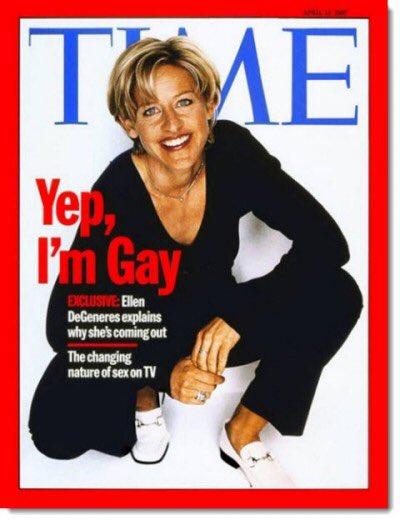
Sigh. Baume’s book is still interesting for this TV aficionado. When the gay content is more apparent, giving him more to work with, the chapters are much more interesting. The chapter on “Ellen” is furtive ground, even if I wanted more in-depth analysis of the clunky yet earnest season that followed Ellen Morgan outing herself to Laura Dern’s Susan and, via microphone, to other airport passengers. I would have loved a tub of popcorn as I gobbled down Baume’s accounts of “Will & Grace” and “Modern Family.” 


Television has come a long way in its portrayals of queer characters. Perhaps today’s awkward, nascent gay boys have more opportunities to understand their identities by catching content so accessible on phone and laptop screens. 

Saturday, September 19, 2020

A GOLDEN ANNIVERSARY: LOVING “MARY”


Fifty y
ears ago, when I was a kid, there were no gay role models. No out gay actors, singers or athletes; no gay candidates for president; no gay family members or neighbors. And so I went with Mary Tyler Moore.


On Saturday, September 19, 1970, the world met Mary Richards, hoping to make a go of things in the big city: Minneapolis. As the main character of CBS’s “The Mary Tyler Moore Show,” Richards represented a different kind of woman to American viewers: she was still single at thirty. (Network execs balked when creators James L. Brooks and Allan Burns pitched her character as a divorcee.)


Apart from Phyllis’ daughter, Bess, the sitcom was kid-free and I felt very mature, staring into a window of adulthood. Mary Richards was sweet, smart, stylish and solidly single. She had her share of bad dates and seemed to shrug them off. Not her thing. Certainly not the ultimate thing.


It never dawned on me to look to the guys. I liked news writer Murray Slaughter well enough, always with a quip at the ready. I simultaneously cringed and laughed at vain, dimwitted anchorman Ted Baxter. Through Mary’s eyes, I even learned to see through her boss Lou Grant’s gruffness and consider him a softy.


Still, my eyes were drawn to the women. Long before “The Golden Girls,” “Sex and the City,” and umpt
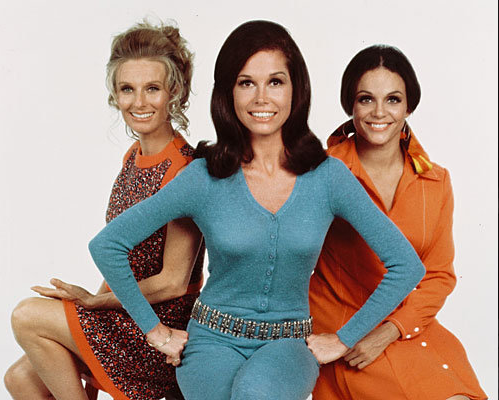
een incarnations of “Real Housewives,” my nascent gay leanings clicked with the strong, quirky female characters surrounding Mary: dowdy, self-deprecating Rhoda Morgenstern; flighty, self-absorbed Phyllis Lindstrom; sly, sexual Sue Ann Nivens; and pie-eyed, wholesome Georgette Franklin. These women were independent by choice or by default. (Technically, Phyllis was married to a never-seen Lars, Rhoda married—and divorced—Joe but that was on another show and, while Georgette eventually married Ted, she had a way of keeping him in check.)

In every scene, I first checked out what Mary was wearing. I marveled at her ribbed turtlenecks. wide-legged pants, diagonally draped belts, plaid skirts and that iconic blue beret she triumphantly tossed in the air as she crossed a busy downtown street in the opening credits. She had a flair and carried herself with confidence. Who wouldn’t want to be like Mary?


Even the wood-block “M” nailed to the wall of her apartment seemed like a savvy accessory. M for Mary, M for Mine. Her place and hers alone.


There weren’t any regular LGBT characters, but I witnessed my first outing of a gay man on the episode, “My Brother’s Keeper,” which originally aired on January 13, 1973. When Phyllis’ brother, Ben, visits, she is intent on matching him up with Mary, but he hits it off with Rhoda instead. Phyllis is despondent—even ruining a party Mary hosts—until Rhoda says, “He’s not my type.” Phyllis, ever volatile, turns incredulous, saying, “He’s witty, he’s attractive, he’s successful, he’s single—”


He’s gay,” Rhoda blurts, matter-of-factly, to which Phyllis replies, “Oh, Rhoda, I’m so relieved!” Phyllis’ reaction says more about what she thinks of Rhoda than where she stands on homosexuality, but the episode closes with a quiet scene, Mary and Rhoda cleaning up as Phyllis sits beside Ben while he plays the piano. Being gay is tacitly accepted as utterly normal. Groundbreaking for a top ten show in 1973.


When I moved to Los Angeles in my mid-twenties to start a new career and finally come out as gay, I played Mary’s theme song in my head. trying to tune out the tentativeness of the first season version: “How will you make it on your own? This world is awfully big and, girl, this time you’re all alone.” In subsequent seasons, Mary had every reason to feel assured as the lyrics changed to, “Who can turn the world on with her smile? Who can take a nothing day and suddenly make it all seem worthwhile?”


I got really good at smiling. So what if I followed it up by staring at my shoelaces.


I was dating and my luck with men wasn’t any better than Mary’s. If she had her share of bad dates, why wouldn’t I? I struggled to shrug them off like Mary, but then dates didn’t come as easily to me in the first place.


In 1991, I participated in my first protest as marchers decried California Governor Pete Wilson’s veto of legislation that would have prohibited employment discrimination of gays and lesbians. As we chanted along Santa Monica Boulevard, I observed a woman get out of car on a side street. She cheered us on before crouching down to explain the moment to her young child. I beamed and felt further empowered as I realized the woman was Valerie Harper, aka Mary’s BFF, Rhoda. Sometimes the people you idolize are, in fact, good people.


Alas, after five years, L.A. didn’t feel like the place where I’d make it, after all. I packed my car, intent on heading north. Before leaving, my friend Richard popped by to give me a beret. He’d heard me gush about Mary in gay bars as I sipped club soda, trying to stay positive as men looked right through me. In Vancouver, I’d reset. I’d find a busy intersection and throw my cap in the air—a sign of exhilaration, a nod to pending triumph.


But I held off. I wanted to exude Mary’s confidence.


It took a couple of years before I felt ready. Success was sketchy at best, but the symbolic act would be an act of faith. I searched my closet, but the beret was nowhere to be found. I never throw anything away; it would turn up. But it never did.


Fiv
e years ago, I readied for my ultimate pilgrimage: a four-day road trip to spend a week in Minneapolis. I dug out a Gap baseball cap from the bottom of a drawer, the letter “G” front and center. G for Gregory, G for Gay (and, yes, for a certain store brand, I suppose).


I f
ell in love with Minneapolis, particularly its lakes and art museums. I took selfies outside the grand home that served as the exterior shots for Mary’s first apartment. The house had a For Sale sign and, for five minutes, I deluded myself into thinking Mary’s place could be mine...if I happened upon two million dollars.


Based on location shots in the show’s opening and closing, I connected with other Mary spots: Kowalski’s Market where Mary flinches at the price of meat; Basil’s Restaurant where she dines with someone; I even searched for the bridge area where Mary crouches down to feed the ducks. It’s a good thing that my one stint as a stalker involved a fictional person.


On my last day, I headed downtown. Destination: 7
th and Nicolett, the intersection where Mary throws her hat. I was excited and nervous. I fretted about asking someone to photograph my moment. I figured I’d work my way into it, first taking some pics of the Mary statue the city had erected on the corner. I stood there and, spun around, wondering how I couldn’t spot the statue. A city official on a Segway sensed my confusion. “Can I help you, sir?”


I’m looking for Mary. The statue, I mean.”


When he said, “It’s gone,” I almost collapsed. The statue had been removed a week earlier while the area was undergoing a makeover. The worker stayed with me for a few minutes, unsure what to make of my distress. Mary Richards meant nothing to him.


I looked down at the ball cap, tightly crumpled in my hand. I couldn’t conjure up a Mary-worthy smile. Minneapolis was Mary’s town, not mine. 


Schlepping back to my Airbnb, I slipped into Sebastian Joe’s for a double-scoop of chocolate mint and raspberry chocolate chip. Mary would have resisted. Sometimes I’m more of a Rhoda.


Listening to “Love Is All Around,” the show’s theme song, still offers an instant pick-me-up. When I’ve got time, I watch an episode. It doesn’t have to be the one about
Chuckles the Clown’s funeral or the premiere, featuring Mary’s hilarious interview with Mr. Grant. Any episode will do. The show has transcended beyond the easy laughs from Sue Ann’s barbs and Ted’s news blunders. I’m just thankful to spend more time with my imaginary friends. In the finale, Lou Grant chokes up and says, “I treasure you people.” I couldn't agree more.


I take heart knowing that even Mary stumbled and faced roadblocks. After seven seasons, Mary (along with Lou and Murray...but not Ted) got fired from the WJN newsroom. Although the theme song declared she was “gonna make it after all,” it would just take a little longer.

And here I am, 55 and single, living in a hastily rented apartment after the coronavirus sidelined another bold restart. It’s only a coincidence that the building is on Richards Street, but I take it as auspicious. I’m still waiting for my hat toss moment.


Tuesday, December 13, 2016

THE OUTING SHRUG (aka THIS IS WILLIAM)


Oh, how the times have changed. It used to be that a “Yep, I’m gay” moment for a TV character was an end-of-episode shocker. (Sadly, Ellen lost its funny after the big reveal. Suddenly the sitcom had a responsibility beyond making people laugh.) There was a time when a show created extra characters for the sole purpose of filming a kiss between two men and risking an advertising boycott. (I loved thirtysomething!) That was a safer way to play the gay card. These random characters could be written off after the Very Special Episode. (On thirtysomething, the characters Peter and Russell appeared in four episodes each, only two together. Financial losses from the gay kiss on thirtysomething had a chilling effect on televised displays of affection. On Will & Grace, the first kiss between Will and a date did not come until the third season.)

A character’s gayness can still be a source of dramatic tension (Empire) and some misguided plot points. (What do you mean Jamal slept with Alicia Keys?!) But we’ve moved on. Gay TV characters can exist safely beyond the set of Will and Grace (and Jack and Karen). They can reveal themselves and expect little more than a shrug or a half-raised eyebrow. My god, their coming out moment doesn’t even take us to commercial. The viewer doesn’t need to catch his breath. The surprise is not dramatic enough.

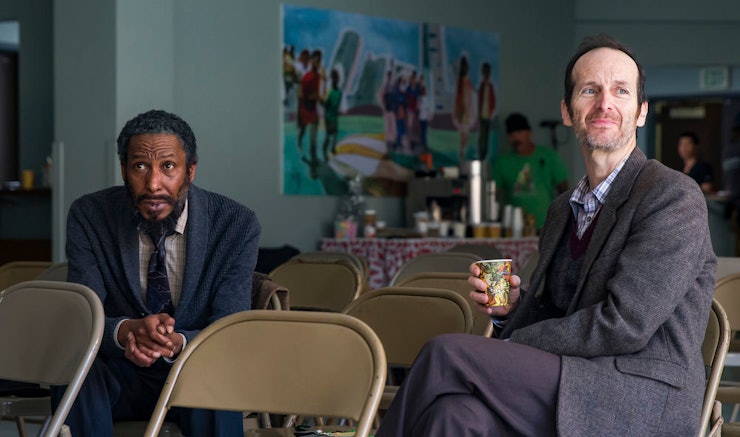
Such was the case when we learned that Randall’s biological father, William, is gay (or bisexual) on last week’s airing of This Is Us. Sure, that’s news. The fact William has a thirty-six-year-old son tells us he had sex with a woman at least once. (I’m proud of that “C+” I got in Sex Ed.) I had not thought William was gay. I made an assumption that I’m sure 100% of the viewers made. I hadn’t thought much about William’s life beyond Randall’s house. Really, my one persistent worry was, Who’s taking care of his cat? Adding an unexpected character element didn’t so much as shock as open up another story line. It merely gave William something to do other than show mild discomfort over stomach cancer and spout words of wisdom about accepting your slice of pie. Now he has a life-before-(and-beyond)-the-Pearsons.

If anything, my only reticence in the William Is Gay (or Bisexual) revelation was that his (ex?) partner aired his grievances over being abandoned in a Narcotics Anonymous meeting. It was a semi-cryptic public shaming. While Jessie may be bitter and feel jilted, his speech gave me a bad first impression. Don’t accuse William of being indirect in abandoning you and then be indirectly confrontational in return. Maybe I’m just overprotective of soft-spoken, kind-hearted, life-of-hard-knocks William. He’s a poet. He was denied connection to his son by Mama Bear Rebecca. He’s got a terminal disease. Kid gloves, Jessie. I don’t want to see William on his deathbed this season. (I just might have donated to the Canadian Cancer Society to try to save a fictional character.)

I can get past Jessie’s poor form at the N.A. meeting. I didn’t have anything invested in him to start with. As he made his grand speech, I didn’t yet know what the point was of this seemingly random Narcotics Anonymous heckler. My mind even wandered to wondering if Kate’s Weight Watchers group might meet down the hall in the same building. Maybe she and William could carpool next time. (Anything to give Kate more screen time…with a character that doesn’t give a crap about her weight.)

So William is gay (or bisexual). I greeted the news without the “hooray” of old. Been there, done that. More of a restrained “oh” followed by a pensive “hmmm”. I do look forward to seeing how William navigates his numbered days between his newfound family and Jessie. Let the drama play out as messed up and endearingly as the rest of the story lines. Let William be a fully realized character. Let him deal with more of the dysfunction that is indeed life.


Monday, September 14, 2015

CHASING MARY--Hangin' with the Girls

It’s a stereotype that the gays love their groups of TV women. I suppose the current ones to watch on the tube are the Real Housewives of Orange County/New York City/Atlanta/New Jersey/Washington, D.C./Beverly Hills/Miami. Egad. I haven’t seen a single episode of any of these. And I’m glad. I might never leave the house.

Long before the Real Housewives, we had Samantha, Miranda, Charlotte and Carrie. It was entirely normal for gay men to sit around asking each other who they were most like. (FYI, friends said I was Charlotte, yet I liked to think of myself as Miranda.) And before “Sex and the City” there was “The Golden Girls”. (I was more Rose than I wanted to admit. West Hollywood made me feel a long, long way from St. Olaf.) I'd be remiss if I didn't mention one of my personal favorites, "Designing Women".

But the original girl gang debuted on CBS on September 19, 1970 as Phyllis Lindstrom ushered Mary Richards into a studio apartment that Rhoda Morgenstern had called dibs on. There were iconic male characters on the show as well—Lou Grant, Ted Baxter, Murray Slaughter—but the show was groundbreaking for its women. It is a testament to these strong characters (and the spinoff nature of the ‘70s) that Rhoda and Phyllis drifted to their own shows. Sue Ann Nivens and Georgette Franklin kept the estrogen levels high. (One might make the argument that Sue Ann inspired Blanche Devereaux who evolved into Samantha Jones and Georgette was the model for Rose Nylund who evolved into Charlotte York. Mary Richards herself may have been the forerunner to Dorothy Zbornak and Carrie Bradshaw.)  

Mary was thirty and single. Thirty! Single! Shocking for the time. It’s not that she was anti-marriage. Quite the contrary. As we hear from Phyllis, Mary had just ended a relationship with a guy after “two long years”. No proposal in sight.

Mary’s status never changed over the course of the show. Here was a beautiful, personable, fashionable, successful woman going it alone, not out of some overt feminist stance, but due to the fact she had no other choice. She was the ultimate single lady. And so how fitting that the first song I heard—I swear!—as I crossed over from North Dakota to Minnesota should be “Single Ladies” by Beyonce. For three minutes, it made my four-day journey to Minneapolis seem entirely logical.

Assuming, of course, you buy into that notion that gays align with their single gal pals. Fictional ones, no less. Many times I questioned myself as I drove through Oregon and Washington and Idaho and Montana and North Dakota. Why travel so far to the fruitless dating grounds of TV’s original Single Lady? I can envision Mary Richards in a turtleneck sweater and bell-bottomed slacks shrugging her shoulders and saying, “Why not?”

Yes, why not.