Showing posts with label Karen Carpenter. Show all posts

Tuesday, December 16, 2025

BODY TALK 2025


I’ve noticed a number of articles popping up, weighing in on the body sizes of the stars of Wicked: For Good. According to a CNN article, “’Wicked: For Good’ revives an uncomfortable debate about bodies and images,” it’s been considered taboo over the past decade to comment on or critique celebrities’ bodies which, frankly, is news to me. In our Insta world, stars often post thirst trap photos of their bodies, the intention being to get “likes” and build a following. To me, a “like” is itself a comment on someone’s body or how they generally look in a pic. For better or for worse, celebrities who are frequently in the public eye are often subject to scrutiny about what they wear and how they look.


In the case of Wicked, the concern is people are commenting that its stars look too thin and the counter-response is that a person’s thinness is none of their business. This is not new. As someone diagnosed with anorexia nervosa, I have been acutely aware of when a fashion model or a D-list celebrity is considered too thin. I struggle with this notion that people should not comment on what is perceived to be extreme thinness. I would agree that some bodies are just naturally thin. But usually the comments arise when the person’s body has gone through some sort of transformation, from larger to thinner or from thin to even thinner. 


I don’t read the comments but I’m sure there are many that are needlessly—and intentionally—harsh. Still, I feel certain that, when it comes to thinness, many comments are expressed out of concern. I don’t feel a strong sense that these comments should be discouraged. Speaking up when concerned—even if the concern is ultimately misplaced—may be better than saying nothing at all. 


Too often weight loss generates all sorts of compliments which may, in turn, encourage the person to work at shedding more pounds. Positive feedback fosters further “positive” action. But I think it’s fair for someone in earnest to vocalize a sense of caution at some point. “Hey. Are you okay? Are you checking in with a professional about your weight loss?”


“Invasive!” many will scream. “That’s crossing a line.” Yes. Likely. It’s tricky with people we know on a personal level while so much easier on social media. The personal level is, of course, where an expression of concern can have more of an effect… both positive and negative.


For myself, the eating disorder part of me loves when I start losing more weight. Looking in the mirror, I see pesky body parts become trimmer, maybe even acceptable. I carry a suspicion that, hmm, maybe my face is getting too thin but I tell myself it’s worth it to have a six-pack and tamed love handles. Weight never comes off evenly throughout the body. So often, it seems the body part I’m most bothered by is the last to show any change from heightened food restriction and increased exercise. 


Once, in college, a group of friends had an intervention with me. I had stumbled on a way of eating that resulted in pounds dropping off with ease to the point where I was fifty pounds lighter than I am today. I was gleeful. This was a game and I was winning. 


It was during the ’80s when baggy clothes were in fashion so I figured no one could see my body changes. It was all for me, not anybody else. I suppose, however, my fashionably baggy clothes reached a point of becoming unfashionably baggy. “You’ve gotten too thin,” they said. “Your face is gaunt.” The way they said it sounded harsh. They were viewing my face negatively. It was a problem.


It was also a jolt. To myself, everything was great. How could weight loss not be a positive thing? Society celebrated dieting success. And I was succeeding exceptionally. I did not see a doctor. I did not receive an eating disorder diagnosis. That wouldn’t come for another thirty-six years. But their talk scared me—enough for me to abandon my weight loss routine and gradually gain back some weight. 


Commenting made a difference.


I know that others will double down and assert that the commenter is out of line. The reaction will be some form of How dare you?! If there truly is an eating disorder at play—diagnosed or undiagnosed—that part of the person will fight. It will dismiss and deny. The incident may even cost a friendship. Hopefully, it doesn’t come to that. But difficult conversations are just that. Sometimes it’s better to have them no matter what the stakes are.


I often think of Karen Carpenter who died from an eating disorder in 1983 at the age of 32. Any Google Image search of her shows a person who is objectively on the thin side. In some photos, she looks hauntingly thin. Did people close to her wait too long to speak up? Did they not speak up at all? To this day, her death is the most tragic celebrity death I can think of. 


Once again, when I was thirty, some other friends called me on my weight loss. At the time, I was struggling financially and I brushed off their concerns until one of them showed up at my door with a loaf of bread from a bakery. I was deeply embarrassed. I could buy my own basic foods. Was I that thin? 


One friend talked to me about seeing a doctor. I’d recently moved back to Canada and didn’t have a medical practitioner. Back in the days of Yellow Pages, I didn’t have a clue how to go about picking a doctor. My friend gave me a couple of recommendations. All this concern jolted me again. I went to a doctor. Through tears, I asked him if I had an eating disorder. (Did men even get eating disorders?) He went with the empathy card instead of playing the curiosity card. He quickly said, “You don’t have an eating disorder. You’re just extremely fit.” In my gut, this didn’t sit right. It offered no relief. Normally, I’d have been giddy from the “extremely fit” remark. I knew deep down I had a problem. I knew my routines were exhausting me. I needed a professional to tell me to stop. Whether I stopped or not was another matter, but it would have helped to have even the possibility of an eating disorder acknowledged. That still wouldn’t come for another twenty-three years.[1]


All this is to say that I don’t think commenting on social media about a celebrity losing perhaps too much weight is going to make a difference, even when well-intentioned. Many celebs are extremely image-conscious. Their profession makes this so. It is possible that a strong wave of remarks about possibly being “too thin” might make them consider talking to a doctor, a psychiatrist or a dietitian. I suspect the public comments might instead provide an impetus for friends, family or even an agent to have a frank, caring conversation. “Well…now that it’s out there…” Again, getting a professional opinion to make sure they haven’t gone too far can be a good thing, assuming the professional proves to be more knowledgeable and curious than mine was all those years ago.


Eating disorders thrive on secrecy. Mine certainly does. When it is finally “out there” with others noticing and wondering, there is at least the possibility for consultation and, with professional support, slow change. Honestly, when it comes to conversation about someone you know possibly being too thin, I think it’s better to err on the side of concern. Have a talk, one where you say what you think should be said, but listen even more, assuming the topic isn’t outright shut down as it may well be. Eating disorders are fierce. They are destructive but, while a person clings to one, the disorder is also doing something perceived as positive. One person expressing concern may not be enough to affect change. 


Tricky stuff. I know it all too well.


[1] Interestingly, my prior blog post titled BODY TALK and written in 2014 speaks as though I have an eating disorder even though it would still not be diagnosed for three more years. The body and brain knew. Professionals just weren’t picking up on it.

Monday, February 13, 2023

JUST DANCE


Being in a relationship, I learn plenty about myself. I don’t give my routines and preferences much thought when I’m on my own, but then a Plus One comes along and labels my habits “quirky.” I wish more of those moments were noted with a tone that regarded me as some precious gem, a true original to marvel at. Typically, however, my atypical tendencies elicit a frowny squint and a thought bubble hovering over his head: “Why?” 


I don’t need to offer examples. I don’t want to feel your virtual frowns or have to block your virtual messages to my boyfriend: “Run, Evan, run!”


I’m an acquired taste. Not everyone loves liver either.


So it was nice yesterday morning when me just being me garnered a smile. He was in the bathroom, doing some bathroom thing, I don’t know, probably primping his already perfect hair, testing its bounce or making it rise two percent higher, and I’d figured it would be a while. (We are both hair-obsessed so that’s a whole realm left off the Quirk List, thank god.) I’d switched from scrolling Twitter, searching fruitlessly for a vegan breakfast pic or an “I’m on an African safari and you’re not” photo to like and instead moseyed over to YouTube. I’d typed in Barry White and selected “Can’t Get Enough of Your Love, Babe,” a snippet of which I’d heard the night before as we watched “You People” on Netflix, Evan reduced to snoring through the last twenty minutes. (One body turn, a blanket tug, wait three seconds and, Hello, Dreamland. It’s a habit that draws pure envy from me instead of annoyance.) 


A snippet was not enough. (Is it disco by default just because it’s catchy, danceable and from the ’70s?) I needed the full song to acknowledge the lingering earworm, to let the tune fully embody my being. I turned up the volume on my laptop, ruing the fact that bonkers high stereos are a relic that peaked shortly after Barry White’s chart prime. The laptop sound system would suffice. My arms lifted, my feet clomped in search of the beat and my hips swayed. I smiled and lip synced along, not wanting my off-key gargling to detract from Mr. White’s distinct bass which I hadn’t fully appreciated as a kid. Barry’s deep voice, like that of Marvin the Martian, freaked Tween Me out. Maybe it was on account of being raised in an environment of women’s voices—my mother, every primary school teacher and Karen Carpenter. Apologies, Barry. You’re a true marvel now. (Marvin the Martian? Still makes me shudder.) 


I danced. Bedroom dancing has always brought bliss. It’s one of my most uninhibited forms of expression, away from judging eyes in a gay bar, no chance of knocking over someone’s gran at a wedding reception, no indignity from being denied service at a café after swaying “aggressively” when The Andrews Sisters pop up on their kitschy soundtrack. In the bedroom, it’s just me and the music.


Enter Evan.


He didn’t join in but neither did I stop. Barry still had a couple more cracks at the chorus and I needed to absorb all of it, the buildups, the rising beats and the sense that this was musical euphoria. Evan smiled and watched a little while going about his business, responding to a text, getting ready for brunch. And yet the song and the feeling added exclamations to the orchestrations as the moment went from Barry and me to Barry, Evan and me. I’d tossed any tendency to self-edit; I knew I was in a frown-free zone. The song’s joy became my joy and, I’d like to think, Evan’s joy, too. 


Dancing together is lovely. Dancing on my own (without the slightest Robyn-esque edge) in front of my guy can be just as grand. 


Some quirks are good.  

Monday, July 25, 2016

NEVER AFTER (Part 2)

-->
No family friction over refusing to invite my brother. No tiffs over chocolate cake versus a lemon vanilla triple berry cake (my choice). And no agonizing as I scratched up the twenty-third incarnation of my vows. I’m a writer. They have to be heartfelt, original and memorable. No wedding. Whew.

Everything was fine until July 20, 2005. I’d come to accept the realities that came with living outside the institution.  Without the ceremony or the formal commitment, I could rationalize that my relationships were more inclined to end when things got tricky. No obligation, no incentive. We were free to be fickle.

But then Canada enacted the Civil Marriage Act, the fourth country in the world to legalize same-sex marriage. I could propose or be proposed to, I could elope or have a big wedding, I could get a fancy certificate, shop for a ring, plan a honeymoon. But ever since that remarkable enactment, I’ve had a pronoun problem. Always I, never We.

The possibility of marriage remains nothing more than a vague hypothetical. And I’m okay with that. As much as I’ve whined and pined, wanting to fall in love again over the past dozen years, marriage is not a goal. Once I stopped imagining marrying Karen Carpenter, there wasn’t a wedding equation in which I fit as a variable during my years growing up. In my mind, the best I could hope for when I came out in the late 1980s was to fall and love with a guy and have neither of us die of AIDS. Gloomy, but such were the times.

Of course, I have neither blond nor brown hair.    
The first time I heard a gay man lobby for the right to marry, I thought he was a shit disturber, a mere agitator who created a distraction from legitimate, viable issues such as increased funding for AIDS research, legislation to make gay bashing a hate crime and protection from employment and housing discrimination. Two grooms on a wedding cake? Don’t be silly.

I remember the possibility of same-sex marriage being readily repudiated by gays and lesbians as the marriage “joke” started to grow legs. Why would we copy the heteros? Look at the divorce rate…why push to be part of a failing institution? Why be conventional? Shouldn’t we create our own culture and traditions? 

But enough of our “community” kept pushing. Maybe “No” served as a motivating force. Maybe gay and lesbian couples that were deeply in love actually wanted a wedding. Heaven knows we’ve bought enough waffle irons and gravy boats for straight couples. We’ve attended plenty of receptions where we’ve watched dance-challenged masses pantomime “Y.M.C.A.”

So the definition of marriage has changed. I’ve had the right to marry for eleven years now and Americans just marked the one-year anniversary of the Supreme Court’s decision recognizing gay marriage. That’s great in terms of a step toward equality, understanding and acceptance. If I were to fall in love again with a guy in his fifties like me, I doubt my partner would have dreamed of marriage during his adolescence and after coming out. Idle time was better spent imagining living on Mars. (Is that still in the works? I don’t get it.)

So, yes, I have the right to marry. I do. I also have the right to raise chickens in my backyard, assuming I could ever afford a home with a yard in Vancouver and assuming I develop a constant yearning for “farm-fresh” eggs. Both rights remain the flimsiest of hypotheticals. Truth be told, they are also beyond my control.  

But I think I should work on getting that lemon vanilla triple berry cake. All mine.   

Friday, July 22, 2016

NEVER AFTER (Part 1)

-->
I wasn’t the type of little boy who, given a box of crayons, madly drew scenes with superheroes and fire trucks. I didn’t get in trouble with my teacher for adding bombs and guns and gushing blood to what would have been a happy family picnic picture. At school, I drew the typical house with a typical road out front and colored in a typical grassy area, a typical apple tree and a typical yellow ball of sun—always in the left corner—floating on a blanket of blue sky. Same picture. Over and over. Even at five, I knew I sucked at art so I played it safe. I stuck with the conventional.

At home, I dared to draw something different. Instead of an ordinary house, I drew castles. Big boxy gray structures with gapped teeth running along the top. It never dawned on me to add a portcullis or defenders peeking above the parapet. My castle would never be attacked. I didn’t have that kind of mindset. The moat had goldfish that peacefully coexisted with alligators that never craved human flesh (or goldfish). The alligators always unseen, stuck to the bottom of the moat, not because they wanted to wage a surprise attack; I just couldn’t draw them.

In the top window of the castle tower, I always drew a smiling princess. She had blonde hair spilling out from under her cone-shaped blue hat that matched her long blue dress. She smiled but she was lonely and sad. (I was taught that everyone had to have a happy face.) This was the woman I would marry. This is where I’d live. Poor thing would be sad ever after!)

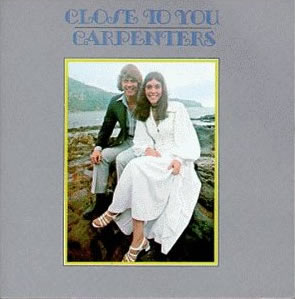
Along with my Karen crushes—Ms. Valentine from “Room 222” and Ms. Carpenter from the “Close to You” album cover—the Princess in the Blue Dress was as close as I got to thinking about marrying.

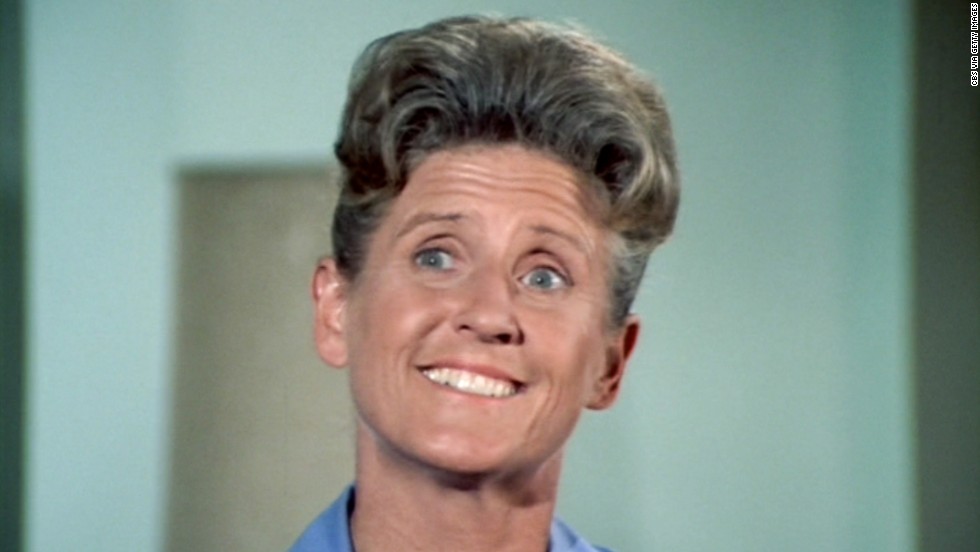
After that, I sometimes imagined having kids—six, of course, like “The Brady Bunch”—but I could never picture their mother. It didn’t concern me. I suppose I figured I could hire a kooky housekeeper. Maybe even Ann B. Davis if she wasn’t doing anything.

I don’t know why I gave up on the concept of marriage when I was so young. It’s not like I got distracted with marathon, recurring games of Cops & Robbers. (I played alone underneath the sycamore tree in my backyard with little animal figurines that came with Red Rose Tea.) First-Grade Me just had a vague yet unmistakable sense I was not the marrying kind. I assumed the reason was because I was too ugly, with all my freckles and untamed curly red hair. That or I was too dull—after all, I played with animal figurines—and too fearful of any human interaction. Funny how the brain accepts things before the reasons are apparent. So no marriage. It was utterly inconceivable.

And that was that.

Wednesday, December 18, 2013

SWIFTLY SPEAKING


I wanna be Taylor Swift.


Not for her nasally voice. I think I’ve got that already. Not for her fame. I wouldn’t be able to handle the paparazzi. (My side profile shots are frightening.) And not for her closetful of trophies. Nothing could ever top my fifth place ribbon I won earned as a seven-year-old in the neighborhood watermelon seed spitting contest. (In truth, there were no ribbons. But it was a moment. With six of us participating, it was the first athletic endeavor wherein I didn’t come last. A victory of sorts. I fashioned my award by tearing a strand from my bed sheet, thinking my mother would never notice. That’s another story...)

I want to fall in love like Taylor does. Swiftly. Did her name create a self-fulfilling prophecy? Perhaps I’ll change my last name. Forget Swift. I’m no groupie. How about Lovemore? Or Firstglance? No, I think I’ll go with (You Had Me at) Hello. Why not? If kids are getting names like Apple and 7, I am going to be James (You Had Me at) Hello. Nice ring to it, no? And I like the parenthetical homage to The Carpenters’ “(They Long toBe) Close to You”. No one else will make the link, but the name is for me.

Perhaps as James Hello I’ll become socially ept. (Clearly, I’ve mastered inept. Why can’t I be ept? No such thing?! By god, how am I supposed to right things?) Maybe the whole name thing needs more thought.

Back to Taylor Swift. This is a woman who falls in love. A lot. True, guys line up for her. Fame, money, trophies. Maybe I’ll go back to wearing my bed-sheet ribbon.


Joe Jonas.

Taylor Lautner.

John Mayer.

Jake Gyllenhaal. (Ah, Jake. This one was the keeper, Taylor.)

Conor Kennedy.

Harry Stiles.

These are all brief relationships. According to my trusty Wiki research, none has exceeded four months. But Taylor would never call them “flings”. Love. Truly, Madly, Deeply. (Aside: Whatever happened to SavageGarden?)

For me, it’s not about the fact the relationships end. My focus is on getting something to start. For the past decade, I’ve been this sad sack, stranded on a quasi-island, failing miserably at survival. Lots of rubbing stones together to try to make a spark, a fire. Nothing. No matches. No light.

Taylor believes in love. Taylor finds love. She is known for bashing her exes in song, but her lyrics are also laced with hope and romance. Listen to “Love Story” again. “Today Was a Fairytale”. Sense the longing in “Teardrops on My Guitar” or “You Belong with Me”. All summer her duet with Ed Sheeran, “Everything Has Changed”, squiggled through my brain like an earworm. It amused me as a tale of falling fast.

All I knew this morning when I woke
Is I know something now, know something now I didn't before.
And all I've seen since eighteen hours ago
Is green eyes and freckles in your smile
In the back of my mind making me feel right.

'Cause all I know is we said, "Hello."                            [As in (You Had Me at)!]
And your eyes look like coming home
All I know is a simple name
Everything has changed.
All I know is you held the door
You'll be mine and I'll be yours
All I know since yesterday is everything has changed.

The jaded part of me dismisses it all as the thinking of a young mind. So naïve. So open. I was that once. An ex (and his mother; both cynical) once described me as a deer in the headlights: innocent, hopeful, and wholly unaware of the harshness ahead. Now I am guarded. I’ve been cheated on, abused and, of late, completely passed over. Yes, Taylor, there is a country song in me if I can ever feel comfortable leaving off word beginnings endings and tossin’ ‘round apostrophes.

But I’d like to get back to being hopeful or, at the very least, suspending disbelief.

Hope is a start. Opportunity is another hurdle. Someone hold the door. Green eyes and freckles or not, show me that smile.

I can’t keep rubbing rocks together. I have no interest in being on “Survivor”. I need a spark, a flame, some warmth. Bring it on. 
Swiftly.

Wednesday, March 20, 2013

MY FIRST CRUSH SONG


Most of the first pop songs I recall had a novelty to them (“Puff the Magic Dragon”; “My Ding-A-Ling”) or were favorites for primary teacher productions (“If I Had a Hammer”; “Scarborough Fair”; “He Ain’t Heavy...He’s My Brother”).

But there was one album mixed in with my dad’s massive classical collection that I begged my parents to play over and over. (They didn’t trust that I’d place the record needle carefully on the vinyl. Seems I’d already built a reputation for being a klutz.) I longed to hear The Carpenters’ “Close to You”. I found the entire album enchanting and, to this day, no other voice touches my heart as profoundly as Karen Carpenter’s.

Songs like “Maybe It’s You” and “We’ve Only Just Begun” introduced me to how adults perceive love. I’d stare at the album and imagine marrying Karen. But even then I felt confused, especially when listening to “(They Long to Be) Close to You”. It was my first awareness of gender in a song.  As I belted out the lyrics over and over again at home, I tried to envision this gorgeous, magnetic man, the one who attracted girls and birds, the one who made stars fall from the sky, the one with “moon dust in your hair of gold and starlight in your eyes of blue.” I knew that this was the ideal man.

While singing, I blissfully kept the male focus, likely causing my parents to have hushed talks in the bedroom.  “Maybe we should buy him a Jimi Hendrix album.” Actually, they were never that hip. “Perhaps something by Perry Como.” It wouldn’t have mattered. For the next two decades, I took extra glimpses at blond-haired, blue-eyed men, sent by angels. Hal David and Burt Bacharach said so and the lovely Karen sang it. I crushed on an image that I occasionally saw on the screen, but that never came to fruition in life. Indeed, there was nothing angelic or golden about the blond blues in my life—certainly not in booger-eating Sean Millar or chewing tobacco-spitting Kelvin Bates.

No regrets though. It was a lovely fantasy. While girls dreamed of princes and living in castles, I fancied the quintessential Golden Boy, the male version of Snow White with birds aflutter around him in a forest. Maybe that explains my early affinity for hiking, too. Karen had that kind of influence on me.

Wednesday, August 1, 2012

"DEAL" WITH IT

Nothing like Karen Carpenter’s sweet, sad voice to simultaneously soothe and send me into a sense of melancholy.  She’s an icon.  Other than my dog, her death is the only one I know by heart:  February 4, 1983.  It was my second year of university and she died at the point when my own eating struggles peaked.  As a kid, I used to stare at the cover of my dad’s “Close to You” album, imagining the dress she’d wear when we married.  “We’ve Only Just Begun” was our song. 

For so many reasons, not meant to be.

The Carpenters’ song “Solitaire” hits me this morning as I write in my favorite café in town.  For the second time this week, a fortysomething woman appears, ordering a muffin and coffee and then sitting at a four-top by herself.  She wears a summer dress, fashionable earrings and necklace.  For a moment, I wonder who she’s meeting.  Obviously, the person is late.  But then she takes out a deck of cards and begins Round 1 of solitaire.  It’s both brazen and sad.  The rest of the coffee soloists are like me, busily surfing or writing on laptops.  I’ve seen newspaper readers and tourists studying maps.  It is true, I have also seen people contentedly working through crossword puzzles and Sudoku, equally individualized tasks, but in my experience, a solo game of cards is reserved for home or airport delays.

She doesn’t cower as I pass her, midgame.  There is a settled aura, if not a confident one.  My first reaction each time is shock, but pity is unwarranted.  In a sense, I admire her.  I’m going out for breakfast and I will not get crumbs in the car.  I am alone and that’s okay.  Now shuffle.  I could learn from her, but do I really want to?

She continues to sit and play.  No one else will join her.  I tune out this scene and let Karen sing me another song, one with a reserved sense of hope:  For All We Know”. 

I do have a deck of cards at home.  Somewhere.  I don’t want to find it.  Not now, at least.  Not ready for that game.