Showing posts with label gay songs. Show all posts

Wednesday, May 29, 2013

THE MUSICAL ROAD TO GAY ACCEPTANCE - Part IV


There are people who play Beatles records backwards, convinced there are hidden messages. Others have written theses on Don McLean’s “American Pie”. My greatest lyrical fascination involves George Michael’s Listen without Prejudice, Vol. 1.


I never bought Michael’s more popular, Grammy-winning Faith which came out two years earlier. “I Want Your Sex” felt gimmicky and “Father Figure” came off as plain icky. But then came the 1990 release of Listen’s debut single “Praying for Time” and I dashed out to buy the album on cassette. (Yep, the music industry made a killing off me, first switching from vinyl to cassette, then to CD. Good thing I never had an 8-track contraption.)

Officially, George Michael publicly came out in 1998 after an embarrassing interaction in a Beverly Hills bathroom. But I was convinced he’d already attempted to step out of the closet eight years prior with the release of the Listen album. It’s just that no one really listened.

On the surface, one can say ”Listen without Prejudice” was George’s plea that the public not prejudge the album based on previous gimmicky/icky fare. No doubt, George felt he’d come a long way since Wham’s debut earworm, “Wake Me Up Before You Go-Go.” It seemed he wanted to scream, “I’m a real musician. I’m an artist. I’m more than a pretty face.”

But, in my mind at least, dear George was desperately dropping every possible clue without actually saying, “Yep, I’m gay.” I empathized with the man. So often in my own far more private life I longed for people to ask or simply conclude and accept that I am gay. Expressly coming out can involve way too much drama.

I knew from the first single that George Michael wanted to say something far deeper than “I Want Your Sex.” “Praying for Time” may be about people turning away from the downtrodden, the homeless, the destitute. But given that this was 1990 during the AIDS crisis when people found new reasons to spew hate toward homosexuals and use God’s wrath as retribution for a sinful “lifestyle choice”, the lyrics had to be viewed as a heartfelt attempt to create compassion for persons living with AIDS. In 1990, AIDS was still a death sentence, many dying within the first year of diagnosis. How could George be referring to anything else?

And it's hard to love, there's so much to hate
Hanging on to hope
When there is no hope to speak of
...Maybe we should all be praying for time.

I contend that another song on the album, “Mother’s Pride”, continued to humanize the tragedy of AIDS. Many viewed the song as being about war and, indeed, it received considerable airplay in the U.S. during the Gulf War. This is the literal take, but it fails to consider the War on AIDS that activists and regular families waged against medical companies and governments.

And as he grows
He hears the band,
Takes the step from boy to man
And at the shore she waves her son goodbye...

Mothers pride
Just a boy...
He's a soldier waving at the shore
And in her heart the time has come
To lose a son.
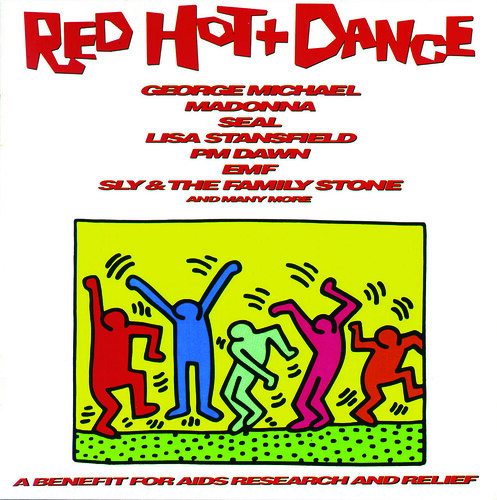
So hurrah, George bravely sang out on behalf of PWAs. (He later contributed songs to Red Hot + Dance, an AIDS album fundraiser.) But the second cut on Listen was even more personal. “Freedom!‘90” focused on George desperately wanting to shed the pop idol image he’d first created with Wham and further enhanced with some eye-catching butt shaking for Faith. That image helped him achieve fame and fortune.

I was every little hungry schoolgirl's pride and joy
And I guess it was enough for me
.

But George then dropped two lines to break up with this rabid fan base:

I don't belong to you
And you don't belong to me.

What struck me more was the rest of the song. All the thoughts expressed the struggles of someone playing it straight and wanting to come out.

I think there's something you should know,
I think it's time I told you so,
There's something deep inside of me,
There's someone else I've got to be.


All we have to do now
Is take these lies and make them true somehow.


I think there's something you should know
I think it's time I stopped the show
There's something deep inside of me
There's someone I forgot to be.


May not be what you want from me,
Just the way it's got to be;
Lose the face now
I've got to live, I've got to live.


How could this not be a coming out song?! I read interviews following the release of Listen without Prejudice and fully expected reporters to ask the obvious questions, with George providing the obvious answer.

Nothing.

George knew that coming out was the path to Freedom, but the starmakers would not have it. Indeed, George instead dove into an intense legal battle with his record company, seeking to sever ties for failing to actively promote the album. How could they not? Faith sold 25 million copies. While Listen may have been more introspective, it still had plenty of hooks. I contend the label did not want their artist of the moment to risk being shunned by many God-fearing Americans. Better to let the album and George’s attempt at artistic and personal honesty quietly pass.

So much for Freedom. Another dance song on the album, “SoulFree”, echoed the longing of being himself.

Won't you come with me?
Baby, gonna get my soul free.

Oh, if only.

While “Heal the Pain” is a love song at its core, George still opened with a hint about coming out:

Let me tell you a secret
Put it in your heart and then keep it
Something that I want you to know
Do something for me
Listen to my simple story.

This intro seemed to be an aside, much like the backwards Beatles messages, for the rest of the song focused on another person, someone whose love and trust George sought.

Other songs on the album spoke of a failed relationship and George’s desire to try to make it work again. George avoided gender pronouns, but playfully referred to a man (“Mister”) while later retreating to a woman (“Sister”) in “Cowboys and Angels”:

I know you think that you're safe,
Mister.
Harmless deception
That keeps love at bay.
It's the ones who resist that we most want to kiss,
Wouldn't you say?
Cowboys and angels,
They all have the time for you.
Why should I imagine
That I'd be a find for you?


George let things “slip” and still nobody noticed. Except me.

I love this album. In my mind, at least, it will always be a Coming Out affair. Had people truly listened, perhaps things wouldn’t have gotten so messy for George. Perhaps his music career wouldn’t have fizzled so fast, suspended by the legal battle and further mired by substance abuse. Maybe he wouldn’t have needed to find temporary satisfaction in that Beverly Hills public space. Perhaps he’d be lauded as a gay leader who came out on his own terms. Consciously or subconsciously, it was all there in 1990.

Sunday, May 19, 2013

THE MUSICAL ROAD TO GAY ACCEPTANCE (Part III)

Talkies wiped out silent movies and, as The Buggles famously sang, “Video Killed the Radio Star.” Maybe not to the same degree, but in the ‘80s, you needed a video to get people to “hear” your song. The success of “Take on Me” by a-ha and everything by Duran Duran depended on an eye-catching vid.

I was an MTV devotee during the early years when Alan Hunter, J.J. Jackson, Mark Goodman, Nina Blackwood and Martha Quinn provided musical small talk and introduced world premieres of the latest Phil Collins video. (Don’t you just want to stop and YouTube “Sussudio”? Maybe not. I won’t bother with the link.)

I could waste a morning watching the videos go by, ignoring the next college assignment while waiting for friends to awaken in the early afternoon.

During the early years of MTV, musical acts were finding their way with the video format. Many of the clips now come off as embarrassingly primitive, from “Maneater” by Hall and Oates to The Steve Miller Band’s “Abracadabra”—strobe lights, shadows,...oh, boy! Within a few years, however, some of the best videos managed to tell a story, making song lyrics more potent.

The Bronski Beat made it hard to tune out as we watched the video for “Smalltown Boy” and witnessed a young gay male, played by lead singer Jimmy Somerville, get beat up in an alley after ogling a male diver. A police officer brings the boy home and explains the bashing to the shocked parents. The boy then leaves home for the city, searching for a place of belonging. While his mother hugs him goodbye, the father stoically hands his son some money and refuses even a handshake. We see isolation, but in the end, it appears the boy has made some connections. The video format provided us with a moving picture indeed. It is one portrayal of a coming out story.

The first time I saw it, I wondered after the fact, if somehow I’d mistaken the song’s subject. Surely, MTV would never replay it. There would be complaints, the video would be banned. But a week or two later, I stumbled on the video again. And then again. The video never made MTV’s “heavy rotation” status. (The song achieved international success but only made it to #48 on the Billboard Singles Chart.) Still, I saw it enough times while living in Texas to know there was a way out of the conservative, religious oppression that kept me in the closet. Perhaps this song, along with the Village People’s “Go West” brought me to California a few years later, allowing me to finally be the person I was meant to be. The right song (and the right video) can have that big of an effect.

You leave in the morning
With everything you own
In a little black case
Alone on a platform
The wind and the rain
On a sad and lonely face

Mother will never understand
Why you had to leave
But the answers you seek
Will never be found at home
The love that you need
Will never be found at home

Run away, turn away, run away, turn away, run away.

Pushed around and kicked around
Always a lonely boy
You were the one
That they’d talk about around town
As they put you down

And as hard as they would try
They’d hurt to make you cry
But you never cried to them
Just to your soul
No you never cried to them
Just to your soul

Run away, turn away, run away, turn away, run away.

Cry , boy, cry...

Wednesday, May 15, 2013

THE MUSICAL ROAD TO GAY ACCEPTANCE (Part II)


Sometimes it takes a village.


Or at least a group inspired by gay sightings in Greenwich Village.

During the same year Rod Stewart’s “The Killing of Georgie” hit radio, the Village People catapulted to fame. "Macho Man”, “YMCA”, “In the Navy”...the songs celebrated typically male things. Was there a gay connection? it all went over my head. To be fair, most of America was clueless as well. At first. Comedians, even Johnny Carson, eventually made gay jokes about the group—I recall a monologue in which he referred to being the Village People’s zipper repairman as an unfortunate job. Still, for awhile the gayness of the Village People did not register. Just a year-round Halloween act. How nice to honor policemen and construction workers.

The lyrics to “Macho Man” didn’t reveal much about being gay. It could easily be grouped with other self-worshipping songs like Rod Stewart’s “Do You Think I’m Sexy”, Right Said Fred’s “I’m Too Sexy” and LMFAO’s “I’m Sexy and I Know It.” Take the eye-roll inducing first verse:

Body...wanna feel my body?
Body...such a thrill my body
Body...wanna touch my body?
Body...it's too much my body.
Check it out my body, body.
Don't you doubt my body, body.
Talkin' bout my body, body,
Check it out my body.
 

If anything, the group may have slightly revealed its hand in a later verse:

Every man ought to be a macho, macho man,
To live a life of freedom, machos make a stand,
Have their own lifestyle and ideals,
Possess the strength and confidence, life's a steal,
You can best believe that he's a macho man
He's a special person in anybody's land.

YMCA” pushed things a little more with the sample lyrics:

Young man, there's a place you can go.
I said, young man, when you're short on your dough.
You can stay there, and I'm sure you will find
Many ways to have a good time.

It's fun to stay at the y-m-c-a.

They have everything for you men to enjoy,
You can hang out with all the boys ...


You could easily read it as the gay anthem it’s become, but the folks who lacked pink-colored glasses interpreted the song as a rallying cry for the downtrodden...and an opportunity for healthy exercise in the form of alphabetic jumping jacks.

The words to “In the Navy”, taken at face value also seemed to lack any gay connotation. The song simply promoted joining a particular branch of the military.

In the navy
Yes, you can sail the seven seas.
In the navy
Yes, you can put your mind at ease.
In the navy
Come on now, people, make a stand
In the navy, in the navy.
Can't you see we need a hand?
In the navy
Come on, protect the motherland
In the navy.

The Navy actually used its shout-out song for recruitment in a time long before we even got to Don’t Ask, Don’t Tell. I wonder how many gay men heeded the call and enlisted, only to be dishonorably discharged. Nobody mentioned that possibility in the song.

I am not sure how the Village People rose to fame—Wikipedia provides a boring account whereby a promoter scouted guys with certain looks, one ad requiring interested dancers to have moustache. I prefer to envision a ragtag troop going on stage in smoky gay clubs, sandwiched between drag queen acts, the hoots and hollers of Freddie Mercury clones egging them on. Catchy as their songs were, it’s hard to imagine how they ever got on mainstream radio. While Rod Stewart tried to shock listeners with a violent death, the Village People cozied up to America by taking a light-hearted approach. They gave the Navy and the YMCA a boost in publicity, winking all the way.

Why fear gay men? They took the view that it was all good, clean fun. And America accepted it. I find it ironic that, while most states still prohibit same-sex marriage, “YMCA” is a wedding reception staple, with everyone from Great Uncle Lew to little Susie crowding the country club dance floor for a lively one-round spelling bee.

Boy George and Dead or Alive soon followed the Village People. Their songs didn’t explicitly address sexual orientation, but their lead singers created a new spectacle.

At least as campy entertainment, we were in.

Monday, May 13, 2013

THE MUSICAL ROAD TO GAY ACCEPTANCE (Part I)

To borrow from The Beatles, it’s been a long and winding road. The pursuit of true equality for LGBTQ members of society remains a work in progress. The final steps are within reach, but they may be the most challenging. I liken it to the last five pounds of a dietary plan to shed fifty. Things look good, but it’s still not the right fit.

Pop music provides the scrapbook for my life experiences. There have been many moments when I haven’t connected with people, but I’ve always jived to and with music. I’ve felt the sorrow of Janis Ian in “At Seventeen” and the loneliness of “All By Myself” (more the Eric Carmen version than Celine Dion’s). I’ve rejoiced in the buzz of Cheryl Lynn’s “Got to Be Real” and Madonna’s “Into the Groove”. It’s a rare occasion though when a pop song expressly captures the struggles that gay men have in finding genuine acceptance, understanding and love.

First gay song I ever heard? I was listening to AM radio in Hamilton, Ontario as a raspy voice mourned the gay bashing of his friend. It was 1977. How did the song hit the airwaves in an era when Randy Newman was making fun of “Short People” and the only “other love” society seemed to accept sprang from this song? (You really need to click on the link.)


Rod Stewart’s “The Killing of Georgie (Part I and II)" captivated me. The ‘70s had several hit story songs—“The Night Chicago Died”, “Billy, Don’t Be a Hero”, “Shannon”—but here was a more socially conscious song at a time when K.C. and the Sunshine Band repeatedly chanted “I’m Your Boogie Man”.

In these days of changing ways,
so called liberated days,
a story comes to mind of a friend of mine.

Georgie boy was gay I guess,
nothin' more or nothin' less,
the kindest guy I ever knew.

His mother's tears fell in vain
the afternoon George tried to explain
that he needed love like all the rest.

Pa said there must be a mistake.
How can my son not be straight
after all I've said and done for him?

Leavin' home on a Greyhound bus
cast out by the ones he loves,
A victim of these gay days it seems.

Georgie went to New York town
where he quickly settled down
and soon became the toast of the great white way.

Accepted by Manhattan's elite
in all the places that were chic,
No party was complete without George.

Along the boulevards he'd cruise
and all the old queens blew a fuse,
Everybody loved Georgie boy.

The last time I saw George alive
was in the summer of seventy-five;
he said he was in love, I said I'm pleased.

George attended the opening night
of another Broadway hype,
but split before the final curtain fell.

Deciding to take a shortcut home,
arm in arm they meant no wrong.
A gentle breeze blew down Fifth Avenue.

Out of a darkened side street came
a New Jersey gang with just one aim:
to roll some innocent passer-by.


There ensued a fearful fight;
screams rang out in the night.
Georgie's head hit a sidewalk cornerstone.

A leather kid, a switchblade knife,
He did not intend to take his life;
He just pushed his luck a little too far that night.

The sight of blood dispersed the gang;
A crowd gathered, the police came.
An ambulance screamed to a halt on Fifty-third and Third.

Georgie's life ended there,
but I ask who really cares?
George once said to me and I quote:

He said "Never wait or hesitate.
Get in kid, before it's too late.
You may never get another chance.
'Cos youth’s a mask, but it don't last.
Live it long and live it fast."
Georgie was a friend of mine.

Oh, Georgie, stay; don't go away.
Georgie, please stay.

You take our breath away.


Oh, Georgie, stay; don't go away.
Georgie, please stay.

You take our breath away.


Oh, Georgie, stay.


The fact that “Georgie” was penned and performed by one of the biggest rock stars of the time amazed me. Stewart could easily have continued singing about deflowering virgin girls (“Tonight’s the Night”) and ogling women’s bodies (“Hot Legs”). Rumors circulated about Rod Stewart’s sexuality, but he didn’t shy away from bringing a gay character to mainstream radio. (Remember, this was seven years before Elton John got married...to a woman.)

 I hadn’t figured out my sexuality at the age of twelve, but I knew the song was groundbreaking.  I’d begun to hear the “fag” remarks and, while the song provided validation, it also induced fear. Were gays that horrid? Might I be killed if I couldn’t keep my mannerisms in check? While the gaybashing tale provided a frightening image, the line that resonated most was “Georgie was a friend of mine.” It’s a genuine, heartfelt sentiment, a strong step forward. Indeed, because of “The Killing of Georgie”, I can forgive Mr. Stewart for butchering the American songbook over the last decade.