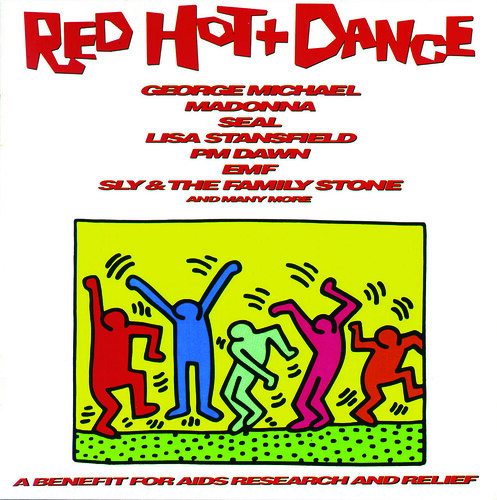
But back to George. His death may not
come as a surprise. He’s had problems over the years. Maybe he was never
supposed to have the spotlight solely on him. Maybe Andrew Ridgeley served a
purpose after all. I think the Brits followed his problems more than those of
us on the other side of the water. Here, he went from scandalous to a joke to
obscure. We moved on. This is the land where we need to know about parking
tickets issued to neighbors of fifth cousins of those Kardashian sisters. (Don’t
ask me to name them. I’ll only sidetrack you with an analysis of Leonardo
DiCaprio’s “Inception.” You won’t be able to argue. But we’ll go back to normal
talk, disparaging Starbucks while nonetheless slurping down our caramel mocha
half-sweet non-fat frappuccinos.)
See what I’m doing? I’m straying.
Because I’m not sure what to make of George’s death. I didn’t know him. I wasn’t
part of his circle of friends. I wasn’t even a neighbor of a fifth cousin. I
never had a backstage pass to allow me to forever tell every acquaintance my
one takeaway: He said hi—well, not to me,
but to a hotter looking guy beside me—and I swear he had a distinct scent of
green tea, scotch and pot on his breath. (Or maybe it was just Hubba Bubba
watermelon.) No, all I knew was the George of MTV and awards shows and of
one particular cassette that I’ll always consider a classic. (If only I had a device on which to play it. I'm an old coot who rather liked cassette decks. Bought my favourite George Michael cassette twice as all that damn ribbon had a tendency to unravel in
my car radio system. Beloved tape decks had their flaws, just like all of us.)

I got much more from George than the
nickel he got from me in royalties. I had a little crush on that handsome, blond-streaked
bopper who first emerged looking way too happy in a CHOOSE LIFE t-shirt. At the
time, I thought Wham! was another one-hit wonder. Like Kajagoogoo. And Haircut One Hundred. Oh, those pretty pretty Brit boys. George’s debut act—was it even
a band?—didn’t deserve continued success, not with an exclamation mark in its
name (just wrong!) and an odd song with a “Go Go” tagged on the end. (A Go-Go(s) tangent: I always thought Jane Wiedlin should’ve had as much solo success as
Belinda Carlisle.)
But Wham! lived on because the lead
singer had more than good looks; he had a voice. And despite “Everything She
Wants” and the solo hit “I Want Your Sex,” I always felt there was a sensitive man
wanting to emerge, wanting vocals to matter in the pre-Adele era. “Careless
Whisper” gave us a window to something greater. I always felt “A Different Corner” and “Jesus to a Child” would never have been released as singles if
George had been a lesser pop star.
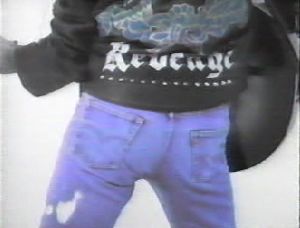
I will admit that I enjoyed seeing him
shake his stuff in those faded jeans in the “Faith” video as much as anyone
else. And I enjoyed all the gay chatter.
Is
he?!
But what about Brooke Shields?
He was a master at feeding us an
infectious hook, from the dopey “I’m Your Man” to the slick “Fastlove,” from the
cheery “Freedom” with Wham! to my favorite single, his solo “Freedom ‘90.” These
were the songs I danced to in gay clubs between Madonna, Janet Jackson and
Bananarama videos. George gave us a good time. Over and over again.
But he went from pop icon to artist
with the release of “Listen without Prejudice, Volume 1.” “Praying for Time”
haunted against the backdrop of the AIDS crisis. The song begins with a plea
for charity but ends in the kind of uncertainty that fit the period:
It's hard to love, there's so much to hate
Hanging on to hope when there is no hope to speak of
And the wounded skies above say it's much too late
So maybe we should all be praying for time.

“Freedom '90” represented an artistic
shift in its absence of the singer in the video, something that must have given
record execs ulcers even as they dropped hundreds of thousands into a delicious
fashion video with the supermodels of the day. (My roommates were obsessed with
models at the time and we argued playfully (?) over which model was supreme. Being
the prideful Canadian, I always went with Team Linda.) Behind the gloss of the
video and the groove of the music, the lyrics begged for us to see George as he
truly was:
Heaven knows I was just a young boy,
Didn't know what I wanted to be.
I was every little hungry schoolgirl's pride and joy,
And I guess it was enough for me….
Didn't know what I wanted to be.
I was every little hungry schoolgirl's pride and joy,
And I guess it was enough for me….
But, today, the way I play the game is not the
same;
No way.
Think I'm gonna get me some happy.
I think there's something you should know.
I think it's time I told you so.
There's something deep inside of me.
There's someone else I've got to be.
No way.
Think I'm gonna get me some happy.
I think there's something you should know.
I think it's time I told you so.
There's something deep inside of me.
There's someone else I've got to be.

But nobody—other than the gays—wanted George
to be anything different. And, really, George already had the gays in his back denim
pocket. I’ll always believe “Listen” was grounded in a real relationship with a
man but no one wanted to see that. Or maybe I wanted to see that too much.
The album didn’t get the sales or the
recognition it deserved, perhaps because its songs demanded that the listener
actually think, perhaps because he didn’t want his ass or even his face to be a
part of the promotion, perhaps because his record label wanted to teach him a
thing or two about corporate conformity.
When news broke of George
propositioning an undercover police officer in a Beverly Hills park bathroom, I
took perverse pleasure, not in seeing a star humiliated—at least not that much—but
in finally having confirmation that Georgie Boy was one of us. Hell, he could
be mine! If only he’d look beyond urinals or bathroom stalls in public
restrooms. (I don’t have a clue where exactly the propositioning occurs. I’m
more concerned with there being soap and a hand dryer that works even just a
little. (They never work beyond “just a little,” do they?))
I’ve read that George never embraced
his coming out. He didn’t want to be the trailblazer. And who can blame him.
His career in North America dried up after the bathroom incident. No more U.S.
charting singles, even with the buzz-generating “Outside” video. Sam Smith et
al. have no idea what homophobia was like back in 1998, particularly for an artist
whose sexy looks were part of the draw.
And so a mega-star with ten Number 1s
and twenty-three Top 40 singles flamed out. But I continued to have my “Listen
Without Prejudice” binges. It was part of the soundtrack to many of my road
trips and, just two weeks ago, I spent a Saturday night playing my own
George Michael marathon, even discovering a new gem, his Rufus Wainwright
cover, “Going to a Town.” Admittedly, I have less than stellar weekends, but
there was renewed joy and appreciation in listening to the man sing.
We’ll always have that. It’s unlikely
that he would have had any kind of musical resurgence. The real tragedy is for
those who knew him personally. I don’t know how he died but I hope it wasn’t at
the hand of one of his demons: drugs, depression or a combination of the two.
George Michael helped define my days of coming out and the years that followed.
He added feel good moments to the process. I’m not sure he ever gave as much to
himself.
I’m still listening, George. Without
prejudice, but for now with great lament.