Showing posts with label gay celebrities. Show all posts

Monday, October 30, 2017

SPACEY-ING OUT


Sometimes the indignation comes easily. Poor Kevin. And by that, I don’t mean to show empathy. Mr. Spacey has long had us wondering when. We’d all heard it. The man is gay. He’ll come out once he feels safe, once his career is solidly on the down slide or maybe once he’s madly in love and about to marry a scholarly British gentleman. Isn’t that why he dashed off to London?

A long time ago, in the ‘90s, many of us wanted him to come out. He could make a difference. As an articulate, Oscar-winning, A-list actor, Kevin Spacey could add an esteemed face to the LGBT movement (back then, mostly L and G). This was when we were dealing with AIDS and hate crimes and hoping people could serve in the military as long as they weren’t blabbermouths about their personal lives. Anti-discrimination and marriage seemed too lofty cherry pies in the sky.

Kevin kept quiet. I don’t recall him trying to pass as straight off-screen. His right. But he was on the wish list. One day, we thought, Spacey, Travolta and Cruise would be grand marshals in Pride parades and continue to receive GLAAD awards even if their big screen roles dried up. How much money did they really need?
We listened to Kevin’s acceptance speeches. Surely, he’d pull a Jodie one day and toss in a cryptic thank you to a lover/partner. Something beyond “good, good friend”, something clearly different than the Damon/Affleck bromance.

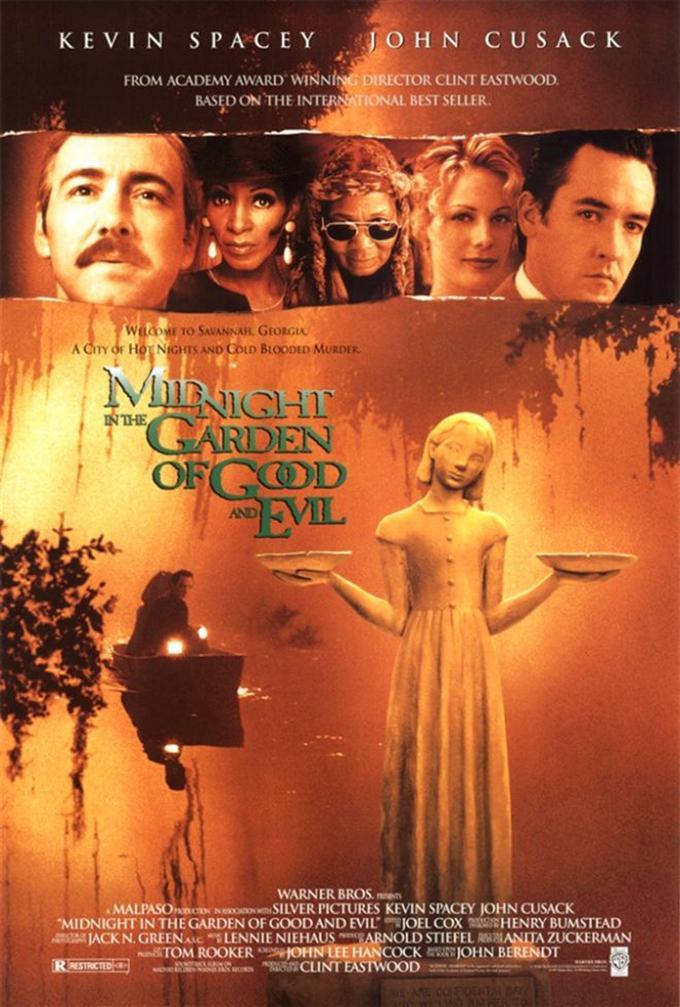
I thought the coming out would occur during press interviews for his gay role in 1997’s “Midnight in the Garden of Good and Evil”. Why take the role and then continue to cling to the confines of the closet? Maybe the fact it flopped affirmed Spacey’s fears that being “too gay”—in other words, publicly gay—was career suicide.

So we all continued to wait. Spacey would dodge questions about his sexuality, at one point in a 2007 interview stating, “I’ve never believed in pimping my personal life out for publicity.” Too defensive. It’s not like he was staging a wedding to Nicole Kidman or Katie Holmes. We all trusted that Spacey would balk at any such suggestions from agents, studios and established religious cults. We felt that this many was of good character. That’s why we all wanted him to come out. But then, somewhere along the way, with the passage of time and the Supreme Court recognizing gay marriage, we stopped caring about Spacey’s private life. He and Travolta and Cruise could go on keeping their “secret”. We had Zachary Quinto, Matt Bomer and Sir Ian McKellen. And Ellen and Rosie, too. Good enough.

If you had told me that Kevin Spacey came out today, I’d have shrugged along with everyone else. Okay. Good for him. That’s a weight off, even if no one else viewed it as a weight anymore.

But that, of course, is not how it went down. He didn’t just casually address it—finally!—in an interview. He tweeted it and he did so, at best, as a distraction and, at worst, in self-defense. We’re still in the thick of the Hollywood cause of the moment, its uncovering decades of sexual harassment and assaults. And, as part of that tide, actor Anthony Rapp disclosed that it was a twenty-six-year-old Kevin Spacey who made unwanted sexual advances to fourteen-year-old Rapp. Spacey launched a multi-tiered response: (1) I don’t remember; (2) I must have been drunk; and (3) Hey, by the way, I’m gay. The implication intertwined with his coming out is that he was conflicted over his sexual orientation, driven to drink and did dastardly deeds such as trying to sexually assault a boy. It was the behavior of a self-hating, self-censoring, horribly confused man.

Distraction or excuse, it comes off as sad at the very least. Yes, I have friends who were so conflicted about being gay that they became addicted to drugs or alcohol. It wasn’t good to be gay in the ‘80s. The alleged incident occurred in 1986 when the AIDS crisis went unchecked and the Reagan administration continued to shirk any sense of leadership in speaking with compassion and conviction to address it. Anti-gay sentiment magnified due to falsehoods and fears about AIDS. It would be exceptional for any gay man in the ‘80s not to be plagued with fits of self-hate, an internalized manifestation of society’s widespread revulsion.

But we didn’t go having sex with minors. I was warily aware of a dubious organization called NAMBLA which generated headlines due to its outrageous agenda. This was the North American Man/Boy Love Association, presumably no larger than a society advocating sex with UFOs, but every time I saw any press about this organization, I felt it represented a major setback to gay tolerance and that ultimate of wishful thinking, acceptance.

There were still large segments of society that lumped homosexuality in with criminals, perverts, practitioners of bestiality and pedophiles. I grew up frequently hearing this. How could that not have had a negative impact into a gay person’s identity? Even today, some extreme conservatives raise fear amongst themselves by claiming an LGBT agenda seeks to “recruit” their children.

Perhaps it’s with all this historical background that I cringe even more at Mr. Spacey’s deflection of responsibility. There was a time when, due to his celebrity, he could have helped advance LGBT causes. He passed on that, which is his right. (I presume he offered support in less public ways.) On a day when he is accused of sexually pressuring a minor, I don’t want him trying to climb on the gay bandwagon. It has the danger of perpetuating an old misperception. It smacks of excuse-making for that which is inexcusable.

If anything good can come from this, it’s a reminder that celebrities—whether movie stars or athletes—are not heroes. Their voices are heard more than the rest of us, but they can be as misguided, perhaps more so because of their protectors, their “yes” men, their perceived power and their desperation to retain fame and fortune.

I respected Kevin Spacey. He is indeed a fine actor. I hope something good will come of all that has aired today. Perhaps Spacey can receive counseling. Perhaps there will be a time when Spacey can truly express full remorse toward Anthony Rapp. For now, it’s an egregious mess, a woeful attempt at saving face and a blatant misfire in terms of garnering sympathy.

I wish he’d never come out at all.

Wednesday, May 29, 2013

THE MUSICAL ROAD TO GAY ACCEPTANCE - Part IV


There are people who play Beatles records backwards, convinced there are hidden messages. Others have written theses on Don McLean’s “American Pie”. My greatest lyrical fascination involves George Michael’s Listen without Prejudice, Vol. 1.


I never bought Michael’s more popular, Grammy-winning Faith which came out two years earlier. “I Want Your Sex” felt gimmicky and “Father Figure” came off as plain icky. But then came the 1990 release of Listen’s debut single “Praying for Time” and I dashed out to buy the album on cassette. (Yep, the music industry made a killing off me, first switching from vinyl to cassette, then to CD. Good thing I never had an 8-track contraption.)

Officially, George Michael publicly came out in 1998 after an embarrassing interaction in a Beverly Hills bathroom. But I was convinced he’d already attempted to step out of the closet eight years prior with the release of the Listen album. It’s just that no one really listened.

On the surface, one can say ”Listen without Prejudice” was George’s plea that the public not prejudge the album based on previous gimmicky/icky fare. No doubt, George felt he’d come a long way since Wham’s debut earworm, “Wake Me Up Before You Go-Go.” It seemed he wanted to scream, “I’m a real musician. I’m an artist. I’m more than a pretty face.”

But, in my mind at least, dear George was desperately dropping every possible clue without actually saying, “Yep, I’m gay.” I empathized with the man. So often in my own far more private life I longed for people to ask or simply conclude and accept that I am gay. Expressly coming out can involve way too much drama.

I knew from the first single that George Michael wanted to say something far deeper than “I Want Your Sex.” “Praying for Time” may be about people turning away from the downtrodden, the homeless, the destitute. But given that this was 1990 during the AIDS crisis when people found new reasons to spew hate toward homosexuals and use God’s wrath as retribution for a sinful “lifestyle choice”, the lyrics had to be viewed as a heartfelt attempt to create compassion for persons living with AIDS. In 1990, AIDS was still a death sentence, many dying within the first year of diagnosis. How could George be referring to anything else?

And it's hard to love, there's so much to hate
Hanging on to hope
When there is no hope to speak of
...Maybe we should all be praying for time.

I contend that another song on the album, “Mother’s Pride”, continued to humanize the tragedy of AIDS. Many viewed the song as being about war and, indeed, it received considerable airplay in the U.S. during the Gulf War. This is the literal take, but it fails to consider the War on AIDS that activists and regular families waged against medical companies and governments.

And as he grows
He hears the band,
Takes the step from boy to man
And at the shore she waves her son goodbye...

Mothers pride
Just a boy...
He's a soldier waving at the shore
And in her heart the time has come
To lose a son.

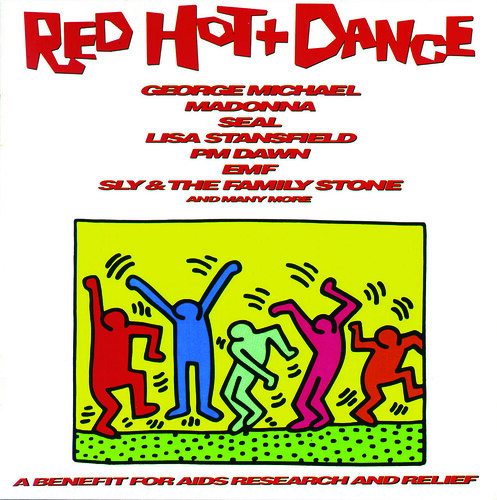
So hurrah, George bravely sang out on behalf of PWAs. (He later contributed songs to Red Hot + Dance, an AIDS album fundraiser.) But the second cut on Listen was even more personal. “Freedom!‘90” focused on George desperately wanting to shed the pop idol image he’d first created with Wham and further enhanced with some eye-catching butt shaking for Faith. That image helped him achieve fame and fortune.

I was every little hungry schoolgirl's pride and joy
And I guess it was enough for me
.

But George then dropped two lines to break up with this rabid fan base:

I don't belong to you
And you don't belong to me.

What struck me more was the rest of the song. All the thoughts expressed the struggles of someone playing it straight and wanting to come out.

I think there's something you should know,
I think it's time I told you so,
There's something deep inside of me,
There's someone else I've got to be.


All we have to do now
Is take these lies and make them true somehow.


I think there's something you should know
I think it's time I stopped the show
There's something deep inside of me
There's someone I forgot to be.


May not be what you want from me,
Just the way it's got to be;
Lose the face now
I've got to live, I've got to live.


How could this not be a coming out song?! I read interviews following the release of Listen without Prejudice and fully expected reporters to ask the obvious questions, with George providing the obvious answer.

Nothing.

George knew that coming out was the path to Freedom, but the starmakers would not have it. Indeed, George instead dove into an intense legal battle with his record company, seeking to sever ties for failing to actively promote the album. How could they not? Faith sold 25 million copies. While Listen may have been more introspective, it still had plenty of hooks. I contend the label did not want their artist of the moment to risk being shunned by many God-fearing Americans. Better to let the album and George’s attempt at artistic and personal honesty quietly pass.

So much for Freedom. Another dance song on the album, “SoulFree”, echoed the longing of being himself.

Won't you come with me?
Baby, gonna get my soul free.

Oh, if only.

While “Heal the Pain” is a love song at its core, George still opened with a hint about coming out:

Let me tell you a secret
Put it in your heart and then keep it
Something that I want you to know
Do something for me
Listen to my simple story.

This intro seemed to be an aside, much like the backwards Beatles messages, for the rest of the song focused on another person, someone whose love and trust George sought.

Other songs on the album spoke of a failed relationship and George’s desire to try to make it work again. George avoided gender pronouns, but playfully referred to a man (“Mister”) while later retreating to a woman (“Sister”) in “Cowboys and Angels”:

I know you think that you're safe,
Mister.
Harmless deception
That keeps love at bay.
It's the ones who resist that we most want to kiss,
Wouldn't you say?
Cowboys and angels,
They all have the time for you.
Why should I imagine
That I'd be a find for you?


George let things “slip” and still nobody noticed. Except me.

I love this album. In my mind, at least, it will always be a Coming Out affair. Had people truly listened, perhaps things wouldn’t have gotten so messy for George. Perhaps his music career wouldn’t have fizzled so fast, suspended by the legal battle and further mired by substance abuse. Maybe he wouldn’t have needed to find temporary satisfaction in that Beverly Hills public space. Perhaps he’d be lauded as a gay leader who came out on his own terms. Consciously or subconsciously, it was all there in 1990.