Saturday, March 23, 2019

L.A. MALAISE

I really like the concept of fight or flight to explain how people react when under stress or duress. Whenever I’ve tried “fight”, it ain’t pretty. In fact, it’s downright embarrassing. I’m just too emotional and I come off as a big mess. So flight it is. Oftentimes, literally. I hop on Air Canada or Icelandair and hope that a change of scenery will not only calm me, but bring me a boost.

I’ve been stressed lately because I’m awaiting hospital admission for a six-week intervention for my eating disorder. In my mind, a hospital is the least conducive place for recovery. I’m a medical wimp. What’s worse, I’ve only been hospitalized twice in my life and both times involved extended stays in psych wards. The things I witnessed, the people I resided with only made me edgier and more depressed. I tried to “fight” this upcoming admission, arguing for treatment in a group home instead. I lost the fight. While I believe my weight is within normal, my symptoms are too acute, too entrenched so it’s a hospital stay before any group home care.

Bring on “flight” mode. When I was number two on the wait list, I boarded a plane for LAX. It’s been twenty-five years since I lived in Los Angeles but it’s still the place where I’m most connected to friends, a couple of whom go back nearly forty years. It’s also the place I finally began to live as a gay man, where I carved out many a four-day weekend in West Hollywood because, back then, the gay bars were the center of gay life.

I figured I’d soak up some sun, take in my favorite beaches, enjoy some trendy restaurants and shopping, view some art, immerse myself in good conversation and return to Vancouver as calm and refreshed as possible given that the hospital admission still loomed large.

Mission not accomplished.

I wasn’t in the mood to shop. Not a bad thing. My wallet had enough leaks as it was. I did go through the rest of my checklist—jogs along the beach from Venice to Pacific Palisades, a walk at El Matador State Beach in Malibu, trips to The Getty and The Broad, meals at favorite restaurants plus some new ones and, best of all, reconnections with friends where it seemed like only days had passed since our last get-together. Still, it felt like I was only going through the motions. I was only a fraction of myself. The trip offered convincing evidence of my suspicion that my antidepressants flattened my mood. I don’t go super low, but I also struggle to feel joy. I live in a narrow mood path whereby I have a generally low affect. I sense that I am technically present for various experiences but I’m not really living them. Rather than getting the mood boost I’ve picked up on so many of my travels over the past five years, I felt more frustrated and disappointed. I existed safely, as if I walked around L.A. wearing a helmet and kneepads, as if walls of mattresses flanked me on both sides.

Where’s the fun in that?

Returning to Vancouver, I’m now number one on the wait list and the flight mode remains as high as ever. How many days of freedom do I have left? Can I squeeze in a jaunt to New York or a road trip to Seattle? Can I afford to go? Can I afford not to? My foot taps nervously, my chest tightens. I’d prepared myself to go to hospital a day or two after being back. I’d emptied my fridge and prepared a packing list. Now I’m told it’s unlikely I’ll be admitted before April but I still have to be ready with a day’s notice if a bed opens up.

All I can do now is wait while I try to repress the old fight-or-flight. So far, not so good.

Thursday, February 28, 2019

PANSY BOY

By Paul Harfleet
(Barbican Press, 2017)

I stumbled upon this picture book at the library today. It looked like someone had propped it up as a display on a lower shelf, only to be knocked over by someone else. But maybe just seeing the title made me assume the worst.

The dedication page simply says, “For my seven year old self”. So many of us already know what author/illustrator Paul Harfleet means. The story introduces us to a boy “from an average town” who loves drawing, writing and marveling at the birds overhead. Alas, joy and freedom do not last. “Holidays passed in reverie but school was filled with jeopardy.”

His stance and demeanour may have been fey
His nature girlish and potentially gay…

Fairy, pansy or just queer
Were the words he came to fear

Somehow this boy had to find a way to withstand the bullying. He needed “a simple plan to tackle the hate”. Inspired by flowers that marked graves and invited reflection at a local cemetery, he began planting pansies in places where he was bullied. At first, no one understood why the flowers popped up in so many places on school grounds. When he finally explained to teachers, they took action and the bullying ended. Consider it as fanciful a happily-ever-after as there ever was.

The story is “a fictionalized origin story” of The Pansy Project, an idea that germinated in the mind of Harfleet back in 2005. He’s been planting pansies ever since.
Everything about the look of this book feels special, from the gorgeous, colorful flowers on the cover to the charcoal gray pages to the words that appear in white font and form curved passages of text. Today is Pink Shirt Day (aka Anti-Bullying Day) in British Columbia where I live and it saddens me that this book should be flattened on a bottom shelf instead of being in a classroom for teachers to elicit discussion from students.

This is a book worth tracking down and sharing with others. It’s beautiful enough to be prominently displayed on a coffee table or mantel, perhaps with some fresh flowers nearby. Track it down. The publisher is from Great Britain (www.barbicanpress.com). Maybe you’ll be inspired to plant a few pansies of your own as you reflect on your past.


Thursday, February 21, 2019

CASTING DOUBT ON A HATE CRIME

Whoa, Jussie.

I give a nod to innocent till proven guilty, but things aren’t looking good.

Did Jussie Smollett stage a homophobic, racist attack to raise his profile in a bid for more pay for his work on the TV show “Empire”? For this post, I’m going to assume the worst—because the repercussions go far beyond him. 

A reasonable person would wonder why someone would even dream of doing such a thing. But then reasonable people rarely possess scheming minds. At the very least, they don’t act on such thoughts.

This whole ludicrous scenario takes me back to adolescence and my early twenties when I’d watch daytime and nighttime soap operas. It became a plot cliché for a young woman to feign pregnancy to get her man. The idea was that he’d do the honorable thing and stick with her—even marry her—and, by the time he realized he’d been duped, by golly, he’d have fallen in love with her anyway. Happy ending. But any viewer could see it never would be. I always felt sorry for the actress playing the role. It meant, more likely than not, that her character’s days on the show were limited. After all, what do you do with this character once her Cry Wolf plan is exposed? She’d be written off, for sure, the actress back in the unemployment line.

But that’s a soap opera. Surely common sense stops people from such folly. But, no. From that same period in my life, while I was attending high school in East Texas, I recall a local politician who got shot—three bullets to the arm. He’d arranged the whole thing with a cousin in order to gain sympathetic press, raise his profile and better his chances at advancing in state government. But the ruse was exposed. The cousin confessed, the calculating politician’s infamy now preserved in a Wikipedia page. Only in Texas. At least, that’s how it seemed at the time.

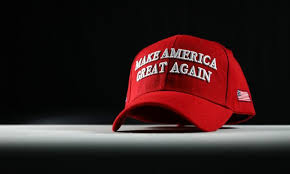
What’s worse about the Jussie Smollett case should be obvious. His actions were also for personal gain but he set up an apparent hate crime and, with a letter he allegedly sent to the “Empire” set days prior to the incident, created the implication that Trump-loving MAGA goons were responsible.

The case had the unfortunate effect of politicizing hate crimes. On social media, incensed Smollett supporters cited the incident as an example of the damage that comes from intolerant MAGA mentality. The Make American Great Again legion got defensive. They lashed out and suddenly an alleged hate crime became a divisive issue, the credibility of a victim questioned. 

As the story began to show cracks, I hoped that it would hold up. It had nothing to do with my opinions regarding proud MAGA folks. I didn’t want an openly gay black man who’d served as an important role model to be exposed as self-serving, Machiavellian fraud.

You can bet that every person charged with a racist or homophobic hate crime in the near future will want to cast doubt on the victim’s story. After all, Smollett has shown how easy it is to make a false claim (assuming one knows how to make or round up a noose, of all things).

Victims already go through enough trauma. The burden of proof—beyond a reasonable doubt—in criminal cases is higher than in civil cases. While the Smollett facts would never be admissible in another case, a defendant will be more driven to attempt to cast doubt. Heck, he may be more emboldened to act in the first place.

It’s natural for people to feel angry for being duped. It makes sense that Chicago police should also be irate over wasted resources and negative international attention on a city with a reputation that has suffered greatly in recent years due to criminal activity. My mind is on the future victims of hate crimes. Let the politicizing of hate crimes be a one-off. Let no one cry wolf over racism or homophobia again.

With all the press this case has gotten, it won’t fade from memory anytime soon. For a couple of seasons, I regularly watched “Empire” and I genuinely admired Jussie Smollett’s acting and singing skills. (I may have even been a tad smitten.) Should he be found guilty, I will be saddened and disgusted.

Monday, February 18, 2019

A CASE OF THE BICEP BLUES?

I just finished reading an enjoyable memoir, Lust & Wonder, by acclaimed author Augusten Burroughs (perhaps best known for Running with Scissors). It’s well worth reading, with great humor and insight into gay relationships. The middle section, in particular, represents an author who is really clicking.

Strangely, two sentences on page 82 nearly made me throw the book against a wall and then shut if for good. Burroughs has a crush on a man and gets up the nerve to ask the guy if he’s seeing anybody. Burroughs writes:

I was wearing a tight T-shirt and jeans. I’d been to the gym
that morning, so my arms were large.

I still want to scream as I type that. I’m guessing Burroughs was about thirty-five at the time and yet that chunk of writing comes off as being the thinking of an emotionally stunted eighteen year old.

Initially, I check myself. Is this jealously? God knows, I’ve never had large arms. A morning gym workout has never made a lick of difference. Same with ten mornings in a row. (Yes, I’ve tried.) And the only thing tight shirts show off is a belly overhang. I could never write that passage, unless it appeared in a work-in-progress novel about, yes, an emotionally stunted eighteen year old.

There is the expression, If you’ve got it, flaunt it, but that always makes me think of women with boob jobs wearing low-cut dresses and open-buttoned blouses. My eyes get pulled in by some gravitational force and I all-too-obviously look away, fretting that I’ve been caught luridly ogling. I’ve got my defense at the ready—“I’m gay!”—but I’ve never had to go there. (Yep. They probably know. I worry way too much.)
I’ve reread the passage several times, and I don’t think Burroughs means to be funny or sad here. It’s just stated as fact. I looked muscular in my tight shirt. I wonder if his editor challenged Burroughs—not on the size of his arms, but on wisdom of including this throwaway comment. It comes off as incredibly shallow. Here, I suppose I’m grateful that I’ve lived a boring life because I could never be a memoirist. I’m fine with being self-deprecating, but I can’t do shallow. I suppose I have my fair share of shallow thoughts but I can’t recall any. Thankfully, they vaporize with due speed. As they should.

I was wearing a tight T-shirt and jeans. I’d been to the gym
that morning, so my arms were large.

There it is again. I can’t shake it. I realize I’ve been bothered by this thinking for so long. I see similar thought bubbles over guys’ heads every single time I go to the gym. If anything, it’s more rampant than ever. They don’t just peek in the mirror anymore. Now it’s full stare and linger as they check themselves out. How much bigger did my arms get after that set? What about my quads?

Even if I stay away from the gym, it’s all over Twitter. Guys post their daily shirtless shots from the gym locker room and their egos are reinforced by hundreds of “Likes. And then there’s the weightlifting videos. Last week, a buff guy approached a schmo (like me) to get him to record his push-up stuntwork on his phone. It was an intense thirty-second routine but I wondered why it really needed to be preserved in video form. Maybe he’d post it to a dating site. Maybe he’d save it until he was eighty, something to show the grandkids. Or maybe he’d just watch it himself. Over and over. As I worked out this weekend, a guy had his girlfriend videoing him and I was inconveniently in the background. I had to glare pointedly so she’d change the angle, the best shot compromised due to “in the way” guy.

I try to see the big-arm point of view. Maybe greater confidence comes with bulging biceps. It’s true that last summer I had a date with a big-bicepped guy and he showed up in a flaunt-worthy tank top. It’s also true that I was terribly distracted, the whole conversation muddled as I kept telling myself to stay at eye level.

Perhaps I even strive to do the same thing when I show up in a green shirt, hoping it helps to highlight the green in my eyes. No muscles to speak of but, hey, I’ve got eyes.

Hell, maybe despite all the great prose in Burroughs’ Lust & Wonder, the one line I wish I could write is, “I’d been to the gym that morning, so my arms were large.” God, I hope not. If I ever get to go to an Augusten Burroughs author talk and/or book signing, I sure hope I don’t immediately look to see whether he just might have gone to the gym that morning. But then he put it out there, didn’t he?


Sunday, February 3, 2019

LABEL LIAR

I’m going to stick with the LGBTQ label for another post. I get where people are coming from when they say they don’t need or want the label. Let people be people. Let each person—straight, gay, transgendered, Maple Leafs fan—find his, her or their own path, labels be damned.

Maybe one day.

But I still recognize the utility of “LGBTQ” when pressing for human rights and legal protections. Sometimes a collective voice is greater than a lone flag bearer. When someone speaks or writes about LGBTQ, I perk up. Someone’s referring to me.

The problem, however, is that I often feel like a fake. After all, I’m a “G”, only one-fifth of what the tag says. And, really, I don’t know how much I can represent the typical gay man, if there even is such a thing. Truth is, I’m not always comfortable with behaviour and beliefs ascribed in one fell swoop to all gays. In many respects, I’m not a group-think sort of person.

But even putting aside the potential quasi-ness of my “G”, my place in the larger LBGTQ community is all the more tenuous.

If “LGBTQ” were some designer clothing label, mine would come from a t-shirt stand on the Venice Beach boardwalk, where you can also buy a fancy “Fendi” bag or a cool pair of “Ray-Bans” sunglasses. Knockoffs, every one.

I’m embarrassed to elaborate.

I can start with the “L”. There was a time when my best friend and roommate was a lesbian. Oh, she’s still a lesbian, but we’re not best friends. No rifts; it’s just that, for the past twenty-five years, she’s been in New Mexico while I’m 1,500 miles away in British Columbia. A long overdue visit still drifts in front of us, the word someday floating in wistful thought bubbles. I have other lesbian friends closer to home but we’ve only communicated through Twitter and Facebook the past few years. Alas, my lesbian ties are there in spirit, strength signal fading.

That’s more than I can say about the “B” contingent. I can’t name a friend, acquaintance or colleague who has ever identified as bisexual. It’s not that I go out of my way dodging bisexuals. They just haven’t identified themselves in my circles. Conceptually, I think being bisexual is ideal. Love who you love, gender be damned. How lovely! (Apparently, being pansexual is slightly broader, at least semantically, but my understanding of newer labels is always fuzzy.) There are some wonderful women I wish I could have loved in every way, but I wasn’t wired that way and a romantic relationship would have been dishonest and damaging. For those who are truly bisexual, all I can do is rah-rah from afar. Wish I knew you.

I’m sad to say the same goes for the “T”. Long ago, I met a few transgendered persons but this occurred at gay events—gay in the broadest meaning of the term. Introductions were made, hands were shaken and our paths never seemed to cross again. What I know about transgender struggles comes from the news, from documentaries and from the few celebrities who identify as transgender. (I’m so foggy on my awareness that I get confused over when to use transgender versus transgendererd. It’s that sad.)

I suppose my lack of connection is in some part related to how I’ve become more introverted in recent years. I don’t attend Pride or any other LGBTQ events. I don’t hang at gay bars. I don’t belong to any gay or LGBTQ groups. It’s hard to grow when I’ve got wall around me.

So, as much as I can embrace the LGBTQ label in theory and from a point of advocacy, it doesn’t fit in terms of day-wear. I believe, I support, I rally...but only from my couch at home. When I shed the LGBTQ label and let me be me, it’s more of a sad thing than a good thing. It’s about being isolated rather than evolved. In truth, I could stand to have the label be more meaningful in my life.

For starters, I’m thinking about a road trip to New Mexico...


Friday, February 1, 2019

THE FIGURE THAT EATS AWAY AT ME

It's Eating Disorders Awareness Week and I gave this speech last night at an Open Mic Night event last night in Vancouver. If you know someone you think may have an eating disorder, read up on the facts, have a heart-to-heart conversation and let them know you care.

1 in 10.
That’s the number equation I grew up with.
I out of 10 people was purported to be gay or lesbian. (We didn’t have the term LGBTQ or any of its incarnations back then.)
I’d sit in my high school government class and look around. So who are the other two?
Sadly, I couldn’t even count on another one, much less two.
I was alone. 1 in 10 be damned.
And this is how I grew up. Alone. Lonely. A lost lamb in search of his flock.
That was back in East Texas. I had to move to Malibu to finally feel some camaraderie. Two hundred fifty in my year at law school. Twenty-four others then? No. Two. But two more than what I was used to.
Now I deal with another fraction: 1 in 4.
Not my math. It comes from Miami, Florida, from an organization with the acronym, NAMED: National Association for Males with Eating Disorders.
1 in 4 persons with an ED is male.
I cited my source because I figured people would doubt the prevalence. Back when I first struggled with obsessive dieting and it evolved into an eating disorder, back in the time when Karen Carpenter was the only person I’d heard of having an eating disorder, the figure I read—somewhere--was 5%. 1 in 20 people with an eating disorder was male.
Even that seemed like a stretch. Back then, I didn’t know of any places where I’d find a room full of persons with eating disorders so I couldn’t check if 1 in 20 had any basis in reality. It seemed high. After all, as I began to read articles about eating disorders—the topic has long been of personal interest for obvious reasons—every “client”, “patient” or person with an eating disorder was given a pseudonym like Amy or Mary. Never Bob.
Really, how could it be 1 in 20?
But let me repeat the current figure: 1 in 4.
In fact, on the home page of the NAMED website, a study is cited and a range is given—25-40% of people with Eating Disorders are male.
Still, now that I am involved in eating disorder groups with Vancouver Coastal Health and with St. Paul’s Hospital, I look around and the figures don’t mesh with what I see.
I take tonight’s theme, I Wish You Knew, and rework it to what suits me and my journey: “I Wish I’d Known”. If it’s really 40%, or even 1 in 4, I wish I’d known someone else, another male struggling with an eating disorder.
The first case study involving eating disorders was in 1690 when Robert Morton considered one man and one woman with symptomatic behavior. 50/50. A nice start.
But over time, eating disorders became known as something women struggled with. It became gender stigmatized. Even as recently as a year ago, when I went through a Coastal Health orientation regarding the eating disorder program, I fought back tears—and some anger—when a PowerPoint slide showed the physical harm to the body that can occur due to an eating disorder. I couldn’t even take my usual stance of denying the facts. The body on the screen was that of a woman. Much of the harm mentioned was female-specific. My first exposure to eating disorders in a room of newbies—myself the only male—was a sense once again of being alone. Something was wrong with me for having an eating disorder. But something even greater was wrong with me for being the only guy. Last month, I completed a questionnaire for a University of British Columbia study about eating disorders. There were questions about how much I worried about my thighs. Nothing about any obsession with muscle mass. When the questionnaires and presentations slant toward one gender, it’s no wonder male cases are under reported.
I speak tonight to provide a male voice. I’m on a bit of a mission, you see. It’s often said that men are taught that they are supposed to handle things themselves. Be tough. Deal with it. It’s why many men resist going to the doctor for a physical ailment. The resistance—and denial—is even greater for mental health issues. Admitting that one needs help and actually seeking it out is even more challenging for a man when it involves a struggle associated with women or, when there’s also the perception that, if it’s a man, it’s a gay man (yes, like myself). (I can only debunk so much as I speak.)
I don’t think I’m saying anything earth-shattering. And I know there are many more poignant, more emotional speeches, recitations and performances tonight. But I ask you, if anyone should wonder how tonight went, that you include mention that there was a guy with an eating disorder who got up and spoke. It’s not about anything I said. It’s just getting the word out there. A guy with an eating disorder. Other guys need to know it’s not some freak occurrence. Because, if it really is 1 in 4—or, just imagine,...40%--then it should be clear to everyone here that there are a lot of guys out there who aren’t getting the help they need. And just knowing that is what got this extreme introvert of a guy itching to speak tonight. 1 in 4.
Where are they?

Friday, January 25, 2019

GIMME A "G"

One of the unexpected benefits of writing a blog has been connecting with other bloggers and regular commenters, both on the blog itself and on Twitter. One blog that I came to regularly follow was “This Gay Relationship” by writer Rick Modien. Nowadays, he uses Facebook as his main platform and one recent post was based on an article I would have missed in the January/February 2019 issue of The Atlantic. The online version of the article, written by Jonathan Rauch is called “It’s Time to Drop the ‘LGBT’ from ‘LGBTQ’”.

Rauch argues that as an identifier of a collective, ‘LGBTQ’ will continue to evolve into a longer mumbo-jumbo acronym as it strives to remain current in its inclusiveness. Already, we’re seeing people begrudge both LGBT and LGBTQ, adopting labels such as LGBTQIAA+ and LGBTTIQQ2SA instead. Don’t ask me what all the extra letters represent. And if I, a (sometimes) flag-waving gay man can’t explain all the letters, you can be sure some frustrated, dismissive straight people will argue for an alphabet soup configuration like, oh, say, ASDKJ4IMA6%ATUIncOGHGN. Their version will be synonymous with, WHATEVER. Is it someone’s banking password or a term for all the non-heterosexuals?

To be sure, no one who aims to be inclusive and understanding wants to be told they’re disregarding someone by leaving out a letter. Still, it’s easy to see how the grow Scrabble tile add-ons become impractical. If I have to refer to myself as LGBTTIQQ2SA, I might just become selectively mute. Like Twitter, there should be some character limit when it comes to mnemonic labels. Five letters seems reasonable, especially when vowels are either absent or not in helpful places.

It’s interesting that I’m getting a lot of red squiggly lines underneath these letter clusters as I type them. LGBT is the only one that gets a pass from my version of Windows. Sorry Q at the end, sorry IAA+. My word processor, much like many average citizens, has dug in. LGBT is enough of a mouthful.

Johnathan Rauch begins his article by mentioning Frank Kameny, a key gay rights advocate who refused to embrace ‘LGBT’, instead sticking with calling himself “gay” in the broad sense of the word, including all non-heterosexual people of any gender. It’s the term Kameny knew for most of his life. Presumably it took a lot of work to accept himself as gay, the nicest term available back in the day, so once he’d reached self-acceptance, the term logically stuck for him.

During my coming out years, I remember the chatter of identity politics. It could get nasty. At first the ‘L’ was questioned. Why do the women need to separate themselves? (Notably, this talk never happened in mixed company.) Eventually, it became common—and reasonable—to talk about “gays and lesbians”. I recall many gay men being vehemently opposed to acknowledging bisexuals. They were dismissed as being gay-deniers, not fully out of the closet, wanting to hold onto some false safety net by continuing to like the opposite sex. (Most) people got past that. The ‘T’ also had a rocky period in being welcomed into the LGB collective. Many feared that transgender rights, farther behind in many respects, would blur or even strip away gay and lesbian progress. After all, it was easy for conservatives to make their adherents get squirrelly over bathroom talk.

My own sense of where things are at in terms of a non-hetero label is that, like my word processor, the general public has accepted LGBT. I see it in articles, I hear it regularly used by speakers. Tagging on the Q gets close to being too cumbersome or, to some, too politically correct. I’d incorrectly thought the Q stood for “questioning”, a term that particularly welcomed younger people who hadn’t figured things out quite yet. Rauch—and probably everyone else—uses Q for “queer”.

Like activist Frank Kameny, I’m at a point where I draw the line. LGBT or LGBTQ will work for me. I don’t mean to exclude anyone, even if an extra letter or a dozen extra letters are needed to technically welcome all. There’s a spirit in a term, even if it’s inaccurate.
Rauch proposes all letter configurations be whittled down to the letter Q. Not for “questioning”, not for “queer”. Just Q. I can see the logic, but I can’t embrace it. Maybe I’m too much of an old fart. I grew up battling myself and others in coming to love and accept myself as a gay man. My letter G just went away. Q, if it means anything, represents “queer”, a term I never liked. I always felt that more abrasive, in-your-face gays and lesbians called themselves queer. It linked with its lay definition, “odd”, while “gay” more appealing, connected with “happy”, an elusive mood that was at least positive.

Don’t take away my “happy”.

If Q isn’t supposed to mean queer, then does it become meaningless? I could counter Rauch and offer some other letter, one that hasn’t been used yet. Not C (cisgender), not D (demisexual), not P (pansexual). I do have a nine-page alphabetized glossary of terms and it looks like E, J, K and N are available. I’m partial to E because there was a time when E rides were the best rides at Disney World. It also marks the beginning of Exceptional, Extraordinary and Excellent. But, really, if we funnel the LGBTTIQQ2 spectrum down to an untaken letter, do we have anything at all? While LGBTTIQQ2 may mystify, the equation LGBTTIQQ2 = E invites mathematical nightmares.

Huh?

My blog pal, Rick Modien, suggests doing away with any letters, other than perhaps the all-inclusive HB (human being). To me, that’s Utopian. We’re not there yet. Based on our history (and some continuing challenges), we still need to stand out. We need to proudly identify ourselves.

I do agree that some labels seem ridiculous and utterly unnecessary. I won’t be starting a movement to identify GEs in the population. That’s because I’ve never been discriminated against as a person with green eyes. Technically, I could advocate for Rs or RHs, people with red hair. Growing up I was often considered somewhat freakish as the only red-head in my class. Carrot Top, Leprechaun. But then again, some of my childhood friends could make an argument for PWGs, persons with glasses, since they got lots of ribbing as “nerds” and “four-eyes”. And then there are the people who had braces...It could go on and on.

In Canada, the LGBT label and all its incarnations may not seem so necessary. Our rights feel secure but some hate still exists. I think “LGBT” was hard-earned, a much more civil term than words like fag, fairy, cocksucker and homo which I heard from children and adults not so long ago. I still embrace my gayness. LGBT can be used proudly. It shows a society has evolved but it hangs around because my gayness is both personally and historically a vulnerable attribute, not like the color of my eyes.

Tellingly, in the United States which often considers itself a melting pot, hyphenated labels are much more common. African-American, Muslim-American. The hyphens fade—people are more inclined to identify as Italian than as Italian-American as their rights of citizenship and their assimilation seem to be more assured. People who have no recollection of their own identity being subject to hate and discrimination fail to see the need for hyphens and letters. The people without a true sense of empathy, at least. (Yes, Ma, that includes you.) I didn’t live in fear of discrimination or hate as an English-American, a Scottish-American or a Christian-American any more than I did as a Green-Eyed-American. Thus, no hyphens necessary.

The LGBTQ community is not there yet. For now the label—with its character limit—should live on.