Showing posts with label male eating disorders. Show all posts

Friday, February 1, 2019

THE FIGURE THAT EATS AWAY AT ME

It's Eating Disorders Awareness Week and I gave this speech last night at an Open Mic Night event last night in Vancouver. If you know someone you think may have an eating disorder, read up on the facts, have a heart-to-heart conversation and let them know you care.

1 in 10.
That’s the number equation I grew up with.
I out of 10 people was purported to be gay or lesbian. (We didn’t have the term LGBTQ or any of its incarnations back then.)
I’d sit in my high school government class and look around. So who are the other two?
Sadly, I couldn’t even count on another one, much less two.
I was alone. 1 in 10 be damned.
And this is how I grew up. Alone. Lonely. A lost lamb in search of his flock.
That was back in East Texas. I had to move to Malibu to finally feel some camaraderie. Two hundred fifty in my year at law school. Twenty-four others then? No. Two. But two more than what I was used to.
Now I deal with another fraction: 1 in 4.
Not my math. It comes from Miami, Florida, from an organization with the acronym, NAMED: National Association for Males with Eating Disorders.
1 in 4 persons with an ED is male.
I cited my source because I figured people would doubt the prevalence. Back when I first struggled with obsessive dieting and it evolved into an eating disorder, back in the time when Karen Carpenter was the only person I’d heard of having an eating disorder, the figure I read—somewhere--was 5%. 1 in 20 people with an eating disorder was male.
Even that seemed like a stretch. Back then, I didn’t know of any places where I’d find a room full of persons with eating disorders so I couldn’t check if 1 in 20 had any basis in reality. It seemed high. After all, as I began to read articles about eating disorders—the topic has long been of personal interest for obvious reasons—every “client”, “patient” or person with an eating disorder was given a pseudonym like Amy or Mary. Never Bob.
Really, how could it be 1 in 20?
But let me repeat the current figure: 1 in 4.
In fact, on the home page of the NAMED website, a study is cited and a range is given—25-40% of people with Eating Disorders are male.
Still, now that I am involved in eating disorder groups with Vancouver Coastal Health and with St. Paul’s Hospital, I look around and the figures don’t mesh with what I see.
I take tonight’s theme, I Wish You Knew, and rework it to what suits me and my journey: “I Wish I’d Known”. If it’s really 40%, or even 1 in 4, I wish I’d known someone else, another male struggling with an eating disorder.
The first case study involving eating disorders was in 1690 when Robert Morton considered one man and one woman with symptomatic behavior. 50/50. A nice start.
But over time, eating disorders became known as something women struggled with. It became gender stigmatized. Even as recently as a year ago, when I went through a Coastal Health orientation regarding the eating disorder program, I fought back tears—and some anger—when a PowerPoint slide showed the physical harm to the body that can occur due to an eating disorder. I couldn’t even take my usual stance of denying the facts. The body on the screen was that of a woman. Much of the harm mentioned was female-specific. My first exposure to eating disorders in a room of newbies—myself the only male—was a sense once again of being alone. Something was wrong with me for having an eating disorder. But something even greater was wrong with me for being the only guy. Last month, I completed a questionnaire for a University of British Columbia study about eating disorders. There were questions about how much I worried about my thighs. Nothing about any obsession with muscle mass. When the questionnaires and presentations slant toward one gender, it’s no wonder male cases are under reported.
I speak tonight to provide a male voice. I’m on a bit of a mission, you see. It’s often said that men are taught that they are supposed to handle things themselves. Be tough. Deal with it. It’s why many men resist going to the doctor for a physical ailment. The resistance—and denial—is even greater for mental health issues. Admitting that one needs help and actually seeking it out is even more challenging for a man when it involves a struggle associated with women or, when there’s also the perception that, if it’s a man, it’s a gay man (yes, like myself). (I can only debunk so much as I speak.)
I don’t think I’m saying anything earth-shattering. And I know there are many more poignant, more emotional speeches, recitations and performances tonight. But I ask you, if anyone should wonder how tonight went, that you include mention that there was a guy with an eating disorder who got up and spoke. It’s not about anything I said. It’s just getting the word out there. A guy with an eating disorder. Other guys need to know it’s not some freak occurrence. Because, if it really is 1 in 4—or, just imagine,...40%--then it should be clear to everyone here that there are a lot of guys out there who aren’t getting the help they need. And just knowing that is what got this extreme introvert of a guy itching to speak tonight. 1 in 4.
Where are they?

Wednesday, April 3, 2013

JUST PASSING THROUGH


I know a lot of people who don’t get Twitter. Or they get it, but they don’t want it. Hashtags, retweets, unfollows—gasp, what has happened to the English language!

To be sure, there are days when I feel like a Twitter outsider. Sometimes when I log in, it’s a stream of mindless tweets about hangovers, the pope and guys posting naked Instagram pics of themselves in the name of #NakedSunday. Yep, sometimes I find the content downright depressing. Does this truly reflect the life I am missing in my rural setting? Is this the sort of thing that drove me from the city seven years ago?

It’s truly a hit or miss affair. I liken Twitter to an airport waiting area where people from all walks of life are temporarily crammed together, waiting for a boarding call that will only lead to them being crammed together with more people, including a little kid who inadvertently keeps kicking the back of your seat and a petite woman across the aisle with an active case of whooping cough.

But I digress. Back to the waiting area. These are moments, not hours, when a group of diverse people is thrown together by one common cause: a yearning to visit Cleveland. (Okay, yearning is most likely a huge overstatement. All the convention centers in Honolulu were booked.)

On a recent day, I had the day off and, as I was feeling worn down from weeks of overwork and hopping about with a broken foot, my writing wasn’t flowing. I fell for the Twitter diversion a few times.

In the morning, I sent a random tweet about how excited my dog is when he gets to piddle on a tree when a young guy with the tag GayIsTheWay (or something like that) tweeted another random thought: Do gays ever eat? I think he was trying to be funny. Another guy—let’s call him NJQueer—replied, “My fat ass does. I wish I was one of those gays who didn’t tho.” I should have let it go, but my history of eating disorders flashed to mind and I didn’t want other gay Tweeps to see the comment passed off.

My reply to NJQueer (and GayIsTheWay, who quickly vanished from the Twitterverse): By all means, eat! I’ve struggled with eating disorders my whole life. Wish weight didn’t matter. That spawned a dialog with NJQueer who opened up about his own struggles with eating and self-image. Another Tweep joined the conversation, revealing an eating disorder and, in a matter of minutes in our virtual airport terminal, we were sharing things we hadn’t mentioned to family and friends. I geared the conversation toward solutions, even if temporary—So how do you cope? What makes a good day?—before we each went on with our day with something positive as a focus.

Incidentally, this conversation went on while I engaged in shorter, clearly lighter conversations about dogs and trees, but while that was amusing, it is not worth sharing.

At the same time, a man in England tweeted about having just discovered a lump while in the shower. I replied that I hoped he was getting it seen to and wished him the best. That conversation continued over a period of days, with him talking about his father and his grandfather’s bouts with cancer and the agony of waiting for test results.

Later that night, I peeked at trending Twitter topics. One caught my eye: #SingleBecause. Hmm, I think I know a thing or two about that. I fired off a string of tweets, chuckling away as the topic tweaked my odd sense of humor. Here they are. Laugh or scratch your head as you like:

1)      #SingleBecause it turns out Hugh Jackman is straight. And married. #sigh

2)     #SingleBecause I caught the bouquet at my cousin Brandy’s wedding & my Aunt Constance put a hex on me.

3)      #SingleBecause Anderson Cooper won’t take my phone calls. Or my emails. Or my lock of hair. I don’t understand why.

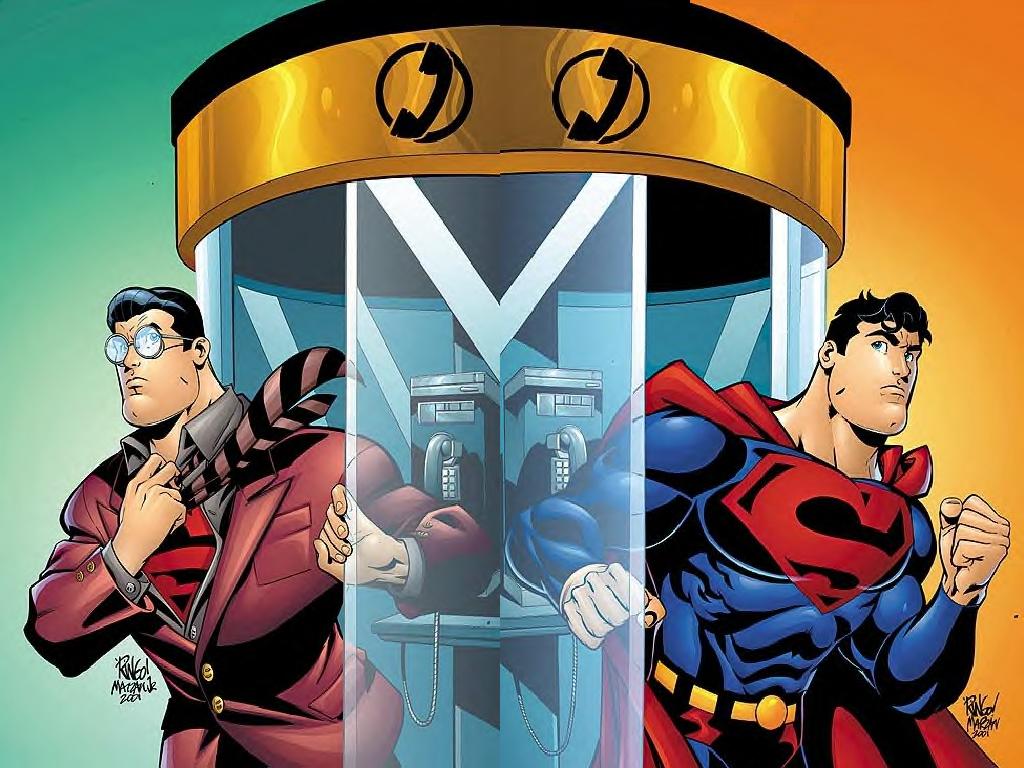
4)      #SingleBecause it turns out Clark Kent isn’t real. (I have to stop stalking phone booths.)

5)      #SingleBecause Do you think it has anything to do with my porcelain doll collection? (I can’t have tea without them.)

6)      #SingleBecause I made an ugly face to my sister when I was 5, the wind came & it froze. #MamaWasRight

7)     #SingleBecause ...Well, isn’t it obvious? That’s what all my friends say, but, no, it isn’t. Not to me & not to Mr. Fluffykins.

8)      #SingleBecause I don’t want to mess up Solitaire Saturday Nights. #Woot!

9)      #SingleBecause Liza Minnelli was The One that Got Away. (These little town blues...)

10)   #SingleBecause that damn alarm went off when I tried to haul the mannequin out of Macy’s. See also #InstitutionalizedBecause

11)   #SingleBecause there’s nothing better than trading Pokemon cards at the kiddie table at my co-workers’ weddings.

12)   #SingleBecause guys don’t seem to like when I pull out the BeDazzler on the 1st date. Why wait when you know it’s right?

13)   #SingleBecause I can’t pull myself off friggin’ Twitter. No, really. Where are they hiding the sign out button?

14)   #SingleBecause the justice of the peace refused to marry me & my Ken doll. And I thought everything was legal in Canada.

Utter nonsense, no doubt, but it can be most helpful to find humor in Chronic Single Syndrome. As I experienced earlier that same day, there are far more serious issues.

Piddling dogs. Eating disorders. Cancer worries. Living the single life. On Twitter, it seems there is something for everyone. Sometimes you just need to add a few more followers to create a new waiting area.

Monday, January 21, 2013

IT'S A GUY THING TOO

There is truth at the base of every overused expression. Take misery loves company. I don’t want other people to suffer whatever pains me; still, there is something perversely comforting in knowing I am not alone.

Last summer, I posted a blog entry about my struggles with body image and bouts of anorexia. So often I have felt there is no one to talk to about the life-long struggle. Media reports largely portray eating disorders as a girl thing. So what the hell is wrong with me? Suck it up, be a man and eat a steak. (As an aside, I hear some gimmicky Caveman Diet is all the rage now. Me disgusted.)

It felt affirming to spot this headline in the Vancouver Sun today: “Eating disorders in men more common than many believe.” For a gay guy long regarded as effeminate and having a girly disorder, I felt a little less freakish. The article would have done wonders had it been published thirty years ago. Another overused expression comes to mind: better late than never.

It’s a lean, low-calorie article, “lite” on analysis, but the main facts are potent. “[S]urprisingly large numbers of men” experience eating disorders. (Yes, we’re still surprised men battle bulimia and anorexia.) One-third of anorexia nervosa and one-fourth of bulimia cases involve males. Those stats are significantly higher than the five percent I’d previously read. Unfortunately, due to the continuing view that eating disorders are a female concern, men are less inclined to seek treatment or to talk about their experiences. The media needs to step up, helping males understand that eating disorders are a guy thing, too. Physicians need to increase their own awareness the incidence of eating disorders among boys and men. Seventeen years ago when I went to my family doctor to get help during a recurrence of anorexia, he didn’t know where to refer me; in fact, he did nothing but tell me to eat. I left his office feeling shocked and even more alone.

The article confirmed things I’d suspected about my own issues with an eating disorder. First, it stated that an eating disorder “can be triggered by a stressful life event, such as undiagnosed other psychiatric conditions, sexual or physical abuse, trouble in school [or] job loss.” Indeed, my two lowest points in battling anorexia came first when I took on too big a load in university and second when I quit my law career and moved to British Columbia, taking on part-time work that did not pay the bills.

While the article acknowledged that some males develop eating disorders after experiencing bullying or teasing, it also affirmed my own reasoning. “An eating disorder can become a coping mechanism, a desperate grasp for control at a time when it feels as if their lives are unravelling.” Anorexia has been a way of asserting control internally at times when I felt I had no control over external situations.

By understanding the triggers that aggravate anorexia, I’ve been able to avoid another downward spiral. Once I recognize pressures that make me particularly vulnerable, I open up to friends, stripping away the secretive nature of anorexia. When eyes are watching, it becomes harder to starve myself.

It is my hope that this is the first of many articles to take away the stigma associated with male eating disorders. It is enough of a burden to battle anorexia or bulimia. Guys shouldn’t have to feel they are alone.