Showing posts with label gay labels. Show all posts

Monday, October 24, 2022

CALL ME BY MY NEW NAME: AGING GAYLY


Name changes happen. Facebook is now Meta. Datsun became Nissan. The TV sitcom, “Valerie,” was retitled “The Hogan Family” after Valerie Harper (RIP) left the show. Sir Elton John was born Reginald Dwight. Arnold George Dorsey performed as Gerry Dorsey before switching to—why, oh why—Engelbert Humperdinck. Prince (born Prince Rogers Nelson) transformed into  Logo. Hollow circle above downward arrow crossed with a curlicued horn-shaped symbol and then a short bar (aka, The Love Symbol) before settling on The Artist Formerly Known as Prince. Sean John Combs has been Puffy, Puff Daddy, P. Diddy, Diddy, Sean Jean, Brother Love and Sean Love Combs. 


I seem to be on the Puff Daddy-P. Diddy-Diddy track. 


It’s with some trepidation that I’ve renamed my blog. Way back in 2008, when blogging may have still been a thing, “Rural Gay” fit perfectly since I lived a ferry ride away from civilization. As a single homosexual in his forties, the title was bound to attract a little online attention, if only from initial curiosity. Why the hell would he make that kind of move?


Yep. Why, indeed. Seven years after starting the blog—and a decade after that cockeyed relocation experiment—I settled anew in Vancouver. Rural Gay no more! 


For some reason, I figured I needed to keep that designation in the blog title, probably since it was the core of the web address. I gave the blog name a clunky tweak: Rural Gay Gone Urban. Always hated it. What did the wretched title say about my writing abilities? Still, I stuck with it, deciding my time was better spent writing posts as a pleasant diversion from drafting essays for occasional publication in the great beyond while continuing to hone novel-length manuscripts.


Another seven years have passed. I’m still blogging, even if that’s not much of a thing anymore. I’m an old dog and I haven’t developed an appetite for new tricks like podcasting and TikTok dillydallying. Old dogs can use words like dillydallying.


I don’t like to think of myself as old even though I’m almost at the point of admitting that the whiskers from three days’ growth on my chin are gray, not blond. (I should look into softer lighting in the bathroom.) I’m startled when I’m reminded that Fleetwood Mac’s “Rumours” is forty-five years old. I curse whenever I think of mentioning VCRs, answering machines or Charles Nelson Reilly in a conversation with my niece. (Charles Nelson Reilly? WTF?!) It’s always hard to transition after a blank stare. 


Allow me to transition here to the new name for the blog. Like it or not, from my vantage point there are more young ’uns than old coots. We’re all aging, of course, but I’m more aware of it now. Remember how the time to reach sixteen or twenty-one seemed to move at a snail’s pace? Such an excruciating wait to drive a car or drink without a comically bad fake ID. Years and whole decades whiz by now. Staring into the bathroom mirror is now about checking for wrinkles, not zits. Oh, how I had so much hope for the powers of Clearasil; not so for my L’Oréal Revitalift eye cream. That thing about getting wiser isn’t always a good thing.


So, yes. I. Am. Aging.


I feel like I’m thirty-six in mind, body and spirit but, judging from how often I’m called “sir” these days, nobody else is buying it. I did get carded at the beer garden at the Washington State Fair last month, but I withheld the urge to woot. Standard procedure. She didn’t even bother squinting to search for where the birthdate is on a British Columbia driver’s licence. 


It shouldn’t come as a surprise when I say I’m not exactly aging gracefully. Nope. I’m kicking and screaming. Rod Stewart’s “Forever Young” keeps popping up on my YouTube stream. Same for Candi Staton’s “Young Hearts Run Free,” a disco-era gem. Dammit, my song choices don’t help my case.


Okay, so enough about the “Aging” part of my NEW, IMPROVED blog title. On to “Gayly.” I had to keep some reference to “gay.” The blog has always been about being a gay man and that will continue to be the case. While I’m okay with “queer,” there was a time the term felt too abrasive—a derisive term that gays took back as their own. There are other descriptors under the LGBTQIA2+ umbrella that seem to suit me, but they weren’t around when I did the hard work of coming out. I love that there are more specific terms people can consider when figuring out their identity. I am committed to accepting and supporting anyone based on how they choose to define themselves with regard to gender and sexuality. In turn, I expect to be respected for sticking with “gay,” at least for now. 


Old dog, remember. Throw me a bone or, better yet, just drop it in front of me.


As a stickler for the grammar and spelling, I’m accustomed to using “gaily” when writing, assuming I would use the word at all. Still, Merriam-Webster recognizes “gayly” as a variant used “less commonly.” I like that. After all, I’ve spent my whole life navigating less common tracts.


As a twenty-something, in a pre-GPS world, there were many times I sat in a car with gay friends and someone called out directions by saying, “Go straight.” The remark was always corrected. “Impossible. Go gayly forward.” Yuk yuk. Yes, these were the same people who chuckled over random references to balls, nuts and the number 69. Don’t be fooled by arty, gay pretensions. We’re as simple as other men…although I’m pleased to say I no longer laugh over farts and fart jokes. Some things just get old when one gets, ahem, old.


So there it is. A new blog title, keeping “gay” and chucking the rest. What do you think of “Aging Gayly”? This is likely a superficial change. I plan to continue to post on similar topics as before: gay culture, my relationship, queer literature and entertainment, and mental health issues, including eating disorders. I hope you’ll stick around, check the blog from time to time, leave a comment on occasion, here or on Twitter. (Retweets and other forms of sharing are always welcome!) I don’t want millennials to shy away from clicking to the blog, but I suppose it’s time for me to accept the gray whiskers while continuing to strive to sustain a healthy, active lifestyle. Thanks, as always, for reading!


Friday, March 4, 2022

QUILTING B...AND THE L, G, T, Q, TOO


Sometimes—fairly often, in fact, and increasingly so—I feel I’ve been living under a rock.[1] I still don’t have a TikTok account and I don’t really get its purpose as a platform. From what I gather, it has something to do with really short videos and, as these posts exemplify, brevity isn’t my thing. I also haven’t hopped on the Wordle bandwagon. Haven’t played it, if “playing” is even the right verb, haven’t Googled it, haven’t had a single chat about it. Honestly, I don’t want to Wordle…again, if that’s the right verb. (If it’s not, surely it will become a verb.) 


This morning, while searching the internet for the umpteenth time to find a potential agent who will LOVE my manuscript, LOVE me, take me as a client and land me a six-figure publishing deal (seven would be okay, too), I came across a term I hadn’t seen before. The agent’s blurb said she was seeking works by traditionally underrepresented authors, including “POC, LGBTQ+/QUILTBAG, neurodiverse, body diverse, and disabled creators.” Lots packed into that statement, lots that makes me excited about publishing striving to be more inclusive. I see many agents make similar (though less comprehensive) statements, whether they’re made genuinely or just because that’s what agents are supposed to do now. The cynic within me wonders how many diverse authors they have and, if none, then will they be content once they get one? Whew! Tokenism at last!


Quite frankly, I’m at the point where I’ll be somebody’s token, even if the “gay” token isn’t as shiny and new as other categories under the diversity umbrella.


Which brings me back to my Term of the Day: QUILTBAG. 


Huh?


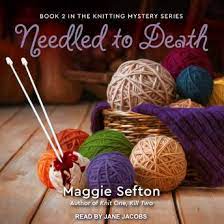
My first image was of a writer walking to a café with a laptop under one arm and a handsewn, oversized purse hauled about in the opposite hand, knitting needles and colorful balls of yarn poking out. I hadn’t realized crafty folk were underrepresented in the literary world. A quick Google revealed there is a potential sub-genre under crime fiction for “knitting needle murders.” It’s a thing. In just ninety seconds online, I came across these books titles: Death by Knitting; Murder, She Knit; Murder Tightly Knit; Needled to Death


Note that the cover indicates
this is the second book in
a knitting mystery series.
Horrors!

I would like to suggest to this agent that crafty, “quilty” authors may not be underrepresented. In fact, I’m hoping the crafty, “quilty” publishing trend is on the wane. I’m developing a fear of quilters. Out of an abundance of caution, I’m never visiting Great Aunt Leonora again. I’ll miss her plate of digestive biscuits, but I’m big on safety first. Besides, I don’t need another handmade tea cozy.


It turns out that’s not what QUILTBAG means. Sometimes I forget that all-caps doesn’t just mean people are shouting or trying to tweet like Trump. (For the record, both these undertakings REALLY OFFEND me.) 


QUILTBAG is another queer acronym which stands for Queer/Questioning Undecided Intersex Lesbian Transgender/Transsexual Bisexual Asexual Gay/Genderqueer. We can thank someone named Sadie Lee for this term. 


Any acronym that purports to represent a broad range of gender and sexual identities will fall short, particularly when these identities continue to evolve now that societies and queer communities are becoming more accepting of a fluidity of sexual orientations and classifications beyond a gender binary. The omission that stands out most for me is Two-Spirit identity. True, Two-Spirit also isn’t expressly noted in LGBT or LGBTQ, but those acronyms use the G and the Q respectively to represent a catchall for a broader community. As acronyms get longer to expressly represent more people, the perceived omissions come off more as slights which offend. What about me? QUILTBAG2 anyone?


I suppose I could get behind QUILTBAG if it took off. To be sure, it rolls off the tongue easier than LGBT or LGBTQ or—deep breath—LGBTQIA2S+. I appreciate that. News anchors, reporters, well-intentioned queer allies and the like must surely hope QUILTBAG sticks. 


But it hasn’t. It doesn’t even make an appearance under the “Variants” subheading of Wikipedia’s LGBT entry despite the fact a quick Google shows the acronym going back to 2012 at least. Maybe I’m not the only queer who has concerns about knitting needle nightmares. Maybe there are butch femmes and leather daddies who see the quilting image as something stereotypically feminine. Maybe we’re all just labeled out. I appreciate that, too.


[1] Such an odd expression, isn’t it? Being as I’m SIGNIFICANTLY larger than a potato bug or an earthworm, how is that even possible? Plus, I don’t think I could tolerate the dank, musty environment.

Tuesday, December 8, 2020

SHEDDING THE "DAD BOD"


Every so often a new term or phrase pop
s up on the internet and it becomes a thing. “Okay boomer.” “Me too.” The name Karen. As is typical with all-things-viral, the original zing of the expression fades and gets warped as more people try to fit it into their own conversations to the point where the meaning is lost, banged up or fused into something utterly different from its original state. That’s what happens when something that deserves fifteen seconds of fame lingers for years.


It’s why I’m pleading for the “dad bod” squad to abandon the term. Move on. Let a man’s natural aging process just be, no comment necessary.


Yes, I’m a man of that certain age and I’m on constant belly watch. I can blame slower metabolism, too much Netflix and both Ben and Jerry. Whatever the contributing causes, my middle section is harder to manage.


This comes as no surprise. I spent decades bracing for it. I feared a future that brought with it the likelihood of an expanding midriff. (Full disclosure: much of this obsessive, unreasonable fear has been fueled by an eating disorder which first started to form when I was ten.) My horrific image of the ominous “beer belly” came from my teen years in Texas as various forty-something men in the neighborhood mowed lawns shirtless in the sweltering heat. I was both aghast and amazed. How could they flaunt a flaw? I told myself I would never “let myself go” like that. How fortuitous that I hated the taste of beer. Surely a wine cooler wouldn’t come with such heavy repercussions.


I’ve known many men who pat their protruding tummies, laugh and acknowledge their “Buddha belly” with an air of resignation...fondness even. When a guy does this, I study his face a few seconds, waiting for it to crack, certain that there’s pain behind this front of self-acceptance. I see nothing. Maybe they never internalized wisecracks about “baby fat” during the tween years. Maybe they didn’t have to stand alone in gay bars, desperate to be noticed by men who couldn’t take their eyes off ab-fab go-go boys, stripped down to neon thongs, dancing without rhythm on podiums. Maybe they just got over it. These men mystify me. They’re as unrelatable as those go-go boys.


I remind myself constantly that a little extra weight around the middle is normal as guys look back over their shoulder at their twenties. For many, a little extra time on the treadmill and waving off that second slice of cherry pie can stave off the weight gain into the thirties, maybe even the early forties. There’s a point though when it’s time to wave the white flag. Alas, for me, it’s still a never surrender mindset.


When I starting seeing and hearing references to the “dad bod,” I was alarmed. It’s a triggering term for me. Please let this pass. Move along, people. Nothing to see here.


I take some solace in knowing that I wasn’t the only one who cringed. In the British GQ article, “We’re calling bullshit on the ‘dad bod,’” they asked, “As your mind palace attempted to come to grips with the words ‘dad’ and ‘bod’ becoming adjacent, did you feel comforted or a creeping dread?”


Apparently, “dad bod” began as a nod to body positivity. It was popularized by a 2015 article called “Why Girls Love the Dad Bod.” written by university student Mackenzie Pearson, a seeming nod to frat boys instead of middle-agers. “The dad bod says, ‘I go to the gym occasionally, but I also drink heavily on the weekends and enjoy eating eight slices of pizza at a time.’ It's not an overweight guy, but it isn't one with washboard abs, either.” Pearson elaborates: “While we all love a sculpted guy, there is just something about the dad bod that makes boys seem more human, natural, and attractive.” She closes with, “[G]irls everywhere are going nuts over this body type on males. We like it. We love it. We want some more of it. So here's to you dad bods, keep it up.”


Okay then. Thank you, Mackenzie. From her perspective, at least, a slight man pouch isn’t a bad thing. Heck, it’s a nice bonus, so to speak. Very glass half full of her.


The problem is that others lifted the term and it spread over the internet, a place where glass half full folks are drowned out by full-on haters. “Dad bod” came to be a “hip” reference for body shaming beach-bound male celebrities with unflattering pics snapped by the paparazzi. There was Leonardo DiCaprio, looking a bit paunch,...dad bod. This summer, when Zac Efron stepped into a hot tub on the premiere of his Netflix series “Down to Earth,”
he trended on Twitter. The thirty-three-year-old was beefier and hairier than his High School Musical days. Some people loved it; others mocked it. “Oh, my god! Zac Efron has a dad bod!”


I stared hard at the photo people freeze-framed from the show. Dad bod?! What were people talking about? No six pack, sure, but so what? The guy was fit. Most men would be thrilled to have his body.


The body shaming continued. Some actor named Jason Momoa who had to get a ripped body to play Aquaman supposedly now had a dad bod. (Um, no.)


A week ago, I came across a photo of shirtless CNN anchor Chris Cuomo in my Twitter feed. “Dad bod!” a shamer declared. (Preposterous!) I could practically hear the wicked laughter booming from my phone screen.


The hating and the shaming have a severe trickle-down effect. If these are of mock-worthy dad bods, the rest of us men over thirty (and far beyond) don’t have a prayer.


People delight in knocking celebs down. F
or ages, fat has been seen as funny. I recall Joan Rivers gaining a (positive) reputation for her cracks about Elizabeth Taylor’s weight. I also remember comedians relying on Marlon Brando and “Fat Elvis” for easy laughs.


To be sure, the gay “community” had a weight problem long before dad bod became a label. Indeed, gays have been label queens. There are still frequent sightings of “No fats, no femmes” in dating profiles. “Daddies” have been both shunned and fetishized. When I was coming out in my twenties, people my age were always pointing out the dads in the bar. They usually wore leather, were remarkably hirsute and liked to bare their bellies (and, sometimes, butt cheeks in a revealing pair of chaps).


Make it all stop.


I’m not alone in this. In a September 2019 GQ article called, “How We Ruined the Dad Bod,” Pearson, that onetime college girl who popularized the term, said, “When you shape it into being something that isn’t normal,” she adds, “people start to view their normal as below average.”


Going back to the British GQ article, it further states:

The dad bod movement was all about attraction – a sop for those of us who 

never matched up to the Greek gods prowling the gym or, even more 

devastatingly, had fallen into the age-old trap of ‘letting ourselves go.’ 

The dad bod was sold as an empowering reassurance that even though we 

couldn’t grift as many Instagram likes as our chiselled bros, we still had 

it – with no confirmation of what “it” actually was. As a body-confidence 

sell, the dad bod was, for me...a failure.


RIP, dad bod. The aging process on a man’s midsection is humbling enough without an icky—and now snarky—term to give it some added definition.


Thursday, October 8, 2020

FINDING VALUE IN SCREEN TIME


Here’s the really great thing that’s arisen during the pandemic: I’m feeling more linked to the LGBTQ community than I have in the past two decades. This old dog is learning new things, too. Thank you, Zoom! It would probably be different if I had to connect with coworkers on a screen during most workdays. If that were the case, I’d probably be cursing the platform. Get people off my screen! Mute yourself! Stop posting questions! Let’s end this session!


For me, Zoom is a choice. It’s offers comfort and connection. I don’t have to put on shoes or change out of my shirt with the brand new coffee stain. (If this were a Rorschach test, I’d say it’s a horse’s head. And, no, I’ve never seen “The Godfather.”) Any anxiety is slight. Could I possibly get the time wrong? What if the link doesn’t work? What if they can see me and I don’t know it? (If only I’d changed shirts!) An event moderator appears on screen and, whew, all is good.


I lost my Zoom virginity relatively late, maybe mid-June. A children’s author talked about her new book and her writing process. Can’t recall a thing about it now.


Apparently it was satisfying enough that I Zoomed again a week later. This time it was an LGBTQ alumni event from the school where I got my undergraduate degree. Texas Christian University. My friends in British Columbia always crinkle their noses when I mention TCU. With both Texas and Christian in the name, they assume I was surrounded by Jerry Falwells and Ted Cruzes, the Bible on the required reading list for every class and a pistol as a basic school supply. Just because. (Hold on to your rights!) In truth, I had great times at TCU. It never felt all that religious, aside from a school prayer that kicked off each football game before we broke into cheers like “Give ’em hell” and “Kill ’em!”


Of course, I didn’t come out during my time at TCU. It was the early ’80s and I’d heard talk of some news article that the school had the highest proportion of gay students in the country. (Purple and white were the school colors, for god’s sake!) Article or not, no one was out. Not. A. Single. Person.


And so it was astonishing that, in 2020, there was such a thing as an LGBTQ alumni group and that the event came through as a regular TCU post on my Facebook feed. Turns out the Zoom session, a talk by a gay professor—Mexican-American, no less!—about the history behind one particular panel of the AIDS quilt, was the group’s inaugural event. As far as I can tell, there was no uproar. A second Zoom talk is set for next week.


Feeling fully Zoom-comfy, I’ve since attended several other LGBTQ events online: a talk with author Garth Greenwell, a discussion with Canadian artist Keith Monkman about his exhibit at Vancouver’s Museum of Anthropology, three literary events sponsored by Word Vancouver and another put on by the Victoria Festival of Authors.


Th
ese are focused talks on LGBTQ matters—mostly, the arts—that go deeper than anything that comes up with my two gay friends I still see as the pandemic drags on. During our socially distanced coffee chats or talks during hikes, we’re more apt to talk about what everyone seems to talk about these days: the coronavirus and Trump’s latest appalling Tweet or stunt. (I look forward to a day when people can go back to whining about the weather.) Zoom offers an hour of gayness. More importantly, I’ve listened and learned about parts of the “community,” going beyond the G and, more particularly, the white G. The most recent event introduced me to four queer writers—one lesbian, two trans, one gay—who also identified as QTBIPOC (Queer and Trans Black Indigenous People of Color). Lots of letters. Terms like “cis” and “non-binary” were also thrown in the mix.


It all goes a long way from the L and the G that I grew up with, when the B was often challenged and mocked and the T was sometimes embraced, sometimes cause for distancing. At times, all the extra letters have confused me. In a post from January 2019, I favored LGBT or LGBTQ as the outer limit for non-hetero spoonful of alphabet soup. All the variations can be assumed to fall within the general G, the broader interpretation of gayness that goes beyond just men attracted to men. In the alternative, Q might be the catchall letter. Easy for me to say as a white gay man. In North America, I fall within the majority of the LGBTQ minority. G works for me. It offers me a sense of place. But now I’m learning how a gay Syrian refugee needs to identify and connect with BIPOC as much as he needs to come to terms with his place within LGBTQ and that he can find even greater validation when sharing thoughts and experiences with its subset, QTBIPOC. There are nuances in identity that a predominately white society doesn’t always pick up on, acknowledge or understand.


S
ome (presumably white lesbians and gays) will find all of this as too politically correct, too attention-seeking. (I cringe whenever someone says “too woke.” It drips with smugness and derision.) I get that all the extra letters can sometimes seem to create distance instead of community. By themselves, the letters do that. I’m just G (and I suppose I’m okay with the Q now). But, clearly, I’m not L, not B, not T and none of BIPOC applies. I suppose I could lament this. I could say it’s hard to find myself in this evolving community of Pride. Isn’t that what certain white Americans are doing when they begrudge new immigrant waves and the rising voices of people of different skin colors? This doesn’t look like the country I grew up in. Why should it?


It’s difficult for me to grasp that some people who come to embrace the rainbow flag fight for their own acceptance and then are content with calling it a day. I’m “in.” Let that be enough. Everyone else should assimilate. In our own community, I wish we all could dig deeper. We share a common yearning to be understood and accepted, but for that to happen for many of us, there are extra layers. For now, LGBT or LGBTQ will be the default label in print and in conversation. Still, if some Pride seekers want to and need to shine a light on an asterisk or an extra letter so that they feel their own sense of place, I can welcome that. I can seek to understand why that makes them feel more represented and more included. It takes nothing away from my identity as a gay man.


I’ve always valued diversity. It fascinates and excites me. In practical terms, however, my understanding has been somewhat naive, a bit too much like a flower child imploring folks to hold hands and sing, “I’d Like to Teach the World to Sing.” (Favorite commercial ever. Even if I’ve never been a Coke drinker.) These Zoom experiences have put me in touch with people I didn’t get to meet and listen to in my pre-pandemic comings and goings at the gym and at my favorite cafe writing hangouts. I could see diversity, but there was never engagement. It was as if there was more plexiglass around myself (and around them) then than now.


Even if all these events were held in a physical space a block away from me and the coronavirus never happened, I probably wouldn’t have attended any of them. I might have had good intentions but, as a socially anxious person, I’d have found an excuse to stay home.


This very strange year has offered unique opportunities. I am invigorated by the thought-provoking moments of connecting that have emerged through a landscape that, at first blush, appeared to be so isolating.