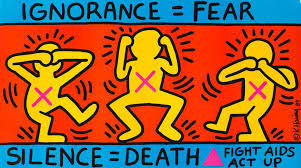
Showing posts with label remembering AIDS. Show all posts

Monday, March 2, 2026

WHERE THE BOYS WERE


Sad to hear that Neil Sedaka died last week. Eighty-six may be a ripe, old age but it happens to be my mother’s age so it once again gives me pause to wonder how long her good health will hold out. Fingers crossed.


I’ve been known to go down a Neil Sedaka rabbit hole a couple times a year. YouTube does me the courtesy of selecting “Laughter in the Rain” whenever it finds itself on a ’70s loop which seems custom-made for me.


When Sedaka’s death was announced, I did some Googling about his life and his music. Didn’t know he gets a shout-out—“Sedaka is back”—at the end of Captain & Tennille’s “Love Will Keep Us Together,” a song he co-wrote with his frequent writing partner, Howard Greenfield. That, of course, sent me down another rabbit hole: Who was Howard Greenfield?


The first thing that struck me was Greenfield lived a much shorter life, dying just shy of his fiftieth birthday in 1986. What had happened to him?


First, however, being the pop music geek I am, I read about the hits he wrote with Sedaka, including ones Sedaka recorded such as “Breaking Up Is Hard to Do,” “Calendar Girl” and “Oh! Carol” (in honour of Carole King) and those the pair wrote for others, including “Where the Boys Are” by Connie Francis and Captain & Tennille’s “You Never Done It Like That.” With other collaborators, Greenfield wrote “Crying in the Rain” by the Everly Brothers, “Venus in Blue Jeans” by Jimmy Clanton, “Foolish Little Girl” by the Shirelles and “Two Less Lonely People in the World” by Air Supply. He also co-wrote the theme music for TV’s Bewitched. (Try to get that out of your head now.) Greenfield was posthumously inducted into the Songwriters Hall of Fame in 1991.


So what happened to Greenfield? Why did he die so young? According to Wikipedia, Greenfield was openly gay and partnered with cabaret singer Tory Damon who also died in 1986. 


Still, I did not put the pieces together.


Greenfield died of AIDS complications on March 4, 1986 and Damon died from AIDS three weeks later.


I bonked my forehead like they do in those “I could’ve had a V8” TV commercials. 1986. AIDS. Of course. 


Just last week, a friend and I were talking about how it almost seemed COVID and the worldwide lockdown from six years ago never happened. How quickly we get back to “regular” lives. How quickly we forget.


I swore I’d never forget the AIDS crisis which I lived through during my years coming out. This, however, feels like a lapse in memory. Only a decade ago, I would have first assumed a male dying young in the mid-’80s died from AIDS complications. Has AIDS fallen off the radar…my radar? This serves as a reminder that it is important to keep real and creative stories about AIDS alive.


Too depressing
, I’ve heard too many people say. “I want happy gay stories,”a friend of mine has said many times. I’ve seen agents requesting works of queer joy. All good. Still, AIDS happened. We must not forget. Movies like Longtime Companion and Philadelphia were important at the time, humanizing AIDS when fear and hate were often associated with the virus. They now feel like historical blips.


It feels we’ve failed to keep narratives about AIDS alive. Contrast this to the Holocaust which always remains ripe for a book or film. If not stories of persons dying of AIDS, where are the works about people who survived this brutal period where, in North America and Europe, at least, it was treated as a gay disease, another reason to shun and actively discriminate against gays. 


Yes, there has been great progress this century regarding gay rights but there is much to learn and remember from the AIDS era. Both the hate and the responsive activism can provide insights for the trans community and other queer people. I feel there is a complacency among non-trans queers. Having crosswalks painted over and Netflix not renewing Boots for a second season are not enough to create a rallying cry.


Being belatedly introduced to the career of Howard Greenfield, I am reminded of all the creative men—and the ordinary men—we lost to AIDS. A generation of gay men, my age and older, was culled thirty to forty-five years ago. As far as I know, Neil Sedaka lived a full life; Howard Greenfield, by contrast, had so much more living to do. Greenfield at least leaves a legacy of catchy, upbeat pop songs worthy of remembrance.


Saturday, May 22, 2021

THEY WERE LOVED


This post is lengthy, but few of the words are mine. (My intro turned out to be longer than I anticipated, but I wanted to provide context.) I have written many times about AIDS, remembering when it was at a crisis level and continuing to support efforts toward helping persons with HIV and finding a vaccine and a cure for AIDS. I truly believe in a NEVER FORGET approach to recalling the human toll and the brilliant, compassionate individuals who died too soon…the average Joes as well. 


There are many people today who were born after the AIDS peak or were too young to know what was going on, blissful days of Power Rangers, “Moesha” and that dang Tickle Me Elmo. Many younger members of the LGBTQ community don’t have a full sense—perhaps even any sense—of the loss and how it spurred increased visibility, formalizing and broadening advocacy while rallying straight allies who had friends and relatives that were affected. These efforts are directly linked to an evolving activism leading to the greater freedoms we now enjoy (but must not take for granted).


A couple of months ago, I stumbled on an AIDS Memorial post somewhere online and I discovered that the original source was an Instagram account. I immediately followed the account (theaidsmemorial) and from then on, I’ve read daily tributes to people who have died from AIDS-related illnesses. On any given day, there are three or four posts—thus, I’ve read about two hundred posts so far. There are days when I brace before logging in, when I hope it will be three posts instead of four or, just maybe only two. I get teary when I read the tributes, always so heartfelt, often wrenching. Sometimes the tears flow. I smile every time as well, sometimes even laugh. Sometimes everything hits me at once. That saying, “A picture is worth a thousand words” has never rung so true and when I look closely at the photos or, sometimes, photos, of the person. Most often, I see a sweetness in the individual. I also marvel at the big hair and now-dated fashion so many of us wore back in the day. It brings fond memories. There are some who unabashedly wear outlandish outfits and I think about what a larger-than-life character the person must have been. It may sound weird, but after I read each post, I make a point of winking at the person’s photo and saying his or her name. You are remembered. I honor you. It matters deeply to me.


The tributes are for lovers, friends, mothers, fathers, uncles, aunts, sons, daughters, grandparents, cousins, coworkers, teachers and mentors. Many of the tributes are for gay men, but there are others for hemophiliacs, people who struggled with addictions, and people who acquired AIDS from reasons not specified. The people who are honored are from all over the world (though most often from the U.S.). Some posts are glowing, others make no attempt to deify their loved ones, but choose to portray them for the loved, but flawed humans we all are. 


I am taken aback by how young almost all of the people were. So few made it to my current age (fifty-six). There are many who died in the ’80s and early ’90s, particularly scary times when the hate was the greatest, when many families disowned them, when treatments seemed as debilitating as the disease and when causes of death were cancer and pneumonia. I am heartbroken when I read about those who died between 1994 and 1996 when we were on the cusp of treating patients with more successful, life-extending drugs. If only they could have held on a little bit longer. If only the disease hadn’t been so savage. I am also surprised by how many died in the twenty-first century, including 2020.


Yes, we must continue to make AIDS a health priority.


I encourage you to follow the Instagram account. Skip the posts some days if it becomes too much. Maybe just look at the pictures and the name. Check in only occasionally if that makes the most sense for you. There is no prize for who reads the most posts. The point is to understand and humanize the toll that AIDS has taken and to simply remember.


What follows are snippets from posts I’ve read, each triggering various emotions and thoughts while also reminding me of things I lived and witnessed. I have pared down comments but none of the writing is edited.


REMEMBER ME:


Patrick Lamar Taylor (October 8, 1963-December 24, 1994): Around 1982, I first saw a story about gay men dying from a mysterious illness in New York and San Francisco. I don’t think I thought much about it at the time. I never imagined that my best friend from the age of 10 would die from a disease later named AIDS on Christmas Eve, 12 years later…[As kids] Patrick and I became inseparable. We loved all the same things as boys…As we grew older, it became apparent we also shared a love for men…Unfortunately, Patrick’s family was not as accepting as mine. When he was 16, he was shipped off to a mental hospital in Georgia. There he was subjected to conversion therapy and shock treatment…I will forever miss my beautiful friend. I wish I could have been there for him. I wish he could have held on until much better treatments were available. I will always wonder where life would have taken him and where he would be today.


*

Tommy Pace [no dates provided]: I think of my dear, wickedly funny, brilliant Tommy Pace. Tommy’s malady was the cruelest. It started slowly, with the smallest Kaposi’s sarcoma lesions I first spied in 1984 as he peeled off his gloves after a performance of “Naked Brunch.” It rapidly progressed. 

[Another friend] recalled a time Tommy was taken to a dog show…As a Dalmation pranced in front of him, he whispered with unbearable black humor, “I have spots too.”

He radiated inner turbulence. Conversations became fleeting; he would abruptly terminate the exchange and retreat. The lesions on his arm were soon matched by a single raised purple lesion on his nose. Tommy covered it up with makeup. Until there was a crop of them. The lesions, now swollen to almost double their size, soon covered his whole face, obscuring his once-glistening eyes. Tommy became unrecognizable.

Through the course of the epidemic, I had come to realize the process of death would either bring people to a higher or lower place—bringing out the more elevated spirits or the darkest demons…Tommy, once the sweetest, gentlest soul, became monstrous. We all tried to turn the other cheek and form a support circle around our dear friend…A trip to the movies attracted unwanted attention. No matter how big the hats and oversized Jackie O sunglasses were, or how many scarves he wrapped around his neck, people would point and whisper…And he knew it. When he caught people staring, he would howl in the most guttural, brutish voice, “Don’t look at me, DON’T LOOOOOK AT MEEEEEEEEEE.” It was heartbreaking. 


Thomas E. Shields (May 9, 1952-April 3, 1987): Mr. Shields singled me out and treated me like I was his child. And I completely adored him…A favorite memory was when we would make some sort of mistake in class and he’d say out lout (almost singing) “I can’t go for that” and the entire class would respond “No can do!”…I’ve told my children stories about Mr. Shields over and over. I’ve shared with them and now with you…this exceedingly talented, intelligent, kind, generous and gentle man I was sincerely blessed to have known…even for a short while.


*

This is my beautiful mom, Catherine Herpfer (April 22, 1959-August 15, 2017)…The effortless hostess…No cancer, no pneumonia, her body just grew tired and stopped working after years of undiagnosed, untreated HIV…My mother was a substance abuse counselor. She was active, ate clean, surfed and paddle boarded any chance she could get near the water…Mom was diagnosed with AIDS on April 30, 2017. She had been unable to walk since Thanksgiving, a complication of the undiagnosed virus that had been in her system. She had been to every kind of doctor to find the cause of her paralysis and when she was finally tested for HIV, the test results never came back to the doctor and he didn’t follow up…I watched my mom waste away from a vibrant, energetic, force of nature to a weak, frail, shadow of herself. I’m still sorting through the broken pieces of my heart…All I know is that I will live the rest of my life honoring the things she held dear, the best qualities she possessed and advocate as best I can. I love you mommy.


*

AIDS does not discriminate against anyone. It took a whole generation of men in the hemophilia community. My brother Eric Ryan (Rick) (May 10, 1963-December 18, 1993) was my best friend. My brother William Ryan (Bill) (May 12, 1969-May 26, 1992) had just made his 23rd birthday. Both were great men as were ALL their wonderful friends that went with them.


*

My sister Dorothy (aka Nicole) and her husband Jason both died from AIDS, Jason in 1987 and Dorothy in 1989. They’re very missed.


*

Jaime Jesus Jimenez (May 18, 1963-October 27, 1995): That’s us [in the posted photo] in 1990…madly in love. Jaime was the only man I ever fell in love with. He was insanely beautiful, inside and out. The stories are endless but one that I cannot erase is bathing Jaime at his weakest and in the last stages of his illness. That very moment, looking at each other, knowing this was it. I felt something shift in my chest. It was my heart literally aching. Fuck I miss him.


*

Marty Donnelly: I accompanied Marty’s casket on the flight from Chicago to Sioux Falls and in the hearse to Cavour…When arriving at a small, local hotel where his family had gathered, an uncle, sort of the family patriarch said, “I understand Marty died from cancer, ah?” I froze. Even in death, so many of our loved ones had to hide their truths.


*

My brother Rion Planty (May 10, 1974-March 2, 2005) lost his battle with progressive multifocal leukoencephalopathy (PML). He contracted the virus due to his almost non existent immune system.

Rion tested positive with HIV sometime in 2002 but he was so afraid of the stigmatism that he stayed quiet and didn’t tell anyone. He lived in [such] fear of anyone finding out that he did nothing to take care of his health…

So many “if” scenarios have gone through my mind every day for the past 16 years but I know in my heart that if Rion had taken care of his health from the moment he tested HIV positive, he would still be with us today. I truly believe it was the stigma of the disease that took his life, not HIV.


*

An example of the unique personalities lost:

Alan Walker (July 6, 1951-May 13, 1996): In between acting gigs and working in bookstores, he collected stamps and created elaborate paper doll folios. Often these paper cut-outs centered around the Miss Universe beauty contest, sometimes in evening wear, sometimes in swimsuits. Each character had a complete bio. He could describe in detail the background and attributes of each of these invented women.

For my 30th birthday in 1989, Alan created a Miss Universe book for me, each participant inspired by an aspect of my life: Miss Connecticut, Miss California, Miss Sweden, Miss Poland, Miss France, Miss Arizona, Miss South Dakota. They were illustrated in their evening wear and were accompanied by a short prose poem. It’s one of the most amazing pieces of art I’ve ever seen…AIDS was particularly cruel to Alan. He suffered terribly in the final weeks of his life. The medical establishment treated him more like a science [experiment] than an ailing human being. Fortunately, I don’t remember him in this state but as the handsome, strapping, charming, boyish angel he was and still is.  


*

Ending on a hopeful note, while pointing out there is more to be done:

Ronald Dennis: I found out in 1984 that I was HIV positive when the ELISA test was released which detected exposure to the virus. In 1986, my symptoms began, weight loss, dripping night sweat, flu-like symptoms of the worst kind, on and off until I was hospitalised with “full blown” AIDS in 1990…I held on until 1996 when antiretrovirals arrived. They saved my life and I didn’t die at 43. 

99% of the men of my generation are long ago deceased. My Black male friends are ALL GONE…I held on and outed my HIV status rather than hide in shame. It was hell what I lived through but here I am! I lived on and here I am at 76…I endured: Pneumocystis pneumonia (PCP) four times in three years. Non-Hodgkin lymphoma, twice, along with a host of AIDS related ailments…As the Senior Advisor at APLA for Project Rise addressing medication adherence among the young Black men in Los Angeles, the very same issues of shame, secrecy and resistance to taking their medication persist in 2021.


Tuesday, February 9, 2021

A DAILY MEMORIAL


Sometimes it’s all I can do to breathe shallowly. This is one of those moments. My laptop is having some issues and, no, the breathing issue is not about that. Not directly. It’s been on its last legs for a year and a half now and, although I backup my work regularly, I know I should switch to the new one I finally bought last month. It would be worth it just for the fact I’d have an “e” key that actually works. (On this device, I have to copy an “e” from existing text and then press Control-V on those rare occasions that I use an “e” in my writing—gosh, only fourteen times in this sentence.) Last night, my laptop once again shut down unexpectedly so I took it as a sign that I was done with writing for the day. I braced this morning, powering it up again. Would it work? Would all my open documents pop back up? Would the sixteen open tabs on my internet browser still be there?


Yes, the laptop is functioning. None of my documents show up, but I’d saved all my work and I just have to open them up again. When Firefox asked if I wanted to restore my last session, I clicked the button to do so but, alas, it retrieved the open tabs I’d had from last October instead of from last night. That’s where the shallow breathing comes in. Not because I’ve lost some needed sites that had been open so long that they don’t show up on recent history search—I can search anew or just move on—but because one of the tabs staring at me anew is about an actor who, as I read it with my sleepy eyes at six o’clock this morning, “succumbed to AIDS.” Of course, I knew his fate. I’d stumbled upon the actor and researched him last September. Still, it’s a jolt each and every time I read about someone dying of AIDS, especially when the coffee hasn’t kicked in. All that gone-too-soon loss of life. I’ll never get past that. It would be easier if I did, but I don’t want to. Like veterans who served in war, I feel a duty to remember those who didn’t survive the AIDS crisis. Never forget. Even as I sense that so many have done just that. Even as I wonder if queer people who are younger than thirty have any sense of what those years were like.


R
eminders of AIDS are all around me as I sit in my home workspace, a windowless room that I suppose was intended to be a dining room or maybe a walk-in closet. Just to the left of my laptop, at the edge of my desk are three playful block figures copyrighted by the Keith Haring Foundation. Think I bought them years ago in a shop in Portland. One of those charming spots filled with eclectic trinkets that will never cover the rent. Haring’s creations are always colorful and fun, the figures captured in motion. They make me smile. I think I bought these blocks to remind me to be playful with my writing (maybe not at this particular moment) and to celebrate simple things like an impromptu dance or a chance to pet and perhaps calm a barking dog.


But Haring’s art also represents my gay identity. I used to have a Keith Haring backpack, a look-at-me-I’m-a-proud-fag symbol. People would stop me in the streets of Amsterdam or at a hip cafe Seattle and comment on it. “Keith Haring, right?” Yes, yes. They’d smile and offer a knowing nod. Translation: You’re gay. It was my old-school version of Grindr. Gay man two metres away. (That’s what Grindr does, right? I’ve only seen it while peeking over a friend’s shoulder years ago as he looked at his phone while we were in a gay bar in West Hollywood. “Oh, my god, everyone in here is on Grindr!” he said with a sense of excitement I found odd. As with most technology, I didn’t get it. This was a gay bar...why did we need an app to tell us that the guys around us in too tight t-shirts or no shirts at all were queer?) Alas, my backpack had its glitches as a Grindr substitute. The people who stopped and commented were always artsy women. I suspect the gay men always crossed the street as I approached.


My beloved Keith Haring backpack is long gone. One morning, as I was writing in a regular cafe—sigh, I miss writing in cafes—my backpack disappeared from the foot of the chair where I was sitting. A homeless person who’d come in ostensibly to use the restroom brushed past me and took off with it. I suppose he needed it more than I. Maybe he even got lucky a time or two.


I’ve always loved that Haring’s art is so accessible. He knew this and used this to create iconic messaging during the AIDS crisis, making people look when they preferred to look away.
Haring died of AIDS-related complications in 1990, thirty-one years ago this month, for him an entire lifetime ago since he was thirty-one at the time. Googling that fact right now feels like a sucker punch to the gut. I’m winded. Again, short breaths. That’s all I can manage.


To my right are four Post-its, their non-sticky parts rising up from my desk surface. A small blue one has the name of the actor/director who’d succumbed to AIDS. I wanted to write a blog post about him. I might not have noticed my scribbled note for another half year. For me, I see a Post-it for a day, maybe two, and then it loses its intended powers of reminding. Little thoughts, things that spark a creative idea in the moment, can quickly be forgotten. Not so, the big things. Like AIDS itself.


There are also a half dozen notes written on torn off pages from three different notepads—a note about querying, a writing to-do list from a month ago (the items still not done), an idea for a novel that I must have thought was brilliant when I jotted it down but now it seems like not much at all. I keep it in the open, hoping that, whatever sense of genius I had felt when I madly wrote it, circling words and adding explanatory arrows (which now explain nothing), will miraculously return on a later glance. Not today.


One of the other pages lists possible ideas I could write about for a regular essay column about relationships in an American newspaper. The first idea is about Stephen, my assigned buddy when I was a volunteer with AIDS Project Los Angeles (APLA). Had he not died of AIDS-related complications at twenty-nine in 1992, he’d be fifty-sev
en today. Sweet, sweet man with big, big dreams. Dreams unfulfilled. The second essay idea on the list is about my dear friend Richard whom I met as an APLA volunteer, who talked me out of wanting to commit suicide when my first love cheated on me with a friend of mine and these two dickheads decided they wanted to make a go of things. Richard often marveled at how he made it through the AIDS crisis as so many friends and lovers around him died. Sadly, Richard died five years ago of brain cancer, still much too young, but he knew the extra quarter century he got was a blessing.


On the side of my four-drawer filing cabinet—yes, I still have such an outdated storage device—is a much crumpled note tacked up with a magnet. It lists background facts and passions of my friend Farrell, my tennis and margarita pal from my days in Dallas. I remember the time I showed up on court after margaritas—happy hour with the nuns I worked with—and, after five minutes of hitting the ball, he just stood on the other side of the court and laughed. Apparently, margaritas are indeed an energy drink, but in all the wrong ways. I dutifully retrieved the two cans of balls I’d managed to send over the fence and we sat and talked on a bench until it got dark. Back then, I didn’t know Farrell was gay and he didn’t know I was. He came out in a letter after I’d moved to Malibu, sensing a coldness when he flew out for a visit and concluded that it had to be because I’d figured out he was gay. We are so sensitive and so capable of misreading signs when we’re closeted. That coldness was law school stress that I stupidly hadn’t shaken, a nice visit unduly compromised.


That crumpled up piece of paper is supposed to help me design an AIDS quilt panel in m
emory of Farrell, the sizing and required materials written on the back. He died in 1995. I found out when a card I’d written to him was returned unopened to my address in Vancouver, a red postal stamp reading: DECEASED. I hadn’t put things together until then and Farrell didn’t share with me. I knew he’d lost his accounting job in Dallas, which could only have been due to illness or discrimination. Farrell was the most dependable person I knew. He’d shared that he was volunteering with the Dallas AIDS Resource Center. That’s the last I heard from him. A very reserved, proud man, I fear Farrell died alone. He’d been adopted and all his relatives in New Orleans had predeceased him. I don’t really have the means of making a quilt. I don’t have the craft gene. I don’t even have the holding scissors safely gene. This project intimidates me. The desire is there along with the sense that, if I don’t remember and honor Farrell, no one will.

Yes, AIDS is still all around me. The reminders are small and quiet. Some days, I don’t even see them. On other days, like today, I’m hit first thing and I know its shadow will hang over me until bedtime.


Small breaths. I’m so lucky I can do just that.