Showing posts with label gay culture. Show all posts

Tuesday, June 10, 2025

GRINDR KILLED THE GAY BAR


In the book Gay Bar: Why We Went Out (Back Bay Books, 2021)author Jeremy Atherton Lin says, “Perhaps the bars were only ever meant to be a transitional phase.”


Certainly, that seems to be how it has turned out. The same seems to be the case with gay neighborhoods. Vancouver’s Davie Street and the slightly broader West End aren’t nearly as obviously gay as they were when I moved to the area three decades ago. 


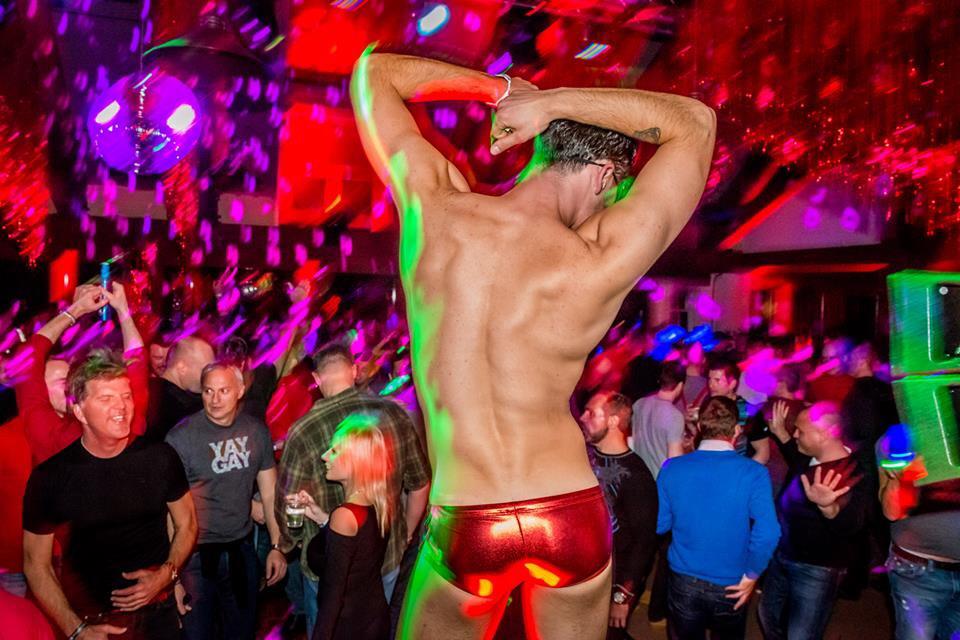
Part of the evolution has been on account of queer people feeling more accepted in greater society—although current anti-trans actions are huge setbacks. As the “community” has dispersed, gay bars have a significantly smaller walk-in clientele. Uber provides another responsible option for a night out but it comes at a cost as well. With gayborhoods less apparent, gay bars were bound to take a hit in terms of business. Grinder, however, has gay bars on life support. 


Yes, as Lin suggests, we’ve been transitioning away from the bars.


For me, I have not been a regular gay bar patron since about 1998. I got in a relationship and both of us considered it a relief to no longer have to go to the bars, getting looked at or, more commonly, being ignored. I saw no reason to be in a cruisy bar when I had a partner. We got dogs and a house (beyond the gayborhood). The focus changed. Domesticity felt so much better than that depressing walk home from a gay bar far too many nights.


When I was single again in 2004, I didn’t run back to the bars. Instead, I ran farther. I bought a home for myself and the dogs on B.C.’s Sunshine Coast, a ferry ride away from Vancouver. Any gay connections all but ended. Gaydar did not extend that far.


I first saw for myself the decline in gay bars during the summer of 2014 when I spent a month at an Airbnb in West Hollywood. I went out one night with my former Santa Monica roommate and his husband, first grabbing a drink at The Palm in Beverly Hills, then heading to a gay bar, The Abbey, in WeHo. 


As I sipped my Tom Collins—too much ice, as always—I looked around to see if anyone was looking my way. It was a clearer than ever no. Having been out of the scene for so long, the difference in gay bar culture in sixteen years was striking. The fact no one was checking me out was same old, same old. But no one was checking out anyone. The people who weren’t talking to friends had their heads down, all of them looking at the palm of their hand—or, more specifically, the phone in the palm of their hand. Even my monogamous(?) married couple friends would look down at their phones. 


“What is going on?” I asked as the naïve, out-of-touch person I was. 


But my friends were preoccupied. Someone was 250 feet away. Someone else, 300.


When they finally explained that they were identifying people as gay with the Grindr app, I thought I was stating the obvious: “But it’s a gay bar.” Why should anyone need a phone to do the communicating? We were all right there. (Some of us without the dang app.) 


In time, the reverse of what I thought would happen occurred. People didn’t quit Grindr when they were in gay bars; rather, they quit gay bars. Who needed them when you could Grind at home… or in a restaurant… or wherever the hell you were at any given moment. No more faulty gaydar. The gays in your area—the ones who had the sense to download Grindr—could be tracked based on distance and private photos. Hot… hotter… HOTTER! 


It all left me cold.


When Jeremy Atherton Lin wrote, “Perhaps the bars were only ever meant to be a transitional phase,” I’d hoped the next phase might be something else. We’d come out of dark spaces with booze spilled on the floors. We could socialize in the open. Queer Meetups, maybe. Connecting based on common (non-sexual) interests. Zoom chat rooms perhaps—a singles social. Better yet, speed dating at the library. Maybe with the decline of bars, alcohol would be less of a problem in the community and we’d meet like other people do at park potlucks, softball games, arts performances. We’d remember each other’s names. We’d have conversations. We’d connect… or realize we didn’t. Real experiences IRL.


Alas, no. Like the gay bar, I too have been phased out. Person-to-person meet-and-greets? WHAT?! Too old-fashioned. 


Everything now fits in the palm of one’s hand. Our phones own us. Is this progress?


Monday, February 17, 2025

SHAPE (Documentary Film Review)


I’ve seen a lot of mediocre documentaries since the introduction of streaming channels. They can be cheaply made, a series of interviews on a single set, a few cheesy reenactments, too often the key people not participating in the production, leaving the “truth” to be told by people two or three degrees from what actually happened. Because of this, I now make snap decisions, tuning out many a documentary within the first five minutes.  


Shape: When Idolisation Leads to Exclusion is an Australian documentary available for watching on YouTube that I may have given up on, but someone I respect as a deeper thinker recommended it to my partner, Evan, and so I decided to stick it out. I would watch it; Evan would watch it; then we’d come together to discuss over FaceTime. Being as we have a Vancouver – Denver long-distance relationship, our version of movie night can take a few days to unfold. 


Shape unfolds on a simple set, a stage on which six different queer people appear separately to offer their opinions on finding one’s place in the gay community and how one’s appearance plays a major factor in a de facto sorting system.


The interviewees, along with how they are identified in the film are: Miss Jay (drag queen); Stewart (casual model / dance party promoter); Stefan (Gen X, 55); Aaron (President, Vic Bears); Budi (intersectionality, equity and justice trainer; consultant; director, Ananda Training & Consultancy); and Glen (associate professor, La Trobe University / clinical psychologist).


Aaron, a self-described bear,
sees gay men as having
restrictive views on body shape.
He believes there is even
work to be done among bears.


Nothing in the film is earth-shattering, at least not for anyone who has been immersed in the gay community in the past several decades. From the film’s outset, I found myself nodding but wondering if I needed to stick with the ninety-minute documentary. It felt like listening to a new alphabet song—all familiar letters, just different rhythms and notes. 


And yet I stayed with it. I resisted the temptation to get up and tidy the living room or do the dinner dishes while the documentary droned on. I wondered if there might be a different take, however slight, when listening to a half dozen people immersed in, or at least exposed to, Australia’s gay scene.


“To be as diverse as we think we are,” Aaron says, “we need to get rid of the discrimination.” Hmm…the differences, if any, would be subtle.


Stefan, in his mid-50s, often
comes across as exasperated 
by ageism amongst gays.


The film is slow in the beginning. With half a dozen interviewees, it takes a while to get to know them. They have each been chosen to offer a slightly different take on gay inclusion, and lack thereof. Connection on film, just as in the gay scene takes time. For many a viewer, the familiarity of the gripes made about gay interactions may lead one to turn away—been there, heard that. 


Still there’s something to be said for the cumulative effect of six strangers, talking separately, yet echoing one another, delivering one consistent message: things are messed up. 


The film becomes most compelling when the interviewees are asked to read and react to Grindr profiles. In the virtual world, many do not even consider the pretense of politeness and acceptance. It’s brutal hearing profiles men have typed, saved and posted that boldly—and offensively—say this is what I want; this is what I don’t want. “This” is not a product, however; instead, it is whole groups of people. We know this about Grindr, but listening to the participants read and respond makes one want to auto-delete everyone’s profile. Grindr is too far gone. Is there a way to start over?


I had another reason to be hesitant in viewing Shape. The main topic is about an important one—how our looks, in general, and our bodies, more specifically—affect our integration into the gay community. I have an eating disorder. Too much talk over body ideals and body flaws can be triggering. I’m presently in one of my greater periods of struggle. One body shot or one phrase might hit me the wrong way and set me back even more. Because of this, I am grateful the film limits its images of body ideals at least until two-thirds in. One shirtless white model, who does not have a speaking part poses between interview segments. Then there is a model who would be called a twink, one who would be a daddy and one who is Asian, each of them fitting a proximation of a body ideal. By limiting the men and images, I did not become overwhelmed by notions of body perfection. 


When the film starts to talk about men portrayed on social media and in ads, there is a deluge of The Body Beautiful but by then I was invested enough in the film and I’d heard enough from the interviewees, each offering a form of support by saying this objectification and the higher stature it brings in the gay community are fucked up. 


Budi, who is of Indonesian
descent, makes many astute
comments about how gays 
discriminate over race, height
and views of masculinity and
femininity.

I didn’t reach for the button to close my YouTube window. I managed to watch the whole documentary without feeling any more messed up than I am. In fact, I went away with my feelings affirmed. Yes, the “community” has some growing up to do. The acceptance and inclusion we seek in greater society is often lacking within the Pride fold, particularly amongst gay men.


In general, I think gays are nicer people. We’re kind; we’re sensitive. 


Until we’re not. There’s the group mentality that I witnessed—and, yes, partook in—as I was coming out in the late ’80s. The gay bar was a sieve, washing away all the Not Good Enoughs, limiting everyone’s gaze to men with seemingly perfect hair, faces and bodies. Little things—a bit of body hair, a possible love handle, an underwhelming bicep—constituted reasons to overlook so many people. “Swipe left” culture existed long before the apps.  


I’ve often lamented that groups of gay men often go through a difficult journey—even now—in coming out, only to find rejection and cliquey behaviors in the very “community” that knows all too well about the struggle to be truly accepted for who we are. Why must we continue to dismiss and discriminate amongst our own?


Shape is worth a watch. Better yet, it’s worth watching with a partner and/or friends. While the messages are familiar, sometimes it helps to hear things from other people, offering another opportunity for reflection about our place in the “community” and what we can do or not do to stop us from swimming in the shallow end so we can explore deeper topics and people. The discussion that can arise during and after watching this documentary might cause some of us to rethink how we view our own, be it ourselves or our community. 


If you do watch it, feel to leave a comment or two about your thoughts. I’m curious to know what takeaways others get from the film.


Friday, July 10, 2020

VOTED OFF THE ISLAND...OR NEVER LET ON

I recognize my dismay this week at seeing Fire Island celebrants forgoing social distancing and face masks goes beyond a health concern. In any other year, similar pics would still ruffle me. Oh, the frivolity! The shallowness!

And, yes, in any other year, they could snap back, “Envious much? Looks like someone doesn’t know how to have a good time.”

If the retort stings a little, it’s because there’s some truth to it.

No one has ever thought of me as one of the fun gays. And never ever has a gay stranger asked to have his picture taken with me—And here I am with a hottie. A real sweetie, too!—in an attempt to boost his likes on Instagram.

Of course, I’m way past Fire Island prime. My Best Before date would have been somewhere around 1992. A few spritzes of Carolina Herrera cologne might have masked any sour milk stench until 1995.

It wouldn’t matter how much tinkling I did with a time machine. At no time have I fit the Fire Island brand. I’m more of an Island of the Misfit Toys kind of guy. (If you think I’m putting myself down, read this, my second most-read post ever...after the one about Ricky Martin, coincidentally a quintessential Fire Islander candidate.)

I’m pretty sure if I’d ever shown up in my twenties or thirties to board the ferry to Fire Island, they’d have refused my money and kindly suggested I spend my day at the Long Island Aquarium instead. A different kind of otters. Penguins, too! Let the overload of cuteness assuage the pain of It Gay denial.

Yes, even in my prime, I’d have been better suited for a spot on my very own Arctic ice floe than standing poolside in a Fire Island crowd, asking the frenemy beside me, “Do you think if I chew this ice cube it will make my abs look less defined?”

Abs. As if.

It’s a little too convenient for me as an “ancient” fifty-something to roll my eyes at the waxed and buffed thong strutters and say the party boys have their priorities out of whack.

Morning selfie, stepping into the shower. Low-fat smoothie. Work.
Another smoothie. Tweets about the Kardashian du jour. Work.
Tanning appointment. Gym. Post-gym selfie. High-protein, low-carb
dinner. “Real Housewives of...Salt Lake City”?? Resting-in-bed selfie.
Nighty night.

God, even without Trump and the coronavirus, 2020 seems like a mess.

Still, back in the day, my life wasn’t all that different. Sure, we had “The Real World” instead of “Real Housewives” and photos had to get taken to the drugstore or little drive-thru huts to get developed. (If anyone pointed a camera toward themselves and pressed the button, they would have looked utterly ridiculous and, dare I say, vain.)

There was no shortage of gym divas who madly tanned and toned between circuit party weekends. I attempted some form of parallel play, showing up without fail to Sports Connection for step classes, a weekly ab-cruncher session and extended weight workouts. My abs stayed absent and my butt never bubbled. For all my curls, I never managed to coax a bicep to come out, come out wherever it was. My impressive leg press load failed to add definition to my chicken legs. It was all pain, no gain.

If I couldn’t muscle up, I figured I could at least lose my love handles. The quest caused me to have a falling out with Ben. And Jerry. (I might not have turned my back had I known that they’d one day discontinue Coffee Heath Bar Crunch.) My fridge was full of nonfat products and six-packs of Tab. For a while, I think I was personally responsible for a resurgence of celery in Southern California produce sections. Num-num.

Alas, the love handles loved me too much.

If weights, twelve hundred sit-ups a day and nonfat cottage cheese had done what they were supposed to do, I might have become a different kind of gay. I would never have fully crossed over—always a geek and never a pill popper (rarely even Tylenol for a migraine)—but I might not have stood out for all the wrong reasons when I was It Gay-adjacent. I might have gotten a little recognition for all the time I’d put in and all the sacrifices I’d made in pursuit of the body beautiful.

I realize how sad that sounds. Pathetic even. I’d come off as so much more evolved if I claimed I’d always focused on what’s inside and if I’d easily accepted my body, flaws and all, never tearing up as Christina Aguilera sang “Beautiful,” never once calling Janis Ian’s “At Seventeen” My Song. But I’m committed to being honest on this blog, even when it exposes the ugly parts of me (and, here, I’m talking about what’s inside). Truth is, I wanted to look good. I wanted to be looked at. My goal was always to find love but I thought, if I looked hot, I’d have options instead of defaults and booby prizes.

My friends crammed in extra sessions at the gym in the weeks leading up to the annual White Party in Palm Springs. I silently marveled at how their extra sets added the right kind of bulk while my body stuck to status quo. As they headed for the desert, I stayed home, sticking to my line that I couldn’t handle the heat.

Peripherally, I knew gays who showed up at Halloween balls dressed as shirtless firemen one year and gold body-painted Adonises the next. My most memorable gay Halloween party costume was as a Crayola crayon. I rocked it in head-to-toe yellow felt.

Even on ordinary Saturday nights at Rage or Studio One in West Hollywood, there’d come a point when the It Gays would send each other stud signals and shed their shirts to show off firm pecs and washboard abs glistening in sweat. Yes, their sweat was sexy. The stares they got were just rewards for all the time they’d put in. I served as a harsh Wall Street lesson: not every investment pays dividends. I kept my shirt on. Always. Once my pit stains got big enough from decidedly unsexy sweat, I’d slip out and walk far too many blocks back to my car alone, trying to shake that pesky Janis Ian song from my head.

Who knows what may have happened if my body had ever become Fire Island-worthy or even Friday night Santa Monica Rooster Fish-worthy (a spot for the non-West Hollywood gays). I’d struggled with an eating disorder for a decade before moving to Los Angeles and coming out. The gay scene didn’t cause my condition but it certainly made things worse.

Sometimes I wished I could somehow magically wake up and be straight. Among other things, it would have meant feeling safer walking alone at night, having less fear about getting AIDS and not having to edit my mannerisms. More than that, it would have taken off so much of the pressure to look a certain way in order to be looked at in return. It would have meant Fire Island never being on my gaydar and maybe a few photos of me lying shirtless by some Club Med pool, downing another Budweiser with one hand, proudly patting a Buddha belly with the other.

Blech. No Club Med. And no Fire Island. At fifty-five, I’m still adjusting to my own little island. Sometimes it feels good knowing my supposed prime is in the past. For many of us, “It gets better” gets even better with age.

Monday, February 10, 2020

DEAD TO YOU

You’ve heard the joke. It shows up on many Twitter bios: “In gay years, I’m dead.”

So I’ve got company. Rainbow zombies.

I suppose the age at which we qualify for a gay death certificate isn’t firmly established. Fifty? Forty? Again on Twitter, I’ve seen gay men bemoan the fact they’re turning thirty-two. I half-expect them to include a selfie, holding up a hand-printed poster board sign: The End Is Near. Or maybe it already happened.

Whatever the age, it’s clear that I’ve passed it. Fifty-five. Off life support. Flatlined. Dead.

And yet I still have a pulse. (Just checked again.) I still bear the signs of youth—and, by that, I mean a zit showed up on my back last week. I almost smiled. Almost. (There was a time in the ‘80s when I think I must have covered all-expense paid vacations to Tahiti for everyone on the Clearasil management team.) My bank account appears active—more withdrawals than deposits, nothing new there. My fridge has a several items with expiration dates still pending. (Never mind that bottle of “Calorie Wise” Kraft ranch dressing on the bottom shelf. There was never anything smart about that purchase.)

Ageism has long existed in the gay community. For a supposedly inclusive group, we’ve thrived on compartmentalizing ourselves, on creating clear divides rather than doing what we expect of others—embracing diversity.

When I first came on the scene, it was at the ripe “old” age of twenty-four. There was a whole back-pocket handkerchief culture still lingering but on the way out. Thank god. I didn’t understand it. For some reason, instilled fear in me. What was the difference between a green hanky in the left pocket and one in the right pocket? Did a yellow hanky really have something to do with urine or did people just find it entertaining to elicit looks of horror from me? If only there’d been Google or any sort of Internet. Dating myself, yes. Or some of you might think of it as carbon-dating.

I don’t recall if young gays were called twinks way, way back then. The common term I remember is chicken, more derisively used to label older gay men as chickenhawks. Being gay felt more underground back then. It was past the time when police would do raids on gay bars and the American Psychiatric Association had removed homosexuality from its listing of mental illnesses (although that news didn’t seem to have reached Texas). That’s about as far as gay rights had progressed. “Fag bashing” still floated about on the bored heterosexual men’s list of Things to Do This Weekend. The cheap thrill alternative was just driving by a reputed gay area, rolling down the window and yelling, “Faggot”, “Cocksucker” or something equally hateful/hysterical. Aside from a few straight women lovingly or not so lovingly referred as fag hags, it was safe to assume that everyone in a gay bar was gay. (The community hadn’t fully embraced bisexuals who were viewed as suspect, guys with one foot in and one foot out of the closet.) Coming out stories, commonly shared, were typically dramatic, often punctuated with references to being kicked out, disowned, damned to hell or simply the cause of a lot of tears and ensuing awkwardness.

I say all this because there was a sense that we were an oppressed group and, for some reason, it bred a sense of survival whereby caustic and campy attitudes were very much in vogue. It wasn’t just drag queens that read one another. Put-downs were part of gay play.

Without a doubt, older gays were often mocked by the younger set. “Look at that old queen...” A drunk older gay man or one who dared take off his shirt or went solo on a mostly empty dance floor made for easy dissing. I attributed all this to a great deal of insecurity—that comes with feeling oppressed—and a sense that in our main playing field, the gay bar, everyone was being sized up. Everyone was ripe for derision. Everyone except the rarefied hotties who knew all eyes were upon them and only paired up their kind, waiting for the dance floor to get crowded before taking off their shirts, and joining in, more grinding than actually busting a move.

I’ll admit that I played along as best I could. (No, definitely not as one of the gods!) The campiness often bothered me. It felt mean. But it went down better with a couple of Tom Collins. (I never took to beer unless I could stuff a half dozen lime wedges down the neck of the bottle.) Being camp was the sanctioned humor du jour and, while I was secretly appalled by many of the comments, I was also awed. How was it that these guys were so quick? I couldn’t keep up.

This is around the time that I honed my self-deprecating nature. If I could freely make fun of myself, it took away the sting of being a target by other gays. In theory, at least, that’s how it was supposed to go.

I will admit that I participated in disparaging older gays. They were easier fodder for people like me who struggled to nail a campy persona. There were certain bars that were almost no-go zones, places where the older among us congregated. We’d go every so often for a laugh, in the same way we’d occasionally do a couple of laps in The Spike, a leather bar. Niche groups. As if the gay community never really broke free from the crushing categorization mindset of high school. Gawking within our own supposed “community”. Lots of “Would you look at her...” Easiest line, often no elaboration required. Whether it was someone in leather or someone whose hair had gone salt-and-pepper, I’d always squirm and make a face of horror when one of my small pack would nod in that direction and say, “There’s your boyfriend.”

It’s all an example of how the “pride” part of gay pride was very much a work-in-progress. More of a fake it till you make it concept. I suppose flaunting pride worked better in parades than donning banners that read, “Gay Shame”.

The point to all of this is that I’d like to think gay culture has evolved. Enlightenment comes with acceptance. Indeed, the old campy humor seems very much passe, preserved by the drag queens but, even among them, it feels more forced than ever.

Here in North America, it seems a stretch to claim to be oppressed, at least for the LGB and Qs in our LGBTQ community. Announcing you’re gay draws fewer looks than saying you got a new tattoo. We can marry—something none of us packed into gay bars in 1990 would have ever believed possible. Sexual orientation is included in hate crime legislation in many jurisdictions. Same goes for housing and job discrimination laws. More to do, yes, but things seem to hinge more on a matter of time rather than on possibility.

Maybe it’s time we change our ways. Some of them, at least. Reflect. Keep whatever is or was good about gay culture but grow as well. All this time we’ve been focused on others changing to accept us. Oh, the strides we’ve made! How about acknowledging that we’ve got some changing to do, too? How about greater acceptance within our “community”?

At fifty-five, I don’t expect to be resuscitated anytime soon. I can accept that this is karma, biting me in the ass for past misconduct. I don’t plan on making buttons that say, “60 is the new 40” and passing them out at Pride. I can learn to knit. Maybe I’ll adopt half a dozen cats. (I’ll knit them little sweaters!) Still, I hope that gay men fretting over thirty candles on a cake can avoid getting their own death certificates until many decades from now. Let them continue to live, to be seen, to be heard and, most of all, to be valued.

Friday, November 3, 2017

HAS THE LINE MOVED?


Never thought Kevin Spacey coming out would have people talking. But, from what I’m seeing online, there is some division on sideline sentencing and whether there is any guilt at all.

I don’t think anyone can convince me that he didn’t cross the line in making the moves on a fourteen-year-old actor. Some people offer the vague defense that many minors go to bars and lie about their age. Not the case here. Spacey knew Anthony Rapp and he knew the guy was a boy. It wasn’t at a bar; it was at Spacey’s space. Could alcohol have played a role? Sure. I just don’t know how drunk you have to be to think it’s okay to come on to someone who is fourteen.

The bigger debate centers around those gay bars between men, not minors. One man says he was groped by Spacey at a bar and suffered Post Traumatic Stress Syndrome as a result. That’s where many seem to side with #TeamSpacey. Some say the other guy must have been homophobic to have such a strong, lingering reaction. Others say groping is a normal act in gay bars. There is no history of gays asserting power over gays, like the advantage men have had over women. Men can be cavemen and, without a woman in the mix, one can expect caveman actions. There’s never been a social check to tell gay men that groping is not okay in a gay environment like gay bars.

I was offended the first times I was groped. What just happened?! Often, the contact came on a crowded dance floor or as a friend and I circulated through the swarms of men packed into a West Hollywood club at midnight on a Saturday night. It was like that grade school “prank” where someone taps you on the shoulder, you turn around and no one claims responsibility. It would happen over and over as classmates laughed. Annoying until you figured out who did it. Then you laughed along with the group, relieved to finally be in on the joke.

In the crowded gay bar, anonymous groping happened. One friend or another would say, “I just got my ass grabbed.” Depending on the groper and or the gropee, the reaction was “Ewwww” or “Congratulations!”


I was always incensed. To be sure, I wanted to be noticed. I wanted a boyfriend and, in the late ‘80s/early ‘90s, the gay bar seemed like the best option. (Seems sad when I type that.) An ex of mine in L.A. said I had a perpetual deer-in-the-headlights look to everything. And he meant everything, gay or otherwise. Like I was some country bumpkin when I was actually a nice, naïve Canadian boy who happened upon Los Angeles by way of Texas. (It stunned me that everything about that self-description was considered a turnoff to most guys I met.)

For the record, I never took my shirt off in a gay bar either.
Part shyness, part body image issue, part common sense.
As long as I didn’t share anything about myself, I remained grope-worthy, at least to a few. Some weren’t even all that drunk. I never suffered PTSD. Groping was part of the gay bar ambience, along with all that smoke that seeped into my clothes, skin and lungs. The fact I found groping offensive made me feel like a bad gay. If it was someone I wasn’t into which was almost always the case—friends said I was too picky (Uh,…thanks?)—the grope was too forward, too creepy. On the rare occasion, I thought the guy was hot, the act left me confused. Is that like a bad pickup line? What am I supposed to do now? Grope back? Why couldn’t he have just said hi?

“You just need to get laid,” a peripheral friend would say. But then he’d disappear for the rest of the night to,…you know.

To be sure, I wanted to be noticed. I wanted a boyfriend and, in the late ‘80s/early ‘90s, the gay bar seemed like the best option. (Seems sad when I type it.)

“You can’t be so sensitive,” a closer friend said. “And don’t you think he’s kinda cute?”

Miss you, Mary.

The answer was usually “No” and occasionally “Not anymore.” And then ten or fifteen minutes later, I’d say goodbye to whoever was still present in my little group of barflies, walk back alone to my parking spot, closer to The Beverly Center than the bars, and drive home, wondering, What’s wrong with me? Is this what gay is all about? Wasn’t the theme from the “The Mary Tyler Moore Show” supposed to be my song? What if I don’t make it after all? (Maybe I should’ve been more literal with my inspiration and followed Mary Richards to Minneapolis.)

My indignation made me a fuddy-duddy. I was out but still an outsider. Frequently I’d ask, “Is this all there is?” although I learned to keep the question in my head after the fuddy-duddy label. (I gave it to myself. People would just hear me rant, put their drink down and say, “Yeah, I think I’m going to check out the scene at Micky’s.”)

Basically, the feedback I got—expressly or otherwise—was that groping was just part of the gay bar scene. It’s what gays do along with drinking too much, taking Ecstasy and staring at the crotches of go-go boys. Too much real conversation was overrated, a buzz killer.

I revisited L.A. a few months before I turned fifty (I’m still pretending that was just yesterday) and some of the same friends and I found ourselves back in the same West Hollywood Clubs. There was a déjà-vu as the peripheral friend dumped us within the first forty-five minutes, leaving with a muscled twenty-something as though nothing had changed. At Rage, we danced and I got groped by a sexy man two decades younger than me. Instead of outrage, I was flattered, a sad reaction to what I’d always shunned. I knew all too well that I’d reached pasture-grazing status in the gay world. I didn’t have a beach home in Huntington Beach or drive a Mercedes or have personal trainer sessions three times a week like my ageless, never-worked-a-day-in-his-life peripheral friend. This ass grab made me feel noticed and younger. The guy didn’t even flee the bar when I turned and he saw my face in the admittedly dim lighting. Later, my group drifted to Revolver and yet again I got groped by another attractive younger guy. Still no indignation. Still flattered. I was a hypocrite. I was that desperate to feel young again, to feel looked at—even with a leer—instead of being looked past.


Maybe it is time for a new etiquette in what few gay bars remain. Before my time, I’d heard about sex in dark corners and backrooms but, at least to my knowledge, those things were the lore of an earlier generation. And, thankfully, I never had to figure out the colored hanky codes. We’ve done away with smoking in clubs. Perhaps it’s time for kamikaze groping to be retired, too. Should be easy to do away with. Anyone who wants random contact can hookup online or at some outdoor site that’s widely talked about on other internet sites. Maybe the clubs can turn up the lights a notch and people can actually get to know one another through sustained conversation. If we go retro, let us “Vogue” without that extra hand movement. Can we stop the anonymous groping in bars or is this still the wishful thinking of a (hypocritical) old fogy?