Showing posts with label acceptance. Show all posts

Monday, November 10, 2025

EAVESDROPPING ON HOPE


I went swimming at a public pool beside a local high school on Friday. My normal swim day is Wednesdays so I was taken aback when, in the middle of my workout, my lane was closed down. This left only one lane for swimming laps—the slow, medium and fast swimmers merging into one. Let’s just say I was not happy. When I asked the lifeguard if this was going to be a regular thing, the poor guy shrugged and said, “I don’t know.” He’s the guy that just shows up to do his shift.


As it turned out, the slower swimmers got out of the pool, leaving the lane to just me and one other swimmer. Our speeds were comparable. I focussed on just swimming laps, getting my workout in. But around me, there was a lot of cheering and shouting. Each time I would turn to the side to get a breath while swimming freestyle, I could see a large group of people who looked student-aged standing fully clothed along the side of the pool. They seemed to be the ones causing the commotion.


It was only after I finished my last lap that I came up for air and saw what the ruckus was all about. This looked like a group of grade eight students, roughly 13 or 14 years old. They were cheering on their classmates who had constructed small, one-person boats out of cardboard. The objective was for the boat makers to paddle their craft from one end of the pool to the other while trying to keep their cardboard structures afloat. The scene was comical and chaotic at the same time.


Let’s just say there’s a reason freighters aren’t made from cardboard.

I got out of the pool and showered, then proceeded to get dressed in the changing room. While this was going on, two of the students who had taken unfortunate plunges in the pool, entered the locker room to change out of their wet clothes.

One of the boys said to the other that he’d forgotten to pack a towel. “What were you thinking?” said the other boy.

“I asked my dad to pack a bag for me,” came the reply.

The other boy lightly mocked his classmate. “What… You get mommy to pack for you?”

The boy without a towel took the question literally. His answer: “My mom is in India. “

“What?! How is that?”

At this point, I was tempted to butt in, even though I knew it was not my place. I wanted to give the towel-less kid (Boy 1) some support. I wanted to explain that, based on my years as a school principal working in diverse neighbourhoods, there had been a lot of families from India. It was common for one or more members to go back to India for one to two months at a time. This was practical. Why travel so far only to turn around again after a short visit?

Boy 1 handled things on his own. “My family’s complicated. “

“How so?”

“It’s a long story,” said the boy, perhaps wanting to dodge the explanation.

“I’ve got the time,” said his curious classmate. (This amused me.)

“It’s about surrogacy.”

“What’s that?” Boy 2 asked.

“It’s when you take an egg—”

“Oh! You mean a surrogate.”


“Yeah,” Boy 1 said. “My dads are gay.” This time there was no hesitation. 

As my back was to the two boys, I assume the boy without the towel simply nodded his head. Boy 1’s explanation was taken matter-of-factly. There was no ridicule or teasing about the fact his dads were gay. No need to ask questions. It just was what it was.


Instead, the conversation passed without a segue to a more involved negotiation about how to scrounge up enough money for the two of them to buy pizza for lunch.

I am heartened by this conversation. Despite regressive actions from conservative adults who happen to be in positions for making and changing laws, this younger, non-voting age group seems to take in stride differences related to LGBTQ identities. They are growing up with freer forms of expressing themselves and seeing their peers do the same. While some lawmakers are desperately trying to keep a lid on All Things Gay, messages, conversations and supports are out there, both online and in person. 


Fourteen years ago, I was pleased but skeptical when the book, It Gets Better, was published, with words of encouragement from notable people. I thought it was a noble project, but I wondered how it would be received by some 13-year-old who was actively being bullied or living in a household where anti-gay remarks were regularly made by parents. How does Hold on until you’re 20 help a young teen cope? When you’re 13, 20 feels like a lifetime away.


But now I can view the book over a longer trajectory. Since 2011, despite setbacks, things truly have gotten better. It’s not a time for complacency—there is more to be done and supposedly enshrined rights may still be volatile—but there is evidence that things are getting better for younger people, for both those who identify as LGBTQIA+ and those who don’t. One of my favourite sayings, You Be You, appears to have more traction with this age group. There will always be ways to put peers down but perhaps queerness is less likely to be the cause for ridicule. 


Seems I got more than just a workout from my trip to the pool.

Monday, February 17, 2025

SHAPE (Documentary Film Review)


I’ve seen a lot of mediocre documentaries since the introduction of streaming channels. They can be cheaply made, a series of interviews on a single set, a few cheesy reenactments, too often the key people not participating in the production, leaving the “truth” to be told by people two or three degrees from what actually happened. Because of this, I now make snap decisions, tuning out many a documentary within the first five minutes.  


Shape: When Idolisation Leads to Exclusion is an Australian documentary available for watching on YouTube that I may have given up on, but someone I respect as a deeper thinker recommended it to my partner, Evan, and so I decided to stick it out. I would watch it; Evan would watch it; then we’d come together to discuss over FaceTime. Being as we have a Vancouver – Denver long-distance relationship, our version of movie night can take a few days to unfold. 


Shape unfolds on a simple set, a stage on which six different queer people appear separately to offer their opinions on finding one’s place in the gay community and how one’s appearance plays a major factor in a de facto sorting system.


The interviewees, along with how they are identified in the film are: Miss Jay (drag queen); Stewart (casual model / dance party promoter); Stefan (Gen X, 55); Aaron (President, Vic Bears); Budi (intersectionality, equity and justice trainer; consultant; director, Ananda Training & Consultancy); and Glen (associate professor, La Trobe University / clinical psychologist).


Aaron, a self-described bear,
sees gay men as having
restrictive views on body shape.
He believes there is even
work to be done among bears.


Nothing in the film is earth-shattering, at least not for anyone who has been immersed in the gay community in the past several decades. From the film’s outset, I found myself nodding but wondering if I needed to stick with the ninety-minute documentary. It felt like listening to a new alphabet song—all familiar letters, just different rhythms and notes. 


And yet I stayed with it. I resisted the temptation to get up and tidy the living room or do the dinner dishes while the documentary droned on. I wondered if there might be a different take, however slight, when listening to a half dozen people immersed in, or at least exposed to, Australia’s gay scene.


“To be as diverse as we think we are,” Aaron says, “we need to get rid of the discrimination.” Hmm…the differences, if any, would be subtle.


Stefan, in his mid-50s, often
comes across as exasperated 
by ageism amongst gays.


The film is slow in the beginning. With half a dozen interviewees, it takes a while to get to know them. They have each been chosen to offer a slightly different take on gay inclusion, and lack thereof. Connection on film, just as in the gay scene takes time. For many a viewer, the familiarity of the gripes made about gay interactions may lead one to turn away—been there, heard that. 


Still there’s something to be said for the cumulative effect of six strangers, talking separately, yet echoing one another, delivering one consistent message: things are messed up. 


The film becomes most compelling when the interviewees are asked to read and react to Grindr profiles. In the virtual world, many do not even consider the pretense of politeness and acceptance. It’s brutal hearing profiles men have typed, saved and posted that boldly—and offensively—say this is what I want; this is what I don’t want. “This” is not a product, however; instead, it is whole groups of people. We know this about Grindr, but listening to the participants read and respond makes one want to auto-delete everyone’s profile. Grindr is too far gone. Is there a way to start over?


I had another reason to be hesitant in viewing Shape. The main topic is about an important one—how our looks, in general, and our bodies, more specifically—affect our integration into the gay community. I have an eating disorder. Too much talk over body ideals and body flaws can be triggering. I’m presently in one of my greater periods of struggle. One body shot or one phrase might hit me the wrong way and set me back even more. Because of this, I am grateful the film limits its images of body ideals at least until two-thirds in. One shirtless white model, who does not have a speaking part poses between interview segments. Then there is a model who would be called a twink, one who would be a daddy and one who is Asian, each of them fitting a proximation of a body ideal. By limiting the men and images, I did not become overwhelmed by notions of body perfection. 


When the film starts to talk about men portrayed on social media and in ads, there is a deluge of The Body Beautiful but by then I was invested enough in the film and I’d heard enough from the interviewees, each offering a form of support by saying this objectification and the higher stature it brings in the gay community are fucked up. 


Budi, who is of Indonesian
descent, makes many astute
comments about how gays 
discriminate over race, height
and views of masculinity and
femininity.

I didn’t reach for the button to close my YouTube window. I managed to watch the whole documentary without feeling any more messed up than I am. In fact, I went away with my feelings affirmed. Yes, the “community” has some growing up to do. The acceptance and inclusion we seek in greater society is often lacking within the Pride fold, particularly amongst gay men.


In general, I think gays are nicer people. We’re kind; we’re sensitive. 


Until we’re not. There’s the group mentality that I witnessed—and, yes, partook in—as I was coming out in the late ’80s. The gay bar was a sieve, washing away all the Not Good Enoughs, limiting everyone’s gaze to men with seemingly perfect hair, faces and bodies. Little things—a bit of body hair, a possible love handle, an underwhelming bicep—constituted reasons to overlook so many people. “Swipe left” culture existed long before the apps.  


I’ve often lamented that groups of gay men often go through a difficult journey—even now—in coming out, only to find rejection and cliquey behaviors in the very “community” that knows all too well about the struggle to be truly accepted for who we are. Why must we continue to dismiss and discriminate amongst our own?


Shape is worth a watch. Better yet, it’s worth watching with a partner and/or friends. While the messages are familiar, sometimes it helps to hear things from other people, offering another opportunity for reflection about our place in the “community” and what we can do or not do to stop us from swimming in the shallow end so we can explore deeper topics and people. The discussion that can arise during and after watching this documentary might cause some of us to rethink how we view our own, be it ourselves or our community. 


If you do watch it, feel to leave a comment or two about your thoughts. I’m curious to know what takeaways others get from the film.


Tuesday, January 24, 2012

WHAT TO DO ABOUT BULLYING—PART THREE

SUPPORTING THE VICTIM: HOW TO MAKE IT BETTER SOONER RATHER THAN LATER

This is one of a continuing series. You may read Part One, “A ‘VICTIM’ IMPACT STATEMENT,” here. To read Part Two, “UNDERSTANDING THE MINDSET OF THE ‘VICTIM’,”click here. Subsequent posts will deal with the bullies and the bystanders.

If we really want to make growing up more tolerable for gay and lesbian teens, we have to start years before that. There are books about two mommies and two daddies that teachers still shy away from. I can take a reasonable guess at what they’re thinking: Why stir up a fuss and get a church-affiliated parent group going to the media saying that I am promoting the homosexual agenda? Realistically, these books are rarely ordered for school libraries let alone used as part of classroom instruction. Right or wrong, we’re not there yet.

Nonetheless, the foundation of acceptance can be laid in elementary school. There are many books on differences and atypical friendships. There is a picture book about a squirrel with OCD and a classic from 1934 about a bull that would rather sniff flowers than fight. Unusual friendships can be found in a wordless book about a fox that loves a chicken as a companion not a main course, a series about a cat that is best buds with a mouse, a story about a tractor’s love for a cow and yet another cow story about befriending a pig. There is a princess who seems to do things backwards. There is a big wolf that discovers he likes the companionship of a little wolf. A favorite of mine involves a straight guy—literally, he’s drawn with all straight lines—who struggles for acceptance in a town where everyone and everything consists of scribbles.

I could go on. Children’s authors and publishers love the themes of differences and accepting yourself for who you are. Teachers do read these books to classes and use them as wonderful discussion starters. All that needs to happen is these discussion starters need to be used as comfortable springboards for dealing with the “That’s so gay” comments that children blurt at young ages. Gay describes two teen boys or two teen girls who love each other. It also describes two men or two women who love each other. Keep it simple. Talk about how the putdown would offend these people. Kids get it. Each time a gay putdown is uttered, deal with it. Teachers establish the climate of a classroom and a playground. How we deal with one another in respectful ways should take priority over the area of a circle. Let’s put things in perspective: I’ve never had to use that math formula as an adult, but I deal with differences every day.

Starting in grade five, the gay putdowns increase, particularly in the change room after gym and on the sports field. Many who taunt learn to whisper their insults, but teachers need to continue to create an environment where putdowns can be reported and addressed. Some of the most impulsive boys never learn how to speak quietly. Their whispers would wake a hibernating bear. More teachers now address comments that are brought to them, but that is not enough. You don’t have to be an eavesdropper to pick up on inappropriate language and gay putdowns. Teachers and coaches need to consistently address what they hear, not just what is reported. Any leeway will only snowball into something bigger. How a teacher deals with what is heard makes all the difference. If talks lead to punishment, the person who reports is deemed a tattletale or a rat. If the issue is dealt with in a way to foster understanding rather than to impose punishment, then there is no resentment (or wrath) imposed on the person who reports the putdowns.

In British Columbia, teachers and other adults can cite the law to support their talks about homophobia. The B.C. Human Rights Code states that it is illegal to discriminate based on a person’s sexual orientation. Having legal protection against homophobia is vital. Sexual orientation must be expressly included in any laws designed to prevent discrimination. Express mention gives tentative teachers something very clear to rely upon. Laws bring validation but they also provide vital support. Parents cannot successfully accuse schools of “promoting the homosexual agenda” when laws clearly state that discrimination is not allowed.

To recap, there is literature to support meaningful discussions about accepting people with differences. Fictional accounts can be safe springboards for meaningful discussion. Many picture books contain messages that can be applied to a wide range of situations. As well, in many jurisdictions, protection from discrimination based on sexual orientation is enshrined in legislation or through court rulings. The legal language provides clear support for creating an environment that disallows homophobia. More than anything, adults need to take the lead. They need to address putdowns in order to foster an atmosphere of acceptance where all children can thrive without fear of bullying. No more turning the other way. No more pretending not to hear or see. No more saying, “Just ignore it.” No more responses that are the equivalent to “Buck up.” Our young people deserve more from the adults entrusted with leading them and shaping them into respectful, responsible citizens.

Monday, December 19, 2011

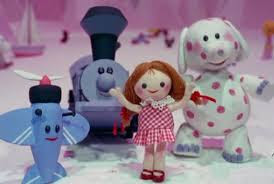
YEP,..."RUDOLPH" IS GAY


The rumors are out there. Bert and Ernie. Tinky Winky. Waylon Smithers from “The Simpsons”.

I want them all to be gay. (Somewhere in a red state, an aide for a Republican Congressman is citing my blog as proof that the gays recruit. A clear distortion. I have no affinity for Teletubbies, but if one of them is gay, I welcome him/it.)

Young or old(er), we all like to have people/creatures with whom we can identify. Some celebrities are openly gay, but I cannot relate to this one or that one . (Heck, maybe it's just the name. I cannot relate to this guy or that guy either.) Sometimes I have to settle for making glorified sock puppets my role models.


And stop-motion animated Christmas characters.

Yes, Rudolph. To me, the Rankin/Bass television classic “Rudolph the Red-Nosed Reindeer” has so much to say about being gay. I watch it every December and find myself referring to characters, scenes and songs even in August. Usually, I have the sense to think in my head rather than out loud. Seems it’s more socially acceptable to constantly quote from “The Wizard of Oz”. I
am one of the friends of Dorothy, but there is room for a reindeer as well.

“Rudolph” is all about being different, feeling different and being misunderstood. And it’s not just our now-beloved reindeer. Early on, Hermey, the only elf at the Pole with thick wavy blond hair, knows the standard elfin life is not for him. (Hermey’s odd name could be a tribute to the ancient god Hermes or to the venerable Hermès fashion house.) He wants to be a dentist, but is told in no uncertain terms that such a path is unacceptable. Elves make toys. He must conform. No break for him. While the other elves presumably drink cocoa and eat Keebler cookies, Hermey is forced to suppress his true self and bang out more toy trains. Hermey can’t do it. Hermey won’t do it! Instead, he sings melodic lines penned by Johnny Marks: “Why am I such a misfit? I am not just a nitwit. You can’t fire me, I quit. Seems I don’t fit in.”

Oh, Hermey, I feel your pain. And, please, I have nothing against elves. Tangential confession: When I was in grade three, I planned to leave home. Nothing against my family (then, at least); I had a higher calling. I decided to stay awake on Christmas Eve until not a creature was stirring and then scurry over to the fireplace to wait for Santa. I had to make my plea for the jolly guy to take me back to the Pole. I wanted to be an elf. No joke. Making toys for nice kids seemed like a noble profession.

Okay, so back to “Rudolph”, Hermey in my mind is clearly gay...and strong enough to break free from conventional expectations. While others admired Superman, Ironman and Batman, Hermey the elf was my hero. I suppose Hermey may be part of the reason I travel sixty kilometers each way to see my gay dentist.


So we’ve got Hermey figured out. How about Rudolph? True, he crushes on that young doe, Clarice. And he becomes gay in the “happy” sense at the very least. Rudy may not be gay, but he would certainly join a gay-straight alliance if they had one at reindeer school. Accustomed to rejection and ridicule, Hermey and Rudy are initially tentative. “You don’t mind my nose?” asks Rudolph, to which the elf responds, “Not if you don’t mind that I’m a—“ wait for it—“dentist.” In a precious part of the script, Hermey and Rudy agree to become independent...together. Rudolph also represents being different and being shunned. He questions himself, singing the same tune as Hermey with a different final line: “Why don’t I fit in?”

Poor Rudolph. Growing up is tough when you don’t feel “normal”. The name calling. The shame that his own parents project. My gosh, they insist that he cover up the part of him that makes him different.


Intolerance comes to a head when Rudolph’s true nose is uncovered at the testosterone-heavy reindeer school, a place where Coach Comet states, “My job is to make bucks out of you.” The coach, in fact, takes the lead in shunning the different pupil, telling his other students, “We won’t let him play in our games.” Even the supposedly benevolent Santa condemns the red-nosed reindeer upon discovery of his uniqueness, saying to the father, “Donner, you should be ashamed of yourself.” As I watch the show now, the behaviors of the elf supervisor, Santa, Donner and Coach Comet are far scarier than those of The Abominable Snow Monster.

I so empathized with the rejected reindeer.

But writer Romeo Muller (adapting the short story by Robert May) drives the theme of being different home with more examples. As a team, Hermey and Rudy set off on their own. They encounter an eccentric by the name of Yukon Cornelius who seeks his fortune in silver and gold. Though rough around the edges, Cornelius does not hesitate to befriend and assist Rudy and Hermey. “Climb aboard, mateys.” Full acceptance. You are who you are.


And to drive home the point about differences, the trio drift onto The Island of Misfit Toys. They meet the unwanted, the unloved, the banished: Charlie-in-the-box, a spotted elephant, a “choo choo with square wheels”, a cowboy who rides an ostrich, and a water pistol that shoots jelly. Rudy and Hermey think they have found a refuge, but they cannot stay. The island is for toys, not living creatures (a seemingly technical distinction since the toys talk, sing, dance and express feelings). They do not even belong among other misfits.

Rudolph sets off on his own in the night, fearing his unique trait will continue to bring detection and danger from the fierce Abominable Snow Monster. Eventually Rudolph reunites with family but he fails to fend the monster from Clarice and Rudolph’s parents. Cornelius and Hermey (yes, my childhood hero!) save the day. Hermey’s dental skills prove essential in reforming the formerly beastly “bumble”.

And because this is one of those happily ever after tales, Rudolph, Hermey and even The Abominable Snow Monster are welcomed back at Christmastown. The adults finally show acceptance (though Coach Comet is silent). Hermey can be a dentist. Rudolph need not cover that distinct nose. The Not-So-Abominable creature can put the star atop the tree. Even the misfit toys are rounded up and delivered to homes where they will be welcomed and loved. Each is needed. Each is valued.


Produced forty-seven years ago, “Rudolph the Red-Nosed Reindeer” was my annual dose of acceptance at a time when there were no openly gay role models. Am I being too egocentric in thinking that Hermey and Rudolph are all about the gays? Other minorities, others who feel they don’t fit in are most welcome to identify with the show and the characters. But I make no apologies for my own interpretation. “Rudolph” continues to entertain while also nudging society to be more open, more tolerant, more loving.

Watch it again. Sing along to the timeless tunes. Most importantly, think about the message.