Showing posts with label LGBT rights. Show all posts

Monday, September 9, 2024

ALIGN YOUR ALLIES


There’s a wonderful clip of Democratic Vice Presidential nominee Tim Walz speaking before the Human Rights Campaign this past weekend. He says, “It’s easy to be an ally when it’s easy to be an ally. What really matters is knowing who’s going to be at your side and stand up when it’s hard.” He said this after sharing an anecdote about stepping up to be the advisor to the Gay-Straight Alliance at the high school where we worked as a coach and teacher in the ’90s.


I was a teacher then as well. I worked in elementary school and we didn’t have GSAs at the time. Still, I’m not sure I would have stepped up had I been asked. In some regards, Coach Walz was bolder than me. I would like to think I would have done it, but I know I would have at least hesitated. I would have told myself it would be easier for a straight coach to take on the role. Coach Walz married his wife, Gwen, in 1994. Any whispers about him being gay (since he supported a gay club) would not have gained traction and, even if they had, he could easily shake them off. He was a straight man, no doubt about it. 


I, on the other hand, was openly gay on staff. It was easy at that particular school since three other gay men were on the faculty. One of them zeroed in on me on my first day subbing at the school before I landed a regular position. I was not out among students and parents. One parent suspected I was gay and, during the first week of school went to the principal to demand that her daughter be assigned to a different grade seven classroom. The principal acquiesced. The episode shook me. The student really liked me from my days subbing at the school. I know she’d have been highly motivated in my class and she’d have thrived. But mama was a homophobe and the principal liked “problems” to go away ASAP.


I became more closeted at all the schools I worked at thereafter. There wasn’t another gay colleague on any of those staffs. I never shook that worry that someday everything might blow up on me. Multiple parents would complain, students would be in the know and snicker constantly in class, my credibility tarnished by a distraction. What if a student made a false allegation? I never came out again to any group at any school. I felt certain staff knew and many parents as well but no one raised the subject and I grew resentful of always having to make what felt like dramatic reveals about my sexual orientation in any area of my life. I grew very adept at handling gay putdowns when students would try to belittle one another. These were teachable moments and I never shied away from them. I was an unofficial ally, but I never stepped up specifically as a role model. 


Hats off to the Coach Walzes of the world. Hats off to the queer teachers who had photos of their partners proudly displayed on their desks. (Most of my years, I didn’t have a partner. Pics of my schnauzers assumed prominent spots on my desk instead.)


Whether it is for students or for adults who identify as something under the LGBTQ+ umbrella, allies are still vital. Allies need to be seen and heard now as much as at any point in my lifetime. We have had allies step up during the AIDS crisis, when the right to work in the military was at stake, when protections from housing and employment discrimination were up for debate and when gay adoption and marriage equality were at play.


Queer rights remain at issue. For my entire life, they have been used for political purposes to drive a wedge between voting blocs, to divide based on differences rather than to unite in spite of them. (Oh, how refreshing it would be to be embraced and accepted, once and for all! In my lifetime? Still a dream.)


Now is a time to forsake timidity—my old standby demeanor—and embrace the boldness within us. It is time to actively support the queers with the biggest target on their backs: trans and non-binary folks. It is time to engage in conversation to better understand what trans people are up against. If you don’t have a trans friend or acquaintance or if they don’t feel like bearing the weight of educating everyone for whom they are the token trans friend/acquaintance, then there is plenty that can be read through podcasts, firsthand blogs and published memoirs. Dig a little. Get out of your bubble. 


I fully believe that denials of trans rights will embolden haters to rollback other queer rights. Pride festivals, most of which are over and done with for this year, create an illusion of acceptance and may instill a sense of complacency rather than empowerment. Look at our numbers! Bigger than a Trump crowd!


On the macro level, Pride celebrations are easy events in terms of queer participation and allyship. (Yes, at a micro level, a questioning or newly out person makes bold steps attending any Pride function. I shook with both excitement and fear—what if I’m on news footage?—when I went to my first parade.)


Globally, there are swings to the right, as happened recently in Germany and as I fear will happen in the next Canadian federal election. All eyes seem to be on the U.S. right now and the stakes couldn’t be higher in terms of free press, democracy, women’s rights and, yes, LGBTQ rights. Trans people are being played in a political version of Fear Factor with ludicrous talk about girls losing places on sports teams, children undergoing operations while at school and, still, invasions of bathroom spaces. Indignancy about pronouns gets tossed in, too. All this goes unchecked in conservative media, for many their chosen—and only—source of “news.” All this also riles up those who don’t know queer people, who don’t hear about queer experiences, who don’t see how much alike queer people are to them. 


It's time for queers to do a little bonding. It’s also time for allies to have the conversations that queers get shut down from having. This would be one of those times that Tim Walz is referring to as when it’s harder to be an ally. These talks can make a difference, maybe not with too-far-gone Uncle JD (don’t bother; just keep away to protect your sanity), but with sheltered cousin Ken and good-at-heart neighbor Carol.


When my parents, who live in Texas, visited in June, I talked about more of my own negative experiences. I got very specific about what felt like homophobic harassment on several occasions with U.S. Border Patrol agents. I talked about my trans friend who has gone through a momentous year in terms of their journey to live their true identity. I talked as well about how trans people are being used as pawns.


At first, my parents tried to shrug things off. “Oh, that’s just Trump,” and “We vote based on other issues.” But I persisted. They have the privilege of shrugging because they are not targeted. But this rising culture of hate is deeply personal to me and choosing to vote based on other issues does not send a clear message that hate will not be tolerated. It tacitly allows it. These politicians take my parents, lifelong conservatives, fiscally especially, for granted. In the pocket. Without taking a stand, or at least not voting in certain political races, homophobe-pedaling politicians keep the traditional conservatives while riling and building up a base that does respond to unchecked allegations of They/Thems taking over the country, somehow taking something away from lowercase them. 


Eventually my parents said, “We didn’t know.” (They are Wall Street Journal readers rather than Fox News watchers.) I knew this was the right moment for me to say with conviction, “It affects me. This is personal. This affects your son and so many other people just trying to live their own normal lives.” 


It got quiet after that. When people truly listen, they also need time to process. 


Did they shift?


Maybe? A little bit? 


I had my say. I know that. It’s time for LGBTQ+ people and our allies to step into this harder time, to make sure loved ones living in conservative bubbles hear another side. Truth. It’s time to be polite—shouting and putdowns aren’t going to create forums for listening much less lead to progress—but resolute. LGBTQ+ issues matter. Our advocacy, as queers or allies, is essential.

Monday, January 21, 2019

DOLLAR DAYS

For the past six weeks, I’ve sat on the news that Canada will debut a gay dollar coin this year. To blog or not to blog. My first reaction: “Hmm,...the coin seems a bit much. Is it really necessary?” And so I kept the article as an open tab on my laptop and mostly ignored it.
But as time has passed, I’m seeing greater significance in this coin and I’m looking forward to seeing what it looks like, to holding it, to stashing one or two in my odds-and-ends drawer, in time sinking to the bottom below dog-bone-shaped paper clips, an old photo of an ex and an incriminating pack of matches from Chaps Lounge.
My humble, don’t-cause-a-ruckus present-day self saw the new coin as governmental silliness, like when the United States Post Office held a vote for the Elvis stamp—fatter, older Elvis versus suave, hip-shaking younger Elvis. (I voted for the pelvic thrust.) But being blase started to feel being ungrateful.
The coin marks a fifty-year anniversary of the decriminalization of homosexuality in Canada in 1969 and, considering how relatively short that span is, the changes have been absolutely astounding. Born in 1964, I’ve lived through the entire process. And, because my life has been irrevocably shaped by prohibitions and seeming impossibilities during that time, I’ve come to regard a simple coin as the least that can be done to commemorate darker times and the gains the LBGTQ community has realized.
There was a time at the peak of the AIDS crisis when my friends and I made our own gay money. Once a month, I’d meet with a small group of volunteers who buddied up with persons with AIDS in Los Angeles, sharing struggles and the emotional toll. During a break, we’d take all our bills out of our wallets and one of the guys would stamp them with a pink triangle and the words “Gay Dollar”. This was before debit cards and credit cards were so ubiquitous and there were times I was too embarrassed to pay with my stamped money so I’d write a check.
Over time, I felt more empowered and grew to be as “in your face” as my meek self could ever be. I got my ear pierced, slapped a pink triangle sticker on the bumper of my Honda Accord and occasionally donned one of a couple of gay t-shirts.
I’m sort of here,
I’m queer,
Get used to it (please, if that’s all right with you).
Like many who grew up during the time AIDS was a death sentence, my awakening arose from anger at the sense gays were dispensable. By this time. I was living in the U.S. and had endured a stint of time in Texas, deep in the Bible Belt, before fleeing to California. I’d already thrown up my arms over the oft-stated notion that gays were perverts and degenerates. How do you argue with people who so freely fuel hate with ignorance? What truly maddened me was seeing a creative, vibrant loving group in society getting decimated while officials fretted over toilet seats, plastic gloves and “family values”. As incensed as I got thirty years ago—even participating in protests—the “faggot” taunts and that condescending “Love the sinner, hate the sin” mantra still fester deep inside me. I grew up feeling defective and less than. Sadly, that doesn’t change with enlightened legislation.
I never envisioned marrying a man. I never heard any discussion on the topic during my formative gay years. AIDS overshadowed all else. Even now, gay marriage feels like a right for others, not me. While I see elderly men publishing wedding announcements in the “Vows” section of The New York Times and silently cheer their special day, gay marriage seems like something that’s more for a younger generation, people who are growing up with it as a right.
I spent almost all of my career in the closet, even if it seemed the door was wide open most of the time. It felt like an open secret but having my homosexuality as any kind of secret still proved damaging. As a teacher, I feared I would lose my job. I began work in a Catholic school in Texas, with nuns by my side. I felt certain I’d be fired if they ever found out. During this same time my sister asked for me to be her daughter’s godfather but then rescinded the offer when I told her I was gay and her Catholic priest told her the Church would not recognize me as a godfather.
I grew up hearing that gays were pedophiles. I feared false accusations if I were out and a student didn’t like a low grade on a major project. I envisioned parents protesting me as their child’s teacher. (It happened once, at the only school where I was out to staff at least. One parent had her daughter transferred to another classroom, the principal opting for appeasement rather than standing up to prejudice.) When I became a principal, I didn’t care much anymore, but I didn’t want my gay identity to be a distraction. (Yes, I hear the internalized homophobia in that statement.) Growing up in a society where gays were hated, shunned, even condemned has done long-term damage.
I also never adopted a child despite a yearning to do so, beginning with my early work with persons with developmental disabilities. Several children I worked with were wards of the State of Texas, their parents having relinquished all rights either due to egregious acts of abuse or a lack of desire to raise someone with so many needs. The inkling began when I was eighteen and I supported persons with special needs at both a parks program and in two group homes. Sammy, a sixteen-year-old Mexican American with burns over much of his body due to abuse from his father, communicated in simple sentences, albeit with significant speech difficulties. He could print his name and a few basic words. He was gifted, relatively speaking, in terms of athletics, especially swimming and running, and his initial withdrawn nature gave way to an exuberant personality with a robust laugh. Sammy deserved a better life yet I presumed courts wouldn’t approve placing him in an eighteen-year-old’s care.
My most intense work with persons with special needs occurred after finishing university, when I was between twenty and twenty-four years old. Like many in the field, there were days when I felt, If I could just take you home and raise you... Yes, many deserved better lives. I knew there was a need for adopting persons with special needs but my own internalized homophobia got in the way yet again. Despite what is probably my own gift in working with children, I never felt worthy enough to be a parent. I always felt that if I were a gay dad it would create more of a liability for the child.
To be sure, not having children is my greatest regret. I acknowledge that some of it was my own doing but society’s view of homosexuals and its opinions regarding gay adoptions also played a major part.
I’ve grown up surrounded by homophobia. While I found circles of people who embraced and accepted me, reports of hate crimes and discrimination took their toll on me in subtle ways. There are times when I still feel ashamed—even a pariah—as a gay man. The past fifty years has been a period of remarkable, “swift” change in terms of LGBT acceptance but it represents my entire existence—a life lived against a backdrop of hate and resistance. Despite the gains, I continue to see the hate in the comments section below articles like the one announcing the gay Canadian dollar. The objections are couched in tired old phrases like “special rights” and “political correctness”.
I’ve now come to the point where I believe a limited edition gay Canadian coin has great meaning symbolically. The changes over the past fifty years mean that today’s LGBTQ youth have a better chance at a healthier self-identification. They have an opportunity for more social acceptance and for people around them to help stand up to the haters. Moreover, they have more legal rights in terms of marriage, parenting, housing and employment. They are in a position to expect these things rather than hope for a few rights and never even dream of others.
I look forward to holding my first government-approved gay money. No doubt, I will shed some tears—part hope, part regret. I don’t care if the indulged majority who never had to question marriage, raising children or being secure in a job may feel the coin is frivolous. The coin isn’t for them in the first place. It’s an acknowledgement for those of us who repressed our true selves and felt oppressed. It is for gays who never lived to see rights and protections enshrined in law. It is for younger LGBT people to learn more about of how far we’ve come and to gain a deeper sense of gay pride. For these reasons, the coin has value so much greater than any monetary designation. The coin represents both empowerment and normalization.
Come on, Canada. Show me the money!

Friday, July 3, 2015

INCONCEIVABLE


If you'd have told me when I was four years old at my uncle's wedding that I too might someday get married, I would've said, "Inconceivable."
Okay, I wasn’t that precocious. I probably would have said, "Eww!" At 4, I wanted to marry my mother. But wearing an air circulation-killing bowtie and shiny black shoes made me anti-marriage.


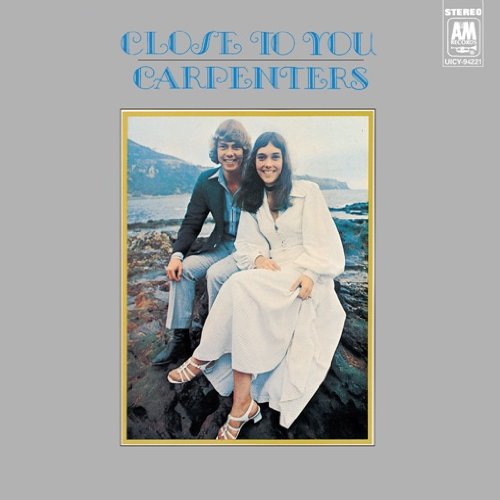
When I was five, I spent too much time with my ear to my parent's stereo, staring at the cover of The Carpenters' debut album and listening to a sweet voice sing "We've Only Just Begun".  Sorry, Mom, you’d been replaced by Karen Carpenter. My bride, my wedding song.


Somewhere during childhood, I gained a sense that marriage was for Other People. This group included bowtie haters, but I still sensed something was amiss. At weddings, I’d try to picture myself waiting at the altar for a bride to walk the aisle following a teary flower girl, either unaccustomed to all the attention or distraught over that fact that several roses had had their petals needlessly plucked. (Okay, it was wrong to impose my thought on a little Melody Cunningham.) I couldn’t imagine some woman in a veil becoming my wife. I had vague notions of feeling unworthy.

In adolescence, I fought to keep new notions vague. If you’d have told me that someday two men or two women would have the right to marry each other, I’d have said, “Inconceivable”. I was beginning to fixate on the “two men” thing, but survival was my highest aspiration. Based on a Texas Monthly article I’d read while attending high school in East Texas, I would have though it more likely that I’d be severely beaten or shot to death by drunken vigilantes.

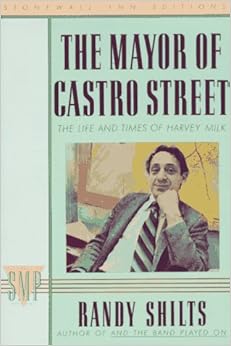
At twenty-two, I’d just finished reading The Mayor of Castro Street: The Life and Times of Harvey Milk by Randy Shilts. I’d bought a second-hand copy at a bookstore in Dallas and dared not look the clerk in the eye. It was an emotional read and it confirmed that murder was more likely than marriage. The AIDS crisis and Shilts’ subsequent book, And the Band Played on, led me to believe that, if not by murder, an early death was still far more likely than a wedding day.

If at any point during my eight years in Dallas/Fort Worth you’d have told me that people would create a hashtag—A what?!—saying “LoveIsLove”, I would have said, “Inconceivable.” From what I gathered, being gay was only about sex. Sinful, dirty, perverted sex.

If you’d have told me during my five years in Los Angeles when I’d make regular trips into West Hollywood to find “my kind”, that gay men could love and be supported by a majority of Americans for being themselves and indeed for being marriageable, I’d have said, “Inconceivable.” As for tweets and rainbow-hued Facebook profile pics—again, what?!—I’d have said, “Inconceivable.”

And yet here we are. 2015. A long, slow process in some respects, but a whirl of mindboggling change when I step back. It is true that a younger generation of men may take their rights to love, marry and just be for granted. And I suppose that’s as it should be. That’s what we worked toward. In another generation, I hope being gay and gay love will be entirely normalized. No “gay love”, just love.

Whew. The talk is of acceptance, not just tolerance. And, yes, the change is remarkable. I am still of a generation that remembers otherwise. Being shunned for so long has had a major impact and continues to define who I am. But I feel the excitement and gratitude. I hadn’t dared to dream that what should be would be. It was inconceivable.

Until it wasn’t.