Showing posts with label gay acceptance. Show all posts

Wednesday, July 26, 2023

"YOU BE YOU"...I MEAN IT.


I have rocks in my head today. It’s a good thing.


These rocks are the colorful creations of children’s book writer and illustrator Linda Kranz. She takes flat rocks and paints them so they transform to vibrant fish which remind me of Mexican folk art. The fish illustrate some of her picture books. 


As a school principal, I got in the tradition of kicking off each school year by reading a picture book during the first day assembly and then working with staff to create a week’s worth of activities linked to that book. One of those books was Only One You by Kranz. It’s all about celebrating individuality, the lifelong learning journey and make the world a better place. (It makes a great graduation present, a nice complement to the multiple copies the cap and gown wearer receives of Dr. Seuss’s Oh, the Places You’ll Go!)


Kranz followed Only One You with a companion picture book, You Be You. It’s sparser in terms of words and more cliché in terms of text. (“Some fish swim up. Some fish swim down. Some fish swim quiet. Some fish swim loud.”) I prefer the former book, but I credit You Be You with helping the title’s familiar message stick. We’re all different and that’s okay. For the past decade, I’ve often heard people spout the sentiment and I’m so glad it’s out there in a world where social media holds up influencers and selfies seem to have morphed from self-expression to a de facto ranking of people’s appearance. Shirtless buff guy gets thousands of likes while “Average” Joe gets seven with shirt on, three without.


The book gives me a visual image to go with the expression. Somehow painted fish make it real. I can say that “you be you” has done wonders for my outlook. Partly on account of my personality and partly due to the time when I came out as gay, I grew up extraordinarily critical of not just myself but others as well. I beat myself up over every one of my perceived flaws…and I perceived so many! It may have been a dysfunctional self-defense mechanism. To quote Taylor Swift’s song “Mean:”

You have pointed out all my flaws again

As if I don’t already see them.


Stick and stones couldn’t hurt me if I hurt myself first. I think so many gay men of my age bracket grew up with loads of self-hate and crap absorbed from all the haters we encountered in school, on playgrounds and sometimes even in our own families. Ideally, we would have lifted ourselves up, individually and as a community. Isn’t that the basis of Pride? But what I observed in gay bars, which seemed to be ground zero for all-things gay, was gays putting down gays. Just like our high school nemeses, we lifted ourselves up by putting others down. It was survival of the cutest/hottest/buffest.
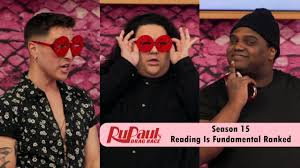


Putdowns were woven into our campy humor. Long before “RuPaul’s Drag Race,” we were reading each other in jokes told at some unsuspecting patron’s expense.

“Oh, check out that tired, old queen.”

“Eww. Look at the twink over there.”

“She’s just a big, ol’ bottom.”

“That one shouldn’t wear a tank top. Her best hope is covering up…everything.”


Yuk, yuk.


Yuck.


Don’t believe me? Watch any version of “The Boys in the Band.” The characters are insufferable. Even listen to the banter between Will and Jack on “Will & Grace.” I love the show, but there was a running joke over Will being overweight. I may have been overly sensitive as someone with anorexia but there was no basis in fact for the putdown. That was the point. It reflected how harsh gays were in assessing their bodies and, yes, the bodies of their peers. 


I mastered this kind of “humor.” Sometimes I relied on it. If I could dismiss a handful of gay men in the bar, I might feel I belonged. I might have felt worthy (or worthier than them at least), despite the fact the models/actors/caterers of West Hollywood looked right through me. 


Critiquing others carried over to other places in my life. While my car idled at a stoplight, I might glance at someone in the crosswalk or popping out of Starbucks and I’d think something harsh about a mistaken mascara application, a misstep in choice of footwear or a hairstyle from the “wrong” decade. The assessments came easily. Joan Rivers, the “fashion police” and “Ab Fab” were also part of my pre- and prime gay years. 


It was a psychiatrist who made note—repeatedly—of how harsh I was about myself. My self-hate was deep, intense, unwavering. I couldn’t shift my frame of mind. What I felt was real and indisputable. 


A medical diagnosis paved the way for a shift from pervasive negativity. After a decades-long battle with what I thought was an eating disorder, I was finally diagnosed in late 2017. It came as a relief. The assessment meant access to supports and I spent all of 2018 and 2019 pursuing and receiving treatment. The interventions came too late. My behaviors are entrenched. As of 2023, things are status quo. I’m a functioning anorexic. 


The one silver lining from all the time I spent in programs was that one course I took was called “Self-Compassion.” On the first day, I was not impressed. My critical brain dismissed and tore up everything the facilitators said, every activity we did and every response from others in the program. It felt too woo-woo, too Oprah. And yet, I found myself relenting each passing week. I went from going through the motions as I’d done with every other group and individual intervention to relenting and coming to find purpose in imagery that calmed my brain and rooted me to positive places and people from my past. I caught some of my negative self-talk and shut it down instead of letting it snowball.


A law school classmate once said to me during a mixer our first year, “You have a lot of quirks.” He didn’t mean it as a compliment. I got the impression our ten-minute conversation exhausted him. He excused himself—more alcohol, a much-needed escape—and we never had another conversation during our three years of study. All the ways I’m different used to be handicaps, things that gave me a permanent home on the Island of the Misfit Toys. Now I think of them and roll my eyes, sometimes even smile. “You be you.” Sometimes that “pride” concept feels real. 


I’m prouder still that I’ve shaken off that tendency to critique passersby. Whatever the body, the clothing, the hairstyle, I let it be…as I should have done all along. If I catch myself leaning toward throwing shade (in my head), I cut myself off and mentally nod to the person in orange Crocs: “You be you.” 


To be sure, I have lapses. Facial tattoos and Botoxed lips are particularly challenging. (You be less you?) I continue to be a work in progress. I hope “reading” people fades from gay culture. It’s the opposite of flattering. Considering so many of us felt rejected and disconnected at times in our lives when we yearned to be accepted and loved for all that we are, “You Be You” should be embraced and practiced in our community as much or more than waving the rainbow flag and revering our divas du jour. I’m always going to be TeamOlivia but I have no problem with queers who are TeamMadonna, TeamGaga, TeamKylie or TeamSam. It’s all good. You be you.

Sunday, November 12, 2017

SWISH MANAGEMENT

-->
We’re our own worst enemies. That can be true when referring to ourselves or to the communities in which we belong.

Let’s set aside the self-hate and consider gay community’s enduring target within: the effeminate gay man. An October 2017 “Masculinity Survey” of 5,000 gay men by the British magazine, Attitude, revealed that 71% are turned off by effeminate mannerisms in other gay men. As well, 41% felt that effeminate gay men give the “community” a bad image or a bad reputation.

Sigh.

Longer sigh.

When does it end? I remember long, long ago—that is, before online dating and hooking up—when men who wanted to broaden their search beyond the bar scene took out personal ads in freebie news-ish publications. You could scan the page until you got to MEN SEEKING MEN. That’s when lonely hearts (or two-timers) stopped talking about pina coladas and getting caught in the rain and became more direct. “No femmes”. (These same great catches often said “No” to fats and Asians.) The defense was always, “Nothing personal.” (How is that not personal?!) “I’m just being honest.” God knows what other endearingly open comments might come out over dinner or that foreplay-inducing bottle of Bud.

We’ve evolved only slightly since then. Rather than being directly offensive, the single suitor (or two-timer/member of open relationship) states online that he’s a “masculine”, fit, white guy, seeking the same. It remains clear who should not apply for an amazing opportunity.

We spent decades in hiding, sticking to closets and darkened bars. In more public places, we walked alongside boyfriends with ample space between us, often saving our open hugs for the fun girl who was always happy (and available) to join us.

We spent the more recent decades demanding to be heard, first for advances in the fight over AIDS and then, when that fight miraculously ebbed, pushing for anti-discrimination legislation and marriage equality. The AIDS crisis weakened us while making us braver and bolder at the same time. Desperation, heightened each time another lover, friend or acquaintance died, made our closets seem silly. Silence and fears about being shamed, ostracized, fired and disowned gave way over time.

Oh, what progress we have made! So now that we’ve achieved such gains in public acceptance, 41% of us wish the more effeminate among us would toe the line. There are some behaviors that still need to be controlled, honed in…closeted. Your high-pitched voices and limp wrists are ruining our reputations! (And to think I posted three selfies of my abs after my gym workout today. Sure I got a lot of “Likes” but that hip swish of yours is killing me.) So bad for the reputation. And, to that 71% among us, such a turn off.

We pushed hard for acceptance. It came faster than many of us older gays (i.e., over 35) could have imagined. But apparently the acceptance is not for all of us, at least when we look within our community. It’s maddening but it’s not surprising. Many gays continue to struggle with low self-esteem, even self-hate. How fragile is acceptance? Are straight people only sounding evolved to be politically correct? What about all those red states? What about when I wander from the city? Self-hate and fear often manifest outwardly and, by golly, the femmes are just embarrassing. I’m not like them. Really, I swear.

Back in my ancient coming out days of the late ‘80s and early ‘90s, I monitored my voice and mannerisms. There was that pesky pinky that liked to stick out as I gently sipped a lite beer. (More limes, please.) My wrists, if not limp, were as thin as the daintiest of women no matter how many sets of dumbbells I curled. My primary object was to “pass”. It’s ironic that so much of coming to terms with being gay was preoccupied with acting straight. Please, let us have made real progress since then. Please let us be who we are. We’ve extended our community from “gay and lesbian” to a growing alphabet of terms and identities. So why haven’t we grown in our understanding and acceptance of the “G” itself?

If anything, there should be greater respect and gratitude to the more effeminate among us. “Passing” was never an option for them. While the rest of us hid, they bore the brunt of slurs and hate crimes when prejudice went largely unchecked. They heard the snickers behind their backs and felt the shunning in their earliest years. How shameful that they might continue to be outcasts in our own community.

We have co-opted positive terms like gay and pride and we’ve flown rainbow flags to represent our diversity. Let us check our own prejudices and endeavor to truly welcome and accept all the colors and incarnations our flag is meant to represent.

Monday, August 14, 2017

A FADED RAINBOW


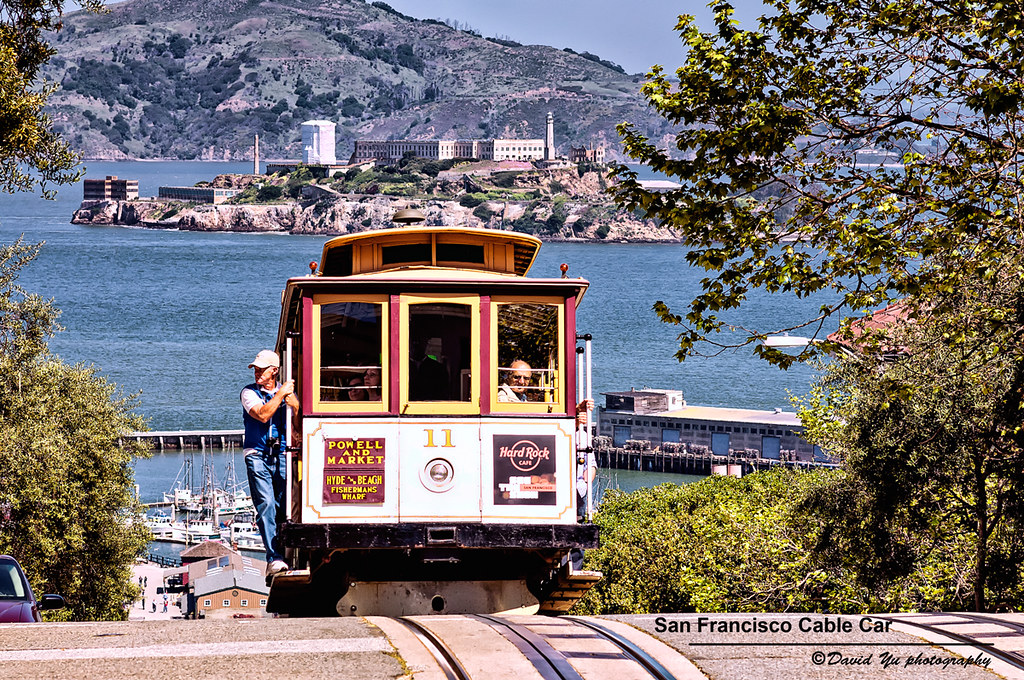
I recently spent four days in San Francisco. It’s changed since I first visited twenty-five years ago when sourdough bread was the must-eat loaf, gays flocked to the bars and the homeless seemed totally at home. On this trip, I opted for spelt scones and currant-laden Irish soda bread and the gay contingent seemed no greater than in Los Angeles, Portland, Seattle or Vancouver. As for the homeless, well, they continue to be strong presence.

It’s the gay thing—actually, the lack of it—that I wish to lament. Even when I was a kid in Hamilton, Ontario and, later, East Texas, I knew that The City by the Bay was a gay haven. (As someone who spent too much time in front of the TV, I also knew it was the place for Rice-A-Roni, “the San Francisco treat”, and a city where Michael Douglas solved crimes with the guy with that distracting, bulbous nose (Karl Malden). The gay notoriety generally drew snickers amongst my peers, scorn from holier-than-thou public figures and a guarded curiosity from me. Is this really a place for the freaks and am I one of them? Is San Francisco my destiny?

I’d heard of a gay politician being murdered there. Was it really all that safe? After university, I managed to buy a copy of Randy Shilts’ The Mayor of Castro Street from a second-hand bookstore in Dallas—no doubt, red-faced with perspiration dotting my shirt as I exited—and I was only more enlightened/confused. I could no longer deny being a depraved member of society for I was indeed a reviled homosexual. (Texas in the ‘80s could really do a number on you.) Perhaps I’d find some semblance of acceptance among the perverts of San Francisco. I left Texas and headed to California, opting for Los Angeles as an extended pit stop on the yellow brick road to Oz.

As luck would have it, L.A. proved to be gay enough. It took a couple of months, but I found my way to West Hollywood and, as much as I begrudged it as a ghetto with too much attitude, I drove in from Malibu as often as I could. After three years, I made my first visit to San Francisco. It proved to be disappointing. The homelessness made a greater impression than anything else and I kept trying to pull my boyfriend away from the bars around the Castro. Maybe I had jealousy issues, but I told myself his drinking problem was the bigger issue.

While gay bars helped me see I wasn’t alone in L.A., I had higher expectations for a city as renowned as San Francisco. I didn’t want to feel confined to bar stools and sweaty dancefloors, no matter how hot the clientele. Hotness never mattered. I had my gay card but studs in clubs viewed me with indifference at best. What I wanted from the city was sidewalk comfort. I wanted to window-shop while walking hand-in-hand with my boyfriend. I wanted to see regular gay folk, not writhing shirtless to Madonna, but scrambling to catch the bus to work or gnawing on a supersized loaf of that sourdough. Always one with faulty gaydar, I noticed only a slightly higher gay quotient. All this time, I’d hoped that this was the place that campy Weather Girls song would prove true.

I’ve probably been back to San Francisco a half dozen more times. They were far from gaycations. I have a college friend who lives in the burbs and she suggested we go to a pumpkin festival while I was there for a weekend. Uh,…okay. Should’ve splurged on a rental car. On another visit, I stayed with a former roommate who was a too-chill California surfer dude. I don’t remember us doing anything. In hindsight, I suspect he was doing acid in his bathroom. No need to leave the apartment for a good trip.

My solo visits weren’t any gayer. I’d hit the Castro during the day, expecting to experience gay immersion in a Starbucks or to exchange knowing glances on the street. I did spot some gays but they seemed to have their own kind of attitude. No nose ring, no nod of recognition. Where, oh where, did the everyday gay geeks go?

Three years ago, I was back for an exciting weekend. I’d flown in to swim from Alcatraz. I biked over the Golden Gate Bridge. I jogged through The Presidio. I was on an exercise kick to fend off a nasty bout of depression and had no time or desire for seeking out the elusive Gay Wonders. It was just a city, albeit a damn pretty one.

There was nothing strikingly gay on this latest occasion. Maybe San Francisco never was all that. Maybe I just have an innate sense of dodging the vibes. I bet I could have walked Haight and Ashbury during the Summer of Love and left frustrated, wondering where I could buy a gallon of skim milk. Maybe it’s my destiny to be forever clueless.

We don’t need a gay mecca now, at least not in the Blue States. Most of us no longer flock to bars that greet us with rainbow flags. We feel safer (and more consumer-savvy) looking at housing beyond the gay ghettos of old. We can go on Twitter and amass a throng of LGBT followers to lessen that sense of isolation that may come from living in a small town or rural area far from any known gay marker. We can bring the gay to us. We don’t need to go to Oz.

But I want to know there still is one. Not out of necessity, but out of a desire to be together or, at the very least, to remember when gay culture thrived and grew in certain centers. It brings comfort knowing there is actually a place at the end of the rainbow. In North America, that place has always been San Francisco. Maybe I’m overreacting but it feels the colors are fading.  

Wednesday, May 15, 2013

THE MUSICAL ROAD TO GAY ACCEPTANCE (Part II)


Sometimes it takes a village.


Or at least a group inspired by gay sightings in Greenwich Village.

During the same year Rod Stewart’s “The Killing of Georgie” hit radio, the Village People catapulted to fame. "Macho Man”, “YMCA”, “In the Navy”...the songs celebrated typically male things. Was there a gay connection? it all went over my head. To be fair, most of America was clueless as well. At first. Comedians, even Johnny Carson, eventually made gay jokes about the group—I recall a monologue in which he referred to being the Village People’s zipper repairman as an unfortunate job. Still, for awhile the gayness of the Village People did not register. Just a year-round Halloween act. How nice to honor policemen and construction workers.

The lyrics to “Macho Man” didn’t reveal much about being gay. It could easily be grouped with other self-worshipping songs like Rod Stewart’s “Do You Think I’m Sexy”, Right Said Fred’s “I’m Too Sexy” and LMFAO’s “I’m Sexy and I Know It.” Take the eye-roll inducing first verse:

Body...wanna feel my body?
Body...such a thrill my body
Body...wanna touch my body?
Body...it's too much my body.
Check it out my body, body.
Don't you doubt my body, body.
Talkin' bout my body, body,
Check it out my body.
 

If anything, the group may have slightly revealed its hand in a later verse:

Every man ought to be a macho, macho man,
To live a life of freedom, machos make a stand,
Have their own lifestyle and ideals,
Possess the strength and confidence, life's a steal,
You can best believe that he's a macho man
He's a special person in anybody's land.

YMCA” pushed things a little more with the sample lyrics:

Young man, there's a place you can go.
I said, young man, when you're short on your dough.
You can stay there, and I'm sure you will find
Many ways to have a good time.

It's fun to stay at the y-m-c-a.

They have everything for you men to enjoy,
You can hang out with all the boys ...


You could easily read it as the gay anthem it’s become, but the folks who lacked pink-colored glasses interpreted the song as a rallying cry for the downtrodden...and an opportunity for healthy exercise in the form of alphabetic jumping jacks.

The words to “In the Navy”, taken at face value also seemed to lack any gay connotation. The song simply promoted joining a particular branch of the military.

In the navy
Yes, you can sail the seven seas.
In the navy
Yes, you can put your mind at ease.
In the navy
Come on now, people, make a stand
In the navy, in the navy.
Can't you see we need a hand?
In the navy
Come on, protect the motherland
In the navy.

The Navy actually used its shout-out song for recruitment in a time long before we even got to Don’t Ask, Don’t Tell. I wonder how many gay men heeded the call and enlisted, only to be dishonorably discharged. Nobody mentioned that possibility in the song.

I am not sure how the Village People rose to fame—Wikipedia provides a boring account whereby a promoter scouted guys with certain looks, one ad requiring interested dancers to have moustache. I prefer to envision a ragtag troop going on stage in smoky gay clubs, sandwiched between drag queen acts, the hoots and hollers of Freddie Mercury clones egging them on. Catchy as their songs were, it’s hard to imagine how they ever got on mainstream radio. While Rod Stewart tried to shock listeners with a violent death, the Village People cozied up to America by taking a light-hearted approach. They gave the Navy and the YMCA a boost in publicity, winking all the way.

Why fear gay men? They took the view that it was all good, clean fun. And America accepted it. I find it ironic that, while most states still prohibit same-sex marriage, “YMCA” is a wedding reception staple, with everyone from Great Uncle Lew to little Susie crowding the country club dance floor for a lively one-round spelling bee.

Boy George and Dead or Alive soon followed the Village People. Their songs didn’t explicitly address sexual orientation, but their lead singers created a new spectacle.

At least as campy entertainment, we were in.

Wednesday, July 11, 2012

TOTALLY JOE


By James Howe

(Atheneum, 2005)

If only there had been a Joe (aka JoDan) Bunch in my class in grade seven or eight.  I’m thinking selfishly here.  Poor Joe would have been brutalized by peers who would taunt him for painting one fingernail, streaking his hair and just being, well, as the title says, totally Joe.  But I would have had someone to set the gay standard.

Some people have their identities whispering at them in sometimes conflicting inner voices.  Not Joe.  His identity loudly came into being at a young age, back when he was a four-year-old, walking the neighborhood in a dress and playing with his collection of seven Barbies.

If only I had had parents who were as enlightened, who did not fear what their inner voices told them about their young son, their Great Hope to become a doctor, the Prime Minister or a Right Winger on the Montreal Canadiens.

I thank author James Howe for introducing a younger generation to a memorable character with an irrepressible personality.   

I can’t recall any Joes from my childhood.  As far as I could tell, I was as Joe-y as it got.  I came to know several Joes in my twenties, once I left Texas where even The Irrepressibles might have found a way to repress, given the unchecked speeches about eternal damnation and the occasional article about gun-toting good ol’ boys hunting for gays.  In Los Angeles, I met Mason, an affectionate, often obnoxious force who learned to dish it out as a means to survive.  I dated Evan, a makeup artist who scared me off with too much talk about my dire need for skin moisturizer.  Sadly, Joes struggle for acceptance, even in gay circles.

Totally Joe is structured as a class writing assignment, an alphabetical autobiography, a year-long journal with Joe’s entries ranging from Addie, his strong-willed best friend, to Zachary, his newest friend who may or may not be gay.  The alphabet is not just a listing of names—L is for Leftovers, P is for Popular (Not).

Joe survives school by hanging out as one of The Gang of Five (which then and always consisted of only four).  It’s hard not to be envious, reading how Joe is completely accepted as he is by this close co-ed group.  Although Joe only comes out midway through the book, fully encouraged and supported by an amazing Aunt Pam, he never strives to pass as straight.

Yes, there are nemeses—namely, a hateful classmate named Kevin Hennessey and his sidekick, Jimmy Lemon.  And then there is Kevin’s mother who leads the cause against establishing a gay-straight alliance at Joe’s school.  This is just the plot point to prompt Joe’s (and Addie’s) parents to step up.  Again, I thought, If only...

Howe’s first-person narrative is zippy, often amusing and totally entertaining.  At times, it’s poignant without being preachy.  Here’s an excerpt wherein Joe recalls an early obsession:

                                My mom says that I played wedding for about a year and that
                                I kept asking everybody if they would marry me.  Even Jeff
                                [Joe’s brother].  (That was the only time anyone can
                                remember Jeff threatening to clobber me on a regular
                                basis.)  I had my Lainy doll marry my Ken doll.  I also had
                                her marry some of my Barbies.  And G.I. Joe.  (I hated that
                                the soldier doll had my name.  I mean, please.  I didn’t play
                                with him much.  He was another Christmas present from my
                                clueless grandparents.  One time when they were visiting,
                                my grandpa asked me if G.I. Joe had been in any wars lately.
                                I said, “No, but he and Ken got married last week.”  Every
                                Christmas since then, my grandparents have sent me a
                                check.)

Totally Joe is a quick read that would be a perfect book choice for a gay-straight alliance or, maybe one day, in a regular grade seven classroom.  The Joes—and Not-So-Joes—of this world need the exposure and the understanding.