Tuesday, June 18, 2019

JAGGED LITTLE PILL

Twenty-nine years ago, long before I ever knew I had struggles with mental health, I spent my first summer of law school doing an internship at Mental Health Advocacy in downtown Los Angeles. At the time, one of the great mysteries was why so many clients went off their meds which caused them to unravel. Their explanation seemed too simple: “I don’t want to be controlled by medication.” Their resistance was maddening.

Now here I am, a client of one mental health organization or another. I’ve been off my meds for three weeks and I’m falling apart. The distress this weekend was excruciating. While I wasn’t suicidal, I couldn’t figure out why I was alive. I couldn’t fathom living another day. I couldn’t see continuing into July. Existing was painful. I’d just returned from a trip to Whistler which followed a trip to the Grand Canyon and I was desperate to find another place to flee. I struggled to even breathe in my tiny condo. I hiked, I ran, I cycled, I cycled some more—a gerbil on a wheel.

This morning I’m still frantic. I can’t figure out what to do with my day, much less my life. I fled my condo for a cafe after feeling like I was burning up even though a check of the temperature showed no cause for overheating. I can’t be by myself right now.

I’ve been unsettled ever since I got out of the hospital. Prior to admission, I had a steady routine. I filled my days. Six weeks of interrupting eating disorder behaviors interrupted everything else as well. Suddenly I can’t read or write. I can’t find purpose. I can’t stand to be in Vancouver but continuing to travel is unsustainable.

When I met with a friend on Saturday, he asked me to promise to take my medication. I couldn’t even offer an insincere yes. Like those clients from three decades ago, I am trying to ride this out. My last psychiatrist (who just retired) told me I’d probably have to be on medication for the rest of my life. He and several other professionals have compared my mental struggles to a physical affliction. “If you had to take meds for diabetes, you would, wouldn’t you?” Hell, I don’t know. Maybe. Probably.

I don’t even like to take vitamins. Or Tylenol.

I feel I’ve gotten so close to being officially medication-free. Two years ago, I was taking three drugs, a cocktail that I often resisted but admittedly worked in making me feel stable, pretty much well. A year ago, I went off all of them and eventually crashed, almost ending up in the hospital again. As a bargain with my psychiatrist, I agreed to go back on two out of three of them. I was okay again. Then six months ago things seemed to radically change. My affect was flat. No joy, no sadness. I existed in a tunnel. Technically safe, but wholly unsatisfying. I couldn’t emote. When I went out with friends, I couldn’t respond genuinely. I was just keeping a seat warm. I wasn’t myself. I felt like time was just passing. It was agonizing.

I missed laughter. I missed smiling. I even missed crying.

While I was in the hospital in April and May, all the people working with me noted my flatness. The hospital psychiatrist took me off one of the meds, which brought me down to a single medication.

Being discharged felt like regaining freedom and control. I immediately went off the remaining medication. I anticipated having to ride out a few lows. I even welcomed the prospect of being depressed. It was better than feeling nothing. And, surely, if I could feel lows, I could experience highs too. I could laugh again.

So far it’s just depression, laced with strong bouts of anxiety. Intense frustration, crying fits. No laughter.

Tomorrow I may go back on my medication. Or maybe the next day. Or next week. It’s illogical, but I continue to resist...and suffer.

Friday, May 31, 2019

TREATMENT WITH ASTERISKS

Free again! I was discharged from hospital yesterday after spending six weeks in a treatment program for people with eating disorders. It’s hard to know if it made a difference. Already this morning I’m restricting food again and obsessing over what my exercise will be. The habits of the disorder are so entrenched that it almost seems foolish to think a month and a half of interruption can have substantial impact. There’s deeper work to be done.

Can’t you just eat more?” I’ve had that question posed by my mother and by my best friend.

Others have said, “But you always eat when we go out.” True. The eating disorder likes to be secretive. It’s my own thing. I do it when no one else is around. It’s why I turn down a lot of dinners. (Being vegetarian makes for a surface excuse, no questions asked. I don’t know if it was just a coincidence, but at one point during my hospitalization, six out of seven patients on the unit were vegan or vegetarian.)

Even during my stay, I was straying from program whenever I could. I got daily passes to go home and, instead of taking the bus to and from as directed, I’d walk the three miles at a brisk pace, passing other pedestrians at every opportunity. While the program required three meals and three snacks per day, I’d skip the snacks while at home and reduce my meal. I figured two full meals and two snacks represented enough progress. And enough calories.

I had longer home passes on weekends and, while exercise was forbidden—full symptom interruption, they called it—I managed to fit in three moderate exercise sessions per week. This was as radical a change as I could tolerate. I told myself I was making the program my own.
Really, I lied. Just like an addict. After every pass, I said I had no struggles. I said I ate according to my meal plan. I told them I did not exercise. I had to lie so I’d keep getting passes. The daily trips off the ward were what kept my sanity. I told them what they wanted to hear. I left as a success story.

So what was the point of it all? Why did I give up six weeks of freedom? In spite of my cheating, my body took in more food and more variety. To a regular person, eating peanut butter or mayonnaise would not be a victory, but higher fat foods were real challenges. Heck, even the amount of water they made me drink was a challenge. My exercise was severely reduced. The miracle is that I didn’t gain weight even though that was my constant fear.

What most people focus on is the outward signs of the eating disorder—amount of food intake, bingeing, purging and exercise. These are clear things to follow when assessing progress. But if it were simply about eating more and exercising less, treatment would be relatively simple. What many people overlook are the psychological reasons for why the eating disorder developed and continues to be fiercely maintained. Issues like self-esteem, perfectionism, betrayal, abuse and neglect come into play. The eating disorder represents control, self-discipline, even comfort. As my eating disorder has gone on for decades, it’s far trickier work uncovering the roots of it so that real, lasting change can occur.

I may be out of hospital but more work remains, on my own and with professional support. Nasty bugger, this eating disorder.

Monday, May 20, 2019

A BELATED AFFIRMATION

There are days when I wake up in my hospital bed and I still wonder if I belong here. For the past five weeks I’ve been in treatment for an eating disorder, an affliction I’ve struggled to acknowledge within myself and I’ve struggled even more to get others to understand.

Each and every time I’ve dared to disclose to someone, the response is quick, a snap judgment. “You don’t have an eating disorder.” 

I don’t feel like having to prove my point.

It’s true that I don’t look the part. I’m male, I’m in my fifties and I’m not rail thin. I even sport some pesky love handles. 

Twenty-four years ago, I dared raise the possibility of an eating disorder with my family doctor, a compassionate gay man whom I assumed would have many patients with low self-image issues, disordered eating and excessive exercise regimens. I had a great deal of angst in the build up to telling him what I thought I might have. He dismissed it as if to reassure me. It only made me feel more alienated. If I didn’t have an eating disorder, then how could I get help? I was starving myself for huge chunks of the day, obsessing over fat content in foods and exercising through injuries, feeling trapped by my workout routines. If I missed a day, the belly would never be tamed.

There were ebbs and flows to my disorder. In relationships, I’d sometimes let up. I’d eat ice cream and pizza with my boyfriend, feeling like a sinner but happy to have a partner in crime. Whenever I wasn’t with my boyfriend, the food restricting would kick back into high gear. Aside from my non-skinny appearance, a big reason so many people haven’t thought I had an eating disorder is because the key behaviors happen when alone. It’s a clandestine disease. When my eating disorder ruled me, I didn’t want to be caught. I didn’t want anyone telling me to change. My eating disorder brought a twisted sense of comfort. It represented control and self-discipline when I felt powerless in many areas of my life. 

You don’t have an eating disorder.

I heard it so many times, I felt I couldn’t get help. I was embarrassed to bring it up. I didn’t want to be invalidated again.

Even when I was hospitalized for depression five years ago, refused food and obsessively exercised in my hospital gown on an elliptical, professional staff failed to recognize my ED behaviors. It took a second psychiatric hospitalization for a psychiatrist and dieticians to piece things together after the nurses complained about my resistant behaviors to eating meals and to eating with the other patients. I finally got a referral to an eating disorder program. 

There are no elliptical machines during my current hospital stay.

I’ve since been assessed by doctors several times. Each time, I hear a common refrain in my head: You don’t have an eating disorder. Each time, I am both disheartened and relieved to hear the doctors confirm the diagnosis. Yes, I have an eating disorder.

As I sit in groups with other patients with eating disorders, I nod with them. They say the same things I think. They nod when I speak. By golly, I belong. 

When I awaken at 5 a.m., I can’t help but wonder if much of my life would be different if I’d gotten help twenty-four years ago. With earlier intervention, maybe I would have overcome the insecurities about my body and chipped away at all the self-hate. 

In my hospital room, I tell myself it’s not too late. I want to believe this old dog can learn a new way of living and can be more forgiving of all the imperfections I obsess over. This cycle of treatment ends, however, in nine days and I know I’m nowhere near real change. Many of my co-patients have had multiple hospital admissions. Is it the program that’s unsuccessful or is the eating disorder just too strong? Maybe it’s both.

I’m lucky to have more counseling and another treatment program on the horizon. Another team of professionals is recommending I stay three months in a group home for people with eating disorders. 

Me? I may not look the part but suddenly the professionals won’t let me slip through the cracks. My behaviors still feel entrenched but I have some hope for change. I want this hospital stay to be the start of a different way of living.
  

Wednesday, April 10, 2019

DATING APOCALYPSE

Since December I’ve been awaiting a six-week in-patient treatment program for my eating disorder. As I’ve had traumatic experiences in hospital before, I pushed for a three-month group home option instead. Unfortunately, the medical team feels my symptoms are serious enough to require hospitalization first. (That’s right, my six weeks in hospital may be followed up with three months in the group home.) Seems my forty years of eating disordered behaviors really did a number on me.

Knowing I’ll be stepping out of real life for a significant chunk of time, I’ve told myself that dating is not an option. After all, it’s far from ideal beginning a relationship with hospital visits as part of the courtship. So no dating.

Still, there’s a little dreamer inside me—persistent sucker—that says this is when it happens. Off the market, I’m suddenly of interest.

But, no. There hasn’t been some hunky dude trying to strike up a conversation with me on an elevator. I haven’t had some dreamboat wanting to share my bench at the gym. An adorkable man hasn’t asked me about the ripeness of melons at the grocery store. I’m as invisible as I’ve ever been.

Same goes for online. I may tell myself that I broke up with the dating apps (or we’re taking an extended break), but it feels like the apps dumped me first. My inbox is empty. Always. I’ve even wondered if OkCupid is working anymore. Maybe the site shut down so no new messages are possible. For anyone. Ah, delusion. I wear it well.

I should correct something. I’m not as invisible as ever. I’m more invisible, if that’s even possible. I guess I knew it was coming. It’s part of being fifty-something. The younger set doesn’t notice you. Not even the forty-nine year olds. In gay culture, you’re supposed to step on an iceberg and float away. I do like the cold but I’m a little afraid of polar bears. Cute but beastly. So no thank you to the iceberg. No thank you even to Palm Springs. I am the walking dead in Vancouver. Without the zombie allure.

Technically, I should have company. There should be some other fifty-somethings, newly or perennially single. But I can’t identify them. Some have wisely decided to live as shut-ins, taking advantage of home delivery groceries and restaurants that hire cyclists to bring a jumbo burger and double order of fries to their door. Older gay men online have taken to lying about their age. A “fifty-five year old” is really mid to late sixties if not seventy-three. The fifties set pretends to be forty-two, maybe forty-five,...something far enough away from that dreaded half-century milestone. It’s blatant lying mixed with wishful thinking and the cop-out line, Everybody does it. In some ways, I get it. I too wonder how the hell I ever became fifty-four. I still feel thirty-four. I still want to believe I look that age. Or forty-four. It’s true, I’ve had people tell me I don’t look my age (although that’s become a much rarer occurrence). Basically, fifty-somethings are in hiding. So how are we supposed to find each other?

But, again, I’m not supposed to be thinking about such things. I’m supposed to have chosen this dateless predicament. I should really be focused on eating more and exercising less. Still, it doesn’t feel good, knowing that six weeks from my hospital admission—or six weeks and three months from then—I’ll be facing datelessness for real.

Maybe ice floes aren’t so bad. Maybe polar bears won’t sniff me either!

Monday, April 1, 2019

"IDOL" EVOLUTION

“American Idol” is no longer the juggernaut that it was when it debuted in 2002 and during the first half dozen seasons that followed. Many have switched their allegiance to “The Voice” or “The Masked Singer” or given up on talent competitions to binge-watch buzzier shows on Netflix. 

I took several years off from viewing but gave it another shot when “Idol” switched from Fox to ABC. I tend to multitask while it’s on, but the show still resonates with me. As a writer, I can relate to people in creative fields desperately pursuing their dreams, looking to build an audience, hoping to break through despite the fact that “Idol” winners now fade from memory a week after the season finale. They sing, they compete because they’re compelled to do so. I write on for the same reason.

One area of positive change on “American Idol” involves its openness in showcasing gay contestants. In the early seasons, I’d cringe when Ryan Seacrest and Simon Cowell exchanged gay putdown banter. I also hated when, in 2003, Clay Aiken competed (ultimately becoming runner up) as Joe Public speculated, derisively, over his sexuality. Indeed, Aiken remained silent during his time in the limelight and waited until 2008 to finally come out as gay.

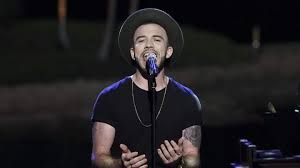
Last night on “Idol”, the forty remaining contestants were pared down to the Top 20. At least two of them are openly gay men. I’d worried that, in casting its elite group, “Idol” would only welcome one as the token gay guy. So far both Ryan Hammond and Jeremiah Lloyd Harmon are still in the running. (The group will be cut to fourteen, perhaps as early as tonight.)

The first to make it through was Ryan Hammond. He spoke of missing his boyfriend Chris who couldn’t make the trip to Hawaii. Ryan dedicated his cover of Donny Hathaway’s “A Song for You” to Chris.

I love you in a place
Where there's no space or time
I love you for my life
You're a friend of mine
And when my life is over
Remember when we were together
We were alone
And I was singing this song to you

In an interview clip, Ryan said of his performance, “I was just thinking about Chris at home so I hope I did it justice for him.”

As Katy Perry, told Ryan he’d made the Top 20, she said, “I think you’re probably finding out who you are in general for the first time so whatever you’ve been saying to yourself has been really working for you.”

Jeremiah Lloyd Harmon’s story has been more prominent this season. The son of a pastor, he worked as a janitor at the church, but he left home because his parents don’t accept him for being gay. With his boyfriend John in the audience—and identified as such by “Idol”, Jeremiah dedicated his performance of Fleetwood Mac’s “Landslide” to his parents. 

Well, I've been 'fraid of changin'
'Cause I've built my life around you
But time makes you bolder
Even children get older
And I'm gettin' older, too

Of his performance, Jeremiah said, “I’m doing this for me. I’m doing this for everyone who’s been outcast by their loved ones…If I can be open about it and vulnerable, then maybe that could bring hope to somebody else.”

Katy again, delivered the news about advancing in the competition. “I just want to say from one pastor’s kid to another that I see you and I love you and I accept you and I’m so proud of you.” Jeremiah hugged his boyfriend twice during his clip last night and the camera even stayed on the couple as they shared a kiss.

My, “Idol”, you’ve come a long way. But it’s not just the show. Here we have two openly gay young men being their true selves on a show still seen my more than nine million people, many from middle America.  Hats off to them. While many have indeed moved on from “Idol” days, I’ll keep watching.