Tuesday, May 11, 2010

NEWSWEEK CAN'T SEE STRAIGHT

Here we go again. I checked my calendar and, yes, it’s 2010. Yet Newsweek publishes a piece by a purportedly gay writer who asserts that Straight for Pay does not work in the acting world. Tony-nominated Sean Hayes can’t play a straight man with a female love interest in Broadway’s “Promises, Promises”. Jonathan Groff can’t play one of Rachel’s love interests on “Glee”. And knowing Rock Hudson was gay reduces his credibility in playing a male romantic lead in his classic movies. (The author cites a single scene: Hudson taking a bubble bath by himself in “Pillow Talk”. Gee, do you think the writer had an agenda?)

Now I have not seen “Promises, Promises”. My rural abode is far from the lights of Broadway. But I would posit that, if there is any difficulty in seeing Hayes act the part of a straight character, it is because of his iconic role as the flamboyantly gay Jack on “Will & Grace”, not because Hayes is a gay man. Many actors struggle to be recognized in other roles when audiences continue to see them as a particular character viewed on their TV screens from week to week over a period of years. This is especially true with over the top, comic roles. For many, Michael Richards will always be Kramer. (In his case, that may be a good thing. Best to block out his infamous standup comic tirade.) Jason Alexander has also struggled with the supposed Seinfeld Curse. What can top the role of a lifetime as George Costanza? Candice Bergen has always remained Murphy Brown in my mind. Shelley Long, Delta Burke, Jackée, Julia Duffy,…their careers stalled after achieving notoriety as memorable TV characters.

Yes, there are many exceptions. That’s not the point. I am merely trying to get in the mind of a Newsweek writer who may be lacking analytical and self-reflective skills. I don’t mean to bash; all I’m saying is it seems too convenient to completely omit the Jack factor. For some, Sean Hayes will always be “just Jack”. (Add your own jazz hands.)

As for Jonathan Groff on “Glee”, what is there not to buy about him as Rachel’s love interest? I did not know the actor is gay, but I don’t dismiss him now that I know. I am a Gleek and I would suggest that any problem with Groff’s role comes from the fact it is underdeveloped. So far I’ve gleaned that he has a wonderful singing voice, but he hasn’t had much to do in wooing Rachel. He came on strong (and convincingly), but the Rachel-Jessie storyline has been diluted as other characters have been featured more prominently and as the show’s writers have continued to pit Rachel with both Finn and Puck.

I’m not sure that anything more needs to be said about the Rock Hudson point. “Pillow Talk”, for crying out loud! I watched it years ago and the whole thing seemed like an innocuous piece of fluff. If John Wayne were in that bubble bath, it would still seem hokey and, in the Newsweek writer’s view, not very macho. Many young (or newly out) gay men like to see the entire world with rainbow-coloured glasses. I dissected George Michael’s songs and easily found all the gay references I wanted before he ever got sloppy with his bathroom habits. When I watched Barbra Streisand in “Yentl”, she was a gay man, not a woman disguised as a man. The gay factor sometimes is more overpowering from a gay person’s point of view than it is for the typical heterosexual male who is too busy ogling over Kristin Chenoweth or Julia Roberts anyway.

The writer also expressed doubt that an out gay actor could have convincingly played George Clooney’s role in “Up in the Air”. That is not the issue. What other actor, gay or straight, could have played that part? I loved that movie, but it was clear to me as I watched that it was the perfect George Clooney part. Once you make the A-list in Hollywood, certain parts are tailor made for you.

I’m done with nitpicking over the flaws in the article’s logic. The bigger concern is the underlying message, especially from my vantage point, living in a rural area where I do not know any other gay men. (Yes, my house is still for sale!) If you can’t be accepted and embraced as a gay man on Broadway, what does that say for rest of us? If your options are limited there, what does that mean for gays struggling to be seen beyond stereotype as sons, friends, teachers, athletes and car salesmen in Peoria, in Moose Jaw and in places rarely designated on provincial or state maps? And if gay men can’t see gay actors as being anything other than gay, how evolved have we become in openly accepting others and in seeing ourselves as human beings with so many other aspects to our identity?

I have to wonder what the editors at a reputable magazine like Newsweek were thinking when they decided to run the article. This will be controversial! This will steal some of Perez Hilton’s buzz!

This. Will. Sell. Copies.

Good for business. Sad for gays.

Sunday, April 25, 2010

ICON GENDER CONFUSION

The death of Dixie Carter and the series end of “Ugly Betty” got me thinking about what pop culture phenomena helped shape me in the early years of becoming a gay man. I read an essay on www.ew.com where Tanner Stransky wrote eloquently about how the characters of Marc and Justin on “Ugly Betty” contributed to his feeling safe in coming out. While Marc is not a character to emulate—same for Jack on “Will & Grace”—I can see how the character would inspire. If someone so stereotypically gay could find acceptance in the (fictional) world and by the viewing public, what do I have to be so worried about?

Of course, I began the coming out process in the mid-’80s and gay figures, real or imaginary, were not so easy to find. There were glimmers of inspiration. I was mesmerized by the television airing of “An Early Frost”, not just because it put a face to AIDS but because it portrayed an otherwise healthy, loving gay relationship. I recall feeling most empowered by an ordinary scene with Aidan Quinn’s character and his partner sharing the bathroom getting ready in the morning. Normal. Maybe I wasn’t a freak of society, doomed to Hell. (I was living in Texas at the time.)

A smattering of gay celebrities came out or were outed on account of AIDS: Rock Hudson, Freddie Mercury, Anthony Perkins. However, the fact that they reluctantly or posthumously came out was not inspiring. The message: Take it to your grave. When Greg Louganis later came out, I was proud of his courage, but I found little that I could connect to—the stud diver versus mediocre me.

As far as regular TV characters representing what it was like to be a gay man, the only one I can recall was Jack Tripper pretending to be gay on “Three’s Company”. Over-the-top antics to make us laugh, to show how uncomfortable people like Mr. Roper were around presumed gays. Not inspiring.

Perhaps by default my icons were women. (Perhaps not. Maybe I just relate better to women.) It started long before I came out to anyone. I remember my first week in university as a sixteen year old and a larger than life history professor asking each of us to identify a heroic public figure. I’m sure I disappointed him by failing to name Martin Luther King, Jr. or JFK or Mother Teresa. I was young and, yes, shallow. My world was ruled by entertainment. I really wanted to write down Olivia Newton-John. She owned the part of Sandy! She encouraged me to find my Mellow side. She swam with dolphins. And she had that lovely voice, for speaking and singing.

I may have been young and shallow, but I was astute enough to know that ON-J would send my prof into early retirement. He was extremely charismatic and I didn’t want to send him off in (total) despair. Instead of Olivia, I wrote down Bob Hope. Mr. USO, Mr. Congeniality, Mr. Bridge the Generation Gap. Clearly I was in need of another role model.

Without knowing I was following the gaystream, I looked to disco diva Donna Summer, brassy Bette Midler, and Barbra in her gender concealing role in “Yentl”. It was the closest thing I could find to a gay movie. As a he, she pined for Mandy Patinkin but couldn’t dare reveal him/her-self. While gay characters took the big screen in AIDS-afflicted roles (“Parting Glances”, “Longtime Companion”, “Philadelphia”), there were a few golden nuggets like “Maurice” and “Torch Song Trilogy”. Still, for whatever reason, Bette seemed a less outrageous icon than Harvey Fierstein.

I think the first gay figure who gave me lasting inspiration was Pedro Zamora in 1994 on MTV’s “The Real World”. Yes, he had AIDS, but his bravery went beyond that. He demanded acceptance as a passionate, articulate gay man. He had more courage in one bushy eyebrow than I had in my entire body.

Fast forward to 2010. While it’s sad to see Marc and Justin leave the small screen, “Brothers & Sisters” continues to build somewhat realistic storylines for Kevin and the adorable Scotty. (Alas, I wish they’d do more with Saul’s character, coming out late in life.) A gay brother on the current season of “The Amazing Race” is fully accepted by the other teams. (Unfortunately, the same show features a young woman who repeatedly said “lesbians” with the same disdain I reserve for Pat Buchanan and The Olive Garden.)

Out (or outed) public figures are still hit or miss. Just because you’re gay and famous does not mean you’re a great role model. For every Scott Brisson, there are more than a few Ricky Martins and Perez Hiltons. But the public rainbow is getting larger and more colorful. And that bodes well for gays seeking to step OUT themselves.

Sunday, April 11, 2010

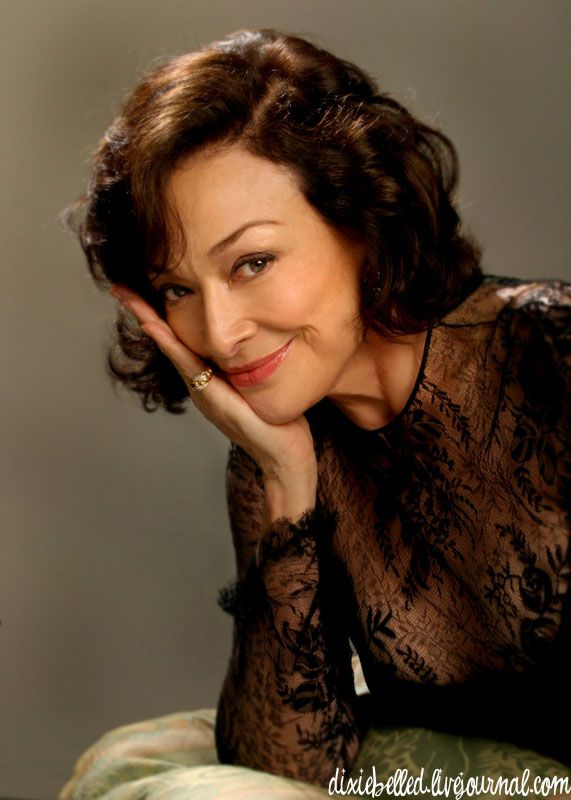
DIXIE CARTER: ICON


April truly is the time of showers. Last April it was Bea Arthur. And now it’s Dixie Carter. All my icons are dying. Donna Summer and Mary Tyler Moore, take care of yourselves, see your doctors just as a precaution.

Bea and Dixie both starred in sitcoms, portraying strong women who spoke their minds as Maude Findlay and Julia Sugarbaker respectively. I loved their characters for their candor, their sense of justice and a raw compassion that viewers could see through their tough exteriors. “Maude” was a show I had to catch in glimpses. When the show wandered into too controversial territory, my mother would send me to my room, the items (continually) spilling from my closet suddenly requiring urgent attention.

By the mid-’80s, I was on my own and no one could control my channel choices. Bea and I got reacquainted when “The Golden Girls” debuted in 1985. “Designing Women” came along a year later. Both shows were must-see programming for me. When I moved to L.A. and finally came out, I wouldn’t go to the clubs on Saturday nights until I’d had my single slice of cheesecake with Rose, Blanche, Sophia and Dorothy. In truth, Rose was my favorite simply because she was so batty (and, yes, it was a delight to see Betty White shed her Sue Ann Nivens). Still, Dorothy was the rock, the one making sense of the insanity. With all the chaos swirling around my life, Dorothy was the one with whom I most identified—right down to the frumpy dating pariah characterization “gently” perpetuated by Blanche.

I bounced around in trying to decide which of the four original “Designing Women” characters I loved the most. Suzanne Sugarbaker was a younger Blanche right down to the Southern accent, Charlene was Rose and Mary Jo and Dixie Carter’s Julia split the Dorothy duties, with a few traces of Sophia thrown in. (Later, Alice Ghostley’s Bernice added another beloved Rose-like voice.) Much of the credit to the strong characters has to be given to writer Linda Bloodworth-Thomason, but Dixie Carter brought Julia to life. Julia regularly got on her pulpit, spouting off lengthy rants about justice and decorum. Her character inspired and empowered me. I daresay Julia Sugarbaker even contributed to my going to law school. (Not that I shared that with any of my fellow students! No, I went with the standard answer, citing “L.A. Law”. Everything is a little different in Los Angeles—even law school.)

While in L.A., I was impressionable with my new gay freedom. I remember meeting a very attractive man at Rage in West Hollywood and thinking I’d found my life partner. During our alcohol-infused conversation, I mentioned that I loved “Designing Women”. He did too! I was shocked and devastated when he failed to return my calls after our one-night fling.

I wrote a spec script for “Designing Women”, but I never dared to show it to anyone other than a jealous partner of mine who had recently given up his dream of becoming a television writer. His feedback was muffled. He did redeem himself by calling David Steinberg (a frequent director on the show and for whom he’d previously worked as a personal assistant) and getting us tickets to a taping of the show. By then, Jan Hooks and Judith Ivey were part of the revolving cast, but Dixie Carter was still there. I sat in a prime seat in the studio audience right beside her husband, Hal Holbrook. I did not dare speak to him, but it was obvious he enjoyed watching her perform as much as I did.

In later years, I did check out “Family Law”, strictly because Dixie Carter was in the cast and I was thrilled to see her surface as the wicked Gloria Hodge on “Desperate Housewives”. But Dixie will always be a beloved icon to me for the life and depth she breathed into Julia Sugarbaker.

Gone too soon.


Thursday, March 25, 2010

THINKING OVER A DO-OVER

Walking the dogs this morning, I glimpsed the For Sale sign perched on the other side of my laurel hedging. It warrants a mention since I haven’t noticed it in weeks. Like the rhododendron that is suddenly blooming,…unremarkable, and then it pops out. That sign has been pitched in the lawn for three months now. I glanced to make sure it hadn’t been vandalized. Of course it hadn’t. I guess I never fully shook that urban mentality.

Although it’s still All Quiet on the Nest-Turn Front, my move back to the Vancouver area got a boost this week with a job offer for a position arising in the summer. I accepted. Rather than activate the panic button over what I’m going to do with the house, I turned my thoughts to reestablishing myself in the city.

There’s excitement, but I’m also concerned about settling back in a city that I’d essentially fled. Absence can make the heart grow delusional. What am I heading back to? I have no doubt I will love the amenities, having a choice in pools, in libraries and gyms. That delights the adult-onset ADD in me. There’s also the expanded food options to add variety to my vegetarian lifestyle: Choices, Whole Foods, Vij’s, Annapurna, The Naam. Shopping, parks, tennis courts, cafés,…it’s easy to glamorize the possibilities.

And yet I only need to take a critical look back to the way things were when I left five years ago. I was nurturing a nascent hermit lifestyle. While I often tell myself that friends stopped calling once a ferry ride created a divide, most of my friendships had been downgraded to acquaintance status (if that) during the last five years of an unhealthy relationship and in the time that followed when I was so worn down by one person that I couldn’t pull myself up to deal with any person. The move to a rural area allowed me to heal, but by then time and space had comatized so many other relationships. Is resuscitation possible?

I’ve had countless episodes in life where I’ve cut off a friend or let a relationship decay only to revive it after a heartfelt mea culpa. If there was something strong enough in the beginning, it came back. In truth, any fractures rarely amounted to solely being my doing. By initiating a reconciliation, I allowed the friend to also have a moment of truth.

Why have I had so many of these experiences? Am I an ass who flits about, sucking what I can from a relationship and then moving on? Some days I can portray myself that way. But, no, I don’t think that is the case. Friendships bloom, evolve, fade, destruct as Life Happens. I happen to be an achingly nostalgic person who rarely settles for the dismissive observation that people move on.

I’ve been lucky. Reconnecting has always been positive. Things don’t go back to the way they were, but that person regains a present storyline in my life. It pales to what once was, but I am grateful there is still something.

I do wonder if my luck is about to run out.

My Vancouver friendships have whittled down to two. There are others I see on occasion, but they are no longer people I feel an urge to call when in crisis or when I’m excited about getting a new job. Returning to Vancouver is a chance for a do-over, but I am preparing for the fact that some doors won’t reopen. In some ways, it may not be radically different from if I’d chosen to relocate to Ottawa instead. I’m going to have to be pounding the pavement, making the phone calls, signing up again for gay tennis and gay volleyball, finding a volunteer organization, rebuilding.

Part do-over, part start over. So, yes, I am excited, but I am also scared. At forty-five, I wonder how much I can change in myself and how many second chances remain.

Sunday, March 14, 2010

HOMOPHOBIA ISN’T GOING ANYWHERE…NOT YET

Prejudice against gays, lesbians, bisexuals and transgendered people continues in Canada. Last’s week’s overheard conversation at the gym only confirms this. “That’s so gay” is a common derogatory putdown still milling about with the equally offensive “Don’t be a retard” (an expression I recently heard my neighbor tell his seven-year-old son). Not enough thought is put into much of what we say. And then I worry that sometimes the thought was there all along.

For the most part, I think in Canada we’ve reached a point where people have learned to be discerning about when and where to honestly disclose lingering feelings of prejudice. I was pleased to see the headline “Underlying resentment of diversity poses challenges” in yesterday’s Vancouver Sun. Obviously not pleased with the continuing resentment, but glad that someone was calling our happy, largely tolerant nation on what lingers. (I wish the article had appeared on the front page rather than being buried on B7. Typically Canadian. Let’s make a point, but not make too big a deal of it.) The article addresses our country’s predicted increase of visible minorities and diverse cultural representations, not gays and lesbians, but the message applies to all who possess a minority status. When hatred and ignorance go underground, they go unchecked and can gain momentum in pockets of society.

Of course, we have it good in Canada, compared to in many other parts of the world. In much of Africa, GLBT people live in fear and continue to face oppression. As outsiders, we can attempt to bring issues to light and to create pressure to change laws and practices, but we can quickly be dismissed as foreign meddlers. That’s why Desmond Tutu’s op-ed piece, “In Africa a step backward on human rights”, in Friday’s Washington Post is so welcome. He outlines some of the hate policies against gays in parts of Africa and rejects the religious veil under which the haters justify themselves. “I would never worship a homophobic God,” he says. Simple. Powerful. Worth a read.

As an adolescent, I did not know anything other than a homophobic God existed. I grew up very connected to church. When my family moved to Texas, routines had to be reestablished and I was the one who insisted that we attend Sunday services each week. My mother and our minister were convinced I’d study theology and become a minister as well. As Episcopalians, we were in the tiny minority in our town, smothered by Southern Baptist dominance, their churches being the only public structures to outnumber Dairy Queens. In my teen years, I witnessed hypocrisy and life changing imperatives when it came to issues of sex— so many tales of sexual awakening stemming from church camps, so many risky abortions and doomed early marriages.

In university, my religious affiliation came unwound. Funny how being exposed to diverse thought put such clear beliefs into question. Morality without compassion felt hollow, self-righteous and, yes, hateful. I cannot count the number of times I heard people limit their own thought processes as they donned holier-than-thou expressions and stated that trite phrase, “Love the sinner, hate the sin.” I knew that “love” could not truly exist in the same sentence with hate.

Nonetheless, my favorite course in university was a study of world religions. In a place where I got the impression that all non-Baptists were going to hell—more than once I was befriended by a seemingly nice person who suddenly turned and grilled me on being “Saved” and “Born Again”—I was fascinated with the different views of divinity and the purpose of life.

Gradually, I pulled away from religion, in part due to feeling unwelcome as a gay man, but also on account of the troubling concept of a “moral war” and the guilt-ridden preoccupation with sin. More than anything, I felt religion impeded independent thinking. I could share a belief, but I wanted to reach it through logic and through consideration of practical implications rather than by way of “Thou shalt”.

Many people find comfort in religion. Wonderful. But religion continues to divide, to foster hatred under the umbrella of “freedom” and to justify inhumane treatment of people who are different. I am thankful that leaders like Desmond Tutu examine their religious views to ensure they are governed by love, without any trace of hate.

Homophobia continues in various degrees in Canada and throughout the world. I have become too quiet, too complacent tucked away in the boonies. An alarming gym conversation, combined with the brave, powerful words of a Nobel Peace Prize recipient, may provide a much needed wakeup call.

Tuesday, March 9, 2010

HARMLESS BANTER AMONG FRIENDS?

My midday gym workout was more painful than usual. True, I was still sore from Saturday’s bicep sets, not to mention my 5K Sunday swim and yesterday’s chest routine. But it was the company that bothered me more than anything.

Due to my year of writing, I have the luxury of going to the gym at any point in the day that I like. (Mornings, however, are never an option. The body is simply not awake enough. Serious injury could occur.) The gym is usually close to empty midday and that’s perfect for me. I don’t go to socialize. Do the drills and get out.

As I pulled into the parking, I was dismayed to see so many pickup trucks. The gym was fairly crowded—packed, considering the time of day—and most of the people were congregated in the weights area, right where I intended to be. Four twentysomething guys talked loudly, liberally throwing in “fuck” and “fuckin’” to prove their masculinity (aka stupidity) to one another. I was not impressed, but I found a free bench, altered my routine based on the weights that were available and tried to tune them out.

That proved fruitless. They talked with an intention of being heard and, worse, they were not content to have a millisecond of dead air. Maybe it’s because I work in solitude at home, interrupted only by the occasional bark as a robin gets too close to the patio door, but the banter was grating.

And then it became more than that. While I did a set on the calf machine, I heard one of them mention AIDS and the guys started laughing so hard they had to stop the sets they were doing. I assumed I’d misheard since the subject seemed far removed from the previous conversation about diminished volleyball skills from drinking beer and a flatulence issue due to a pre-workout coffee stop. I moved to another machine and one of the guys, still laughing, said, “HIV isn’t funny, man.” Another replied, “Especially if you’ve got it.” More hooting.

I frowned but they were too busy enjoying the joke to notice. What decade was this? How had I ended up here?

I said nothing. The moment passed.

A few minutes later, one of the guys complained that the weight they were using was too heavy and his buddy said, “Don’t be a fuckin’ homo, man.”

Homo. The standard putdown. (Funny but I was using heavier weights than them.) This time I couldn’t frown. I turned away, utterly repulsed and opted to further switch up my workout order, doing my ab crunches in another area of the gym. I wasn’t far enough away to completely block out the noise, but I couldn’t make out the conversation.

Fifteen minutes later, the gym was quiet, the guys onto other endeavors. Perhaps a trip to the library. Maybe a quick tour of the latest exhibit at the town’s fledgling art gallery. Surely it was too early to hit one of the area’s half dozen pubs or the liquor store.

With the peace restored, I had plenty of time to think about my inaction. Should I have spoken up? Would it have changed anything? Would I have become the new object of their bond-strengthening homophobia?

I suppose I’ll never know. Cherishing my world of silence, I said nothing.

Wednesday, March 3, 2010

LEFT IN A TENDER MOMENT ALONE

CAUTION: Some sensitive readers may find the incident related in this post too disturbing. As the person who witnessed it, I remain deeply shaken.

I can sometimes embrace being single. Despite occasionally obsessing over finding a guy, I am independent by nature. Even in a relationship, I require significant time alone. And yet there are critical times in life when being on my own totally blows. I had one of those occasions today.

For the second day in a row, I got stuck behind a school bus as I headed home after doing some business in town. I can be an impatient (aggressive?) driver, but I told myself to chill. The bus would have to make several stops to let high school students out and, since passing is not permitted, I could spend the idle seconds petting the dogs.

After the first delay, the bus continued along the road as I followed. Then a deer appeared from the right side of the road in front of the bus. I know there was no time or space for the bus driver to react. And yet I hoped. I watched in horror as the animal was flattened beyond recognition. I pulled over (as did the bus) and shrieked, bawled and shook as my entire body broke out in a cold sweat. The wailing continued as my dogs frantically moved about trying to console me.

I have no doubt I was in shock. Somehow I pulled myself together enough to turn the car around—I couldn’t drive by That Spot—and returned to where I’d been in town, in desperate need to connect with another human being. I patted myself dry (no use, really) with the doggy towel I keep in the car and walked in the building. Ghostly white, hands shaking uncontrollably, tears streaming down my face, I collapsed in a chair and babbled something as people got me a glass of water and an “ice pack” to cool my body down. I remained there for half an hour, chanting “Oh, my God” incessantly until I started to feel faint. The image of what happened replayed over and over, in slow motion. (In truth, the incident, while I witnessed it, played out in slow motion.) I switched from sitting with my head between my knees and a package of frozen perogies resting on my shoulder to kneeling on the carpet, head down as if in prayer.

Finally, I got up, returned the perogies to the freezer and, still stunned, made it to the car. I worried that my dogs would be freaked from observing my hysteria, but they had resumed their naps. Oh, to be a pooch. I sat in the car and patted the dogs, calmly repeating their names as I tried to comfort myself and while waiting for my hands to shake a little less.

To be sure, what I observed would be upsetting to anybody. I just happen to be ultra sensitive when it comes to animals. As a child, I would leave the family room crying uncontrollably on Sunday evenings as a cheetah on Mutual of Omaha’s Wild Kingdom captured its prey. My parents would sit on either side of me in my bedroom as I wept, utterly inconsolable. I still cannot watch most animal documentaries. While I understand the food chain and the laws of nature, I chose not to watch as a life is taken. (I had to stop watching that penguin documentary when it was on TV a year ago, the mere mention of predatory birds creating too much tension.) I have been a vegetarian for twenty-five years. I capture and release not only spiders and moths in my house, but mosquitoes. That should provide more than enough context to explain how upsetting today’s incident has been for me.

Eventually, I drove home. There was no one there to hold me tightly, to let me break down again. There was no one I felt I could call and bawl. I changed my clothes and crawled into bed. Although one dog joined me and nestled up close to me, it wasn’t the same as having a partner to provide comfort and to let me release all the lingering trauma from the most gruesome scene I have ever witnessed.

I saw a life brutally taken in a few agonizing seconds. It pains me that I can’t change that. And I ache as I work through the experience on my own.