|
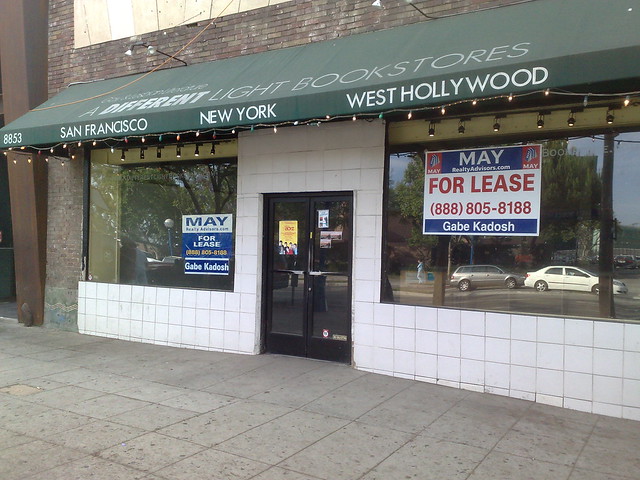
| Support gay bookstores, too. This one is in London. |
Do gay men read books? One of my closest friends reads about two a week, but that’s one extreme. Another friend of mine hasn’t read a book since law school, three decades ago. He’s fond of saying, “I only read if it’s a menu.” That’s another extreme. According to Goodreads, I read thirty-two books in 2023, amounting to eight thousand pages. Not bad for a guy who has always been a slow reader.
I have piles of books in my home and a steady number of titles on hold at the local library, their due dates and limited renewals creating artificial priorities in what gets read. Still, I’m pleased to have a well-established reading habit. While I can stretch Sunday’s New York Times over the course of a week and I read countless articles daily online, I love sticking with a book, seeing how a story or a single nonfiction topic plays out over a few hundred pages. A book offers me many hours of entertainment that I pace myself through over a week or sometimes more than a month. (Reflecting an apparent onset of adult ADHD, I can have up to five books on the go at a time.) I savor some reads, reading in smaller bites to extend the joy, while others demand to be devoured in bigger gulps.

Admittedly, there are also some books that I struggle to maintain a commitment to finishing and a few I decide to abandon, reminding myself that time is precious and there is no need to stick with books that become irritating, pretentious and/or plain boring. A huge shout-out to Daniel Pennac’s The Rights of the Reader for getting real about reading! While Pennac’s first stated tenet is “the right not to read,” I’m hoping that 2024 is a year when more gay men commit to reading more books and, specifically, LGBTQ books.

A favourite gay read
from recent years.
To be even more specific: Please read gay books.
Do I sound like I’m begging? I am.
On Twitter, I follow a lot of gay men. A few of them post regularly about books they read, but so many more identify as “gaymers” in their profile and I get a sense they pass much of their free time playing video games and jumping aboard the bandwagon to stream “Fellow Travelers” or whatever movie/series/special is generating buzz at the moment.

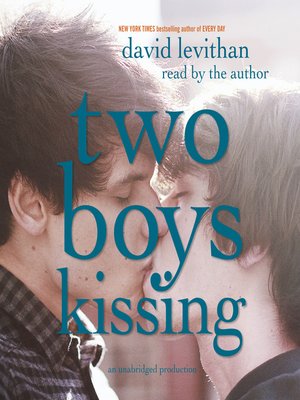
One of the gay books I
read this past year.
To each his own but, selfishly speaking, I really need gay men to be readers. I need them to read gay books and have a few good things to say about them, maybe even posting something positive, possibly creating a buzzy bookish blip on social media. (I just did a quick check of the latest tweets for common hashtags #booktwt and #BookTwitter and nothing in the LGBTQ realm popped up.)

I am a gay writer. I write about various things—ice cream, coffee, mental health, even fly swatters once—but often I focus on something related to being gay. I journal occasionally as it can help me stop obsessing over a darker thought, but mostly I write with the hope someone else will read my work. If someone likes my writing and even comments on it, well, imagine me standing with my shoulders back, my head held high as I tell Dana Carvey’s Church Lady, “Yes. Isn’t that special!” We all need a little affirmation and writing is a solitary endeavor, the sole visitor so often being a voice in one’s head that constantly casts doubt:
What are you doing this for? It’s just drivel.
Why don’t you ever add zombies?

An oldie but a goodie
I’ll say it again: Read gay books. Say something nice about them when possible and, if you can’t, then follow your mama’s advice, not saying anything at all.
If gay men don’t read gay books, publishers don’t have an incentive to put out gay books. They may genuinely love incoming gay manuscripts, but they are running a business. They love money more. Or, at the very least, they need it. Printing books costs money. Shipping books costs money. Same with paying for editors, cover designers, warehouse storage, office heat and lighting, ice cream and coffee. Plus all the other necessities of life.

If people aren’t buying or checking out gay books, if they aren’t talking about them on social media, if they aren’t leaving positive reviews and ratings on Goodreads, fewer gay books are released. The reason there are thousands of Chicken Soup for the Soul books is because people read them (or, at least, buy them). The same for sassy takes on kids’ books, like Go the F**k to Sleep. James Patterson, Colleen Hoover, Stephen King and now Britney Spears could get a publishing deal to print their grocery lists or their annotated log of bathroom behaviors because they’ve proven that people will buy their work. It’s a better bet for a publisher to put out Patterson Poops or Scatting with Britney than to print an amusing take on a suddenly single middle-aged gay character written by some unknown gay dude (me!) who has a blog that no one comments on. (Oh, how I’d welcome the occasion comment!)

A gay young adult
book I read last year.
It's feeling like more of an uphill battle to get gay fiction published these days. Enthusiasm for #LoveIsLove faded once the Supreme Court guaranteed marriage equality in 2015. Foolish as it may be, there’s a complacency about gay rights and no deeper yearning to read about gay lives. Trans rights are the current battleground along with spats over gender pronouns. Stories by and about trans or nonbinary characters are hot. Gay plots? Not so much.
Last year, I received a very discouraging email from a nonbinary, non-white literary agent after submitting the first fifty pages of my still unpublished novel. They stated that “nothing is throwing me off [by your writing] aside from the VERY obvious which is that white men aren’t usually the best fit for my list.” They then openly wondered if “fiction primarily about gay men has kind of peaked already.”

Um...maybe shorts instead?
Peaked? How did my identity become nothing more than a passé trend? Good god, tell me I’m not the equivalent to cargo pants (blech!), Crocs (horrors!) and distressed jeans that flash full knees through oversized holes.
After George Floyd was killed and protests broke out, the publishing industry, like so many other businesses, faced scrutiny over declarations of support for racial justice and minority rights. The words were right, but was there anything to back them up? Where was the diversity in the editors on staff, in agents at firms, in authors on publication and representation lists and in the characters and subject matter that got published?

100%!
Since 2020, it seems to have become standard practice for agents to post in their official agency bios and on their manuscript wish lists a statement like, “I am committed to advocating for the work of authors and artists with marginalized identities” or, “We are looking to engage with work by writers from historically underrepresented communities, including—but not limited to—those who are Black, Indigenous, people of colour, disabled, neurodivergent, or LGBTQIA+.”

A powerful book set
during the AIDS crisis.
For a while, I felt optimistic. I’m gay! I’ve been marginalized! I lived through the AIDS crisis. Hell, I lived more than a decade in Texas. I grew up hearing repeatedly that “my kind” was a bunch of perverts who mixed with pedophiles. Why distinguish though? We were probably pedophiles, too. And recruiters who actively sought to see families disintegrate. I was often patronizingly regarded as a sinner who was loved but whose sin was hated. Sorry, but if you hate an immutable aspect of my identity, I’m never gonna feel the love.
So, yes, hurray! Diverse stories! My time had come. People wanted to publish my stories!

David Sedaris is one of
the best known gay writers,
but so many more authors
deserve to be published.
But it turns out they didn’t. I may have been marginalized, underrepresented and subject to hate and discrimination but not marginalized, underrepresented or subject to hate and discrimination enough. Those opening the gates for more storytellers still controlled the criteria. It seemed like there were only so many spaces saved for the underrepresented and thus it became a contest. Minorities were pitted against one another. Representing a trans author held more cachet than a gay author. A Black gay author looked better on an agent’s profile than a white gay author.
I do not dispute that people who are Black or trans have felt more discrimination on a consistent basis. Being white and male, as the nonbinary agent insinuated, I was privileged which, in some regards, is certainly true, but much of that depends on passing as straight, keeping my gayness in check, liking Sam Smith but not dressing like them or endorsing (or, heaven forbid, adopting) their pronoun preferences.
I did not feel privileged going through school and being mocked relentlessly for my effeminate mannerisms, my total lack of athletic skills and my gravitation to hanging out with girls at recess. I did not feel privileged during my thirty years as an educator, first fearing I’d be fired working in Catholic schools, then worrying about students mutinying and parents pushing for my reassignment (or their child’s transfer) if my gayness were known. It’s why I started this blog anonymously and then wrote under a pseudonym.

A funny book I
reread last year.
I schooled the self-righteous millennial nonbinary agent who lumped me in with all white cisgender men. Technically, I know I am also nonbinary, but I haven’t officially adopted this identity. It wasn’t available during my prolonged coming out years. Getting myself to accept and eventually embrace gay felt like enough of a process. In the past decade, I’ve unveiled all sorts of assigned mental health labels and tried to be open, setting an example in my own effort to break the accompanying stigmas. In terms of myself, I’ve experienced label overload.
When one minority status is lifted up over another for one or two spots, it’s tokenism. It also pits us against one another, dividing rather than uniting us. The fact I’ve feel compelled to say, even beg, READ GAY feels unsavory but a matter of creative survival.

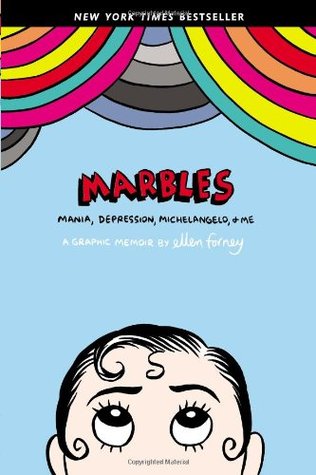
Definitely a thought-
provoking read from
the past year
In the past year, I’ve read books by authors who identified as ace, nonbinary, trans, Black, Korean, Chinese, Jewish, Muslim and polyamorous. The gay authors I’ve read are white, Black, Latino, Jewish and one who was overwhelmingly stuffy and pretentious. I’m rather certain there was a Wiccan in the mix, but I can’t recall who. Some of these authors carry multiple labels. Some choose not to air all of them, hoping one or two labels are enough to entice an agent and editor to give their work a closer look.
Read all kinds of diverse books.

One of the classics I'm
determined to read this year...
but not while wearing
these jeans!
In the end, however, I must advocate for myself and for my aspiring cohort of gay writers. Some who are luckier, younger and more talented do manage to break through. Read something gay. As I’ve already stated, if you like it, tell people, in person and on social media. Maybe even tell the writer. (You’ll make his day, I assure you.) If you don’t like it, just mark it as “read” and move on. Negative reviews are fun to write but they don’t need to be published across any format. If you’re having a really bad day, enjoy an extra scoop of salted caramel ice cream in a waffle cone, but walk away from any temptation to drop a one-star review—that goes for all creative folks and virtually all restaurants and hotels. (If you must, air your gripes privately and directly. It’s more constructive, especially if delivered with a respectful tone.)

Currently reading...
After reading one gay book, maybe read another. Is that asking too much?
One will do. You’ve just supported the arts. Let Love Is Love mutate into something broader and longer lasting. Thank you for your patronage!