Showing posts with label Olivia Newton-John. Show all posts

Monday, August 8, 2022

IF NOT FOR YOU (My Tribute to Olivia Newton-John)


Well, this is a post I don’t want to be writing. Dear Olivia. She was such an influence in my life. Such a lovely human being in so many ways. 


She’d already released several albums before I started listening to pop music on AM radio stations at the age of twelve. In fact, my first purchase of her music was “Olivia Newton-John’s Greatest Hits,” a cassette bought at the long-defunct Sam the Record Man in Hamilton, Ontario in 1977. I never tired of hearing her sing “Have You Never Been Mellow” or “I Honestly Love You” or even lesser tracks like “Something Better to Do” or “Sam.” It endured longer than so many of the tapes I bought in subsequent years, many succumbing to tangled tragedies in cassette decks that suddenly turned from playing to eating my precious music. 


Years later, while I spent a weekend undergoing volunteer training at AIDS Project Los Angeles in 1991, my Chrysler LeBaron convertible passenger side window was smashed, the thief unsuccessful in removing my car stereo, having to settle with making off with the dozens of cassettes I stowed in the vehicle as a makeshift soundtrack for all the times I was stuck in traffic on the 405 or the 10. I was both relieved and insulted that the culprit made a point of rejecting a single item: Olivia’s hits collection was tossed back in the car, resting on the shotgun-side floormat. The criminal was clearly unworthy of Olivia.  


In time, I tracked down every single one of Olivia’s albums, finally stopping after acquiring 1989’s “Warm and Tender,” a pet project of hers. I figured after an artist releases a collection of lullabies for her daughter (and I buy it!), it’s okay to walk away. Fourteen studio albums, three soundtracks and two greatest hits collections—I don’t think I’ve ever owned more music from another artist.


I loved Olivia’s voice. It oozed warmth and sweetness. No doubt, the producers of “Grease” recognized the same thing in her—along with her natural beauty—when casting her in the lead role of Sandy. First time I saw the movie, I was a sheltered kid who was slightly disturbed to see her go from the goody two-shoes singer of “Hopelessly Devoted to You” to a permed-out vixen in tight leather pants—and smoking!—crooning “You’re the One that I Want” alongside John Travolta’s dumb jock Danny. I kept reminding myself it was just a role. Olivia wasn’t that way. If the film makeover seemed scandalous, it was on account of her acting. Such range! A singer AND a thespian! No Oscar nomination? Even more scandalous…to thirteen-year-old me. 


Exactly forty-two years prior to her death, Universal Pictures released “Xanadu” which critics savagely panned. A roller-skating musical with Olivia playing a muse and getting to dance and sing with Gene Kelly was perhaps an acquired taste. Most likely, sourpuss critics hadn’t rushed out like I did six weeks earlier to buy the soundtrack album, Side One consisting of Olivia’s songs and Side Two representing the contributions of the Electric Light Orchestra. I knew every song by heart before hitting the box office. My friends and I watched the movie twice on opening day. That’s the first and only time I’ve ever done that. Needless to say, we LOVED it!


Olivia offered more than just a soundtrack to my adolescence. She was my beard, particularly during my first year in college. Living in a dorm, I was a pimply, dorky sixteen-year-old whose only prior dating experience involved taking Lori Blakely to prom and feeling much relieved when she dumped me midway through the event, flitting off with equally dorky Jeff Hill whom I couldn’t compete with being as he’d been voted Most Likely to Succeed. Kudos, Lori! You saw your opportunity to socially climb and you seized it. I hadn’t yet come to terms with being gay, but I knew I didn’t want to date girls. I suppose I held out hope I’d suddenly wake up one day and realize the alluring appeal of breasts which had been eluding me. I wished for this almost as much as I wished my zits would disappear. 


Let me state the obvious: Wishing wells suck. I wasted so many coins!


My closest friends in the dorm were girl-crazy. Butch, who lived across the hall, was homesick for his high school sweetheart back in Peoria and dropped out after the first semester to be back with her. Herbert, one floor below me, was a pre-med student from Colombia, who fell hard for a girl from Montana and stopped going to classes to spend all his time with her. He got Fs in all classes except his P.E. course, tennis, and didn’t return in January. Michael, down the hall from me, was another pre-med student who kept falling hard for different girls each weekend and clearing his guilty conscience on Mondays by going to confession and being assigned a number of Hail Marys by the campus priest. I stayed loyal to Olivia. 


It goes without saying that I never dated my icon. Never even met her. But I talked incessantly about her the way my friend Laurie from Boston would bring every conversation round to Michael Jackson (and co-opt his one-glove fashion statement). I went to the record store at Fort Worth’s Hulen Mall and begged the manager to let me have the wall-sized Herb Ritts-photographed poster of her “Physical” album—a well spent $10!—which I tacked to the wall above my giant stereo system. I bought a ficus plant to green up my half of the dorm room I shared with an always smelly midwestern frat boy who regularly left me in the hallway as he messed around with his sorority girlfriend. (Did she not have the sense of smell?) I named the plant Aivilo…Olivia backwards. The message to all my dormmates: I wasn’t into dating girls majoring in interior design or economics; I was gaga for Olivia. Hopelessly Devoted to her, indeed. 


All through this time and beyond, I came to respect Olivia for her love of animals and her conviction to protect the environment. When she hosted “Saturday Night Live” in 1982, she insisted on doing a dead-serious political commentary on Weekend Update, railing against President Reagan’s Secretary of the Interior, James Watt. It was an awkward piece, so earnest yet so out of place on a show devoted to comedy. This was Olivia’s own moment to seize the opportunity and attempt to create awareness in a young, captive audience. Chutzpah!
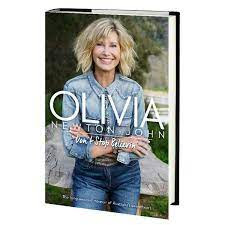


In 2019, I bought her hardcover memoir, Don’t Stop Believin’I looked forward to having her by my side again, in a new incarnation of my old dorm, this time my single room in the eating disorder wing at St. Paul’s Hospital in Vancouver. I knew I would face six or seven difficult weeks there, arguing with dietitians, fretting over being force-fed peanut butter and stressing over a coed bathroom where we weren’t allowed to close the door because the space was constantly supervised in an attempt to thwart the bulimics. (It didn’t matter that I’m anorexic and have never ever thrown up as a means of controlling my weight. The door had to stay open. It was mortifying.) I needed the comfort of Olivia once again, even if I felt the cover photo of the book was less than flattering. 


The book proved to be jarringly disappointing. It was a light read in the worst way. Olivia didn’t have much to say. There was no depth, no insightful commentary about her life’s experiences and most certainly no bite about any difficulties she experienced as a woman in the music and film business. I concluded that Olivia really was pure sweetness, through and through. She apparently ascribed to the belief, “If you don’t have anything nice to say, don’t say anything at all.” Great for life, not so great for creating a compelling read. She was a woman of principle, her heart consistently in the right place—love of family, of animals, of the environment plus a strong desire to fund cancer research and care—but her passions were expressed at a basic level. Dear, Olivia. Sweet yet simple. Lovely but perhaps not an interesting invitee to include at a hypothetical dinner party. Still, the world would be a gentler, kinder place with more Olivias.


Over the years, I read with great concern each time Olivia had a bout of cancer. She always came through, her sunshiny outlook seemingly keeping her in the right frame of mind to battle on. Only a week ago, a friend and I talked about Olivia while on a hike, noting that we hadn’t heard anything about her recently. I reminded myself of the adage, “No news is good news,” but I felt jitters inside. The adage has no application in the world of celebrities. Was she still having to bear down and fight or was she simply recovering and allowing herself quiet times with friends and family to appreciate life? As it turns out, maybe it was both.  

Friday, April 24, 2020

ISOLATION, THEN AND NOW

A year ago this week I entered a different type of social isolation. After sixteen months of various outpatient interventions that I mostly fought against, I was admitted to hospital for what was supposed to be a seven-week stay to deal with my decades-long eating disorder. From the outset, I’m not sure if I was committed. I didn’t tell them at the time, but I didn’t plan to stick around for the full term. I’d already booked a trip to Vegas and the Grand Canyon for the beginning of the seventh week. Anita Baker was on a farewell tour and Vegas was the closest stop to Vancouver. Eating disorder treatment be damned; I was going.

I knew prior to admission that the first week would be the toughest. I would be in Phase One of the program, a period during which I’d receive no passes. I’d be stuck in the hospital wing, one so small nurses barely had to raise their voices to call out “Snack time” from the dining area on one end to be heard deep in the activity room on the other end.

Yeesh. Just recalling snack time makes me cringe. Three times a day, in addition to three meals. It felt they were intent on fattening me up, something I’d clearly stated would be a no-go during several pre-admission meetings. I wasn’t a stereotypical skin-and-bone patient with an eating disorder. I just needed to tweak some “bad” habits involving food restriction and overexercising. I was a skeptic who’d given the people running the program a challenge: show me I can eat more regularly and exercise less without gaining weight. If I gained as much as two pounds, I’d decided I would check myself out. I had a foot out the door from Day One.

In fact, I almost packed up before I’d fully unpacked. On my first afternoon, there was some confusion about the number of times they would take my blood. To call it confusion is being kind; they’d flat out changed the rules. A blood lab technician came by and took my blood that morning, twenty minutes into my admission. I have a serious phobia about needles and blood and all things medical. I’d forewarned everyone. Four nurses stood around trying to distract me and ready to deal with my dead-weight body if I fainted. According to the “agreement” I’d made with my assigned psychiatrist, I’d forego the twice-a-day blood extraction routine and I wouldn’t be stabbed again (yes, that’s how I see it) for four days, and then only if something abnormal came up in my initial blood work.

Logically, there’d be a picture of a needle or taking 
blood here. I couldn’t do it. Started to fee
light-headed Googling images. Honestly. When I 
experience medical trauma, I picture
 my schnauzers. Isn’t Hoover cute?
And yet, sometime around two in the afternoon, a technician with a blood cart strolled back into my room. I panicked. I made a stop sign with my hand. “Oh, no!” I said. “It’s not happening.” The poor technician’s eyes popped out—Drama queen, he probably thought. They don’t pay me enough. He and his little cart switched to reverse gear and I was alone again. It was a good kind of social isolation. I really didn’t need to chat about the weather or Easter with a stranger in a lab coat siphoning my blood. Five minutes later, my assigned nurse and the psychiatrist were pulling up chairs, intent on doing an intervention—Thou shalt give blood, again and again.

It’s exactly what I didn’t want. I had consented to treatment for an eating disorder. I knew frequent blood tests would be an overwhelming distraction, spiking my anxiety, bringing extremely negative associations to the whole program. Like an ornery child, I folded my arms and said, “No more blood or I’m leaving.”

Sometimes little brats get their way, even when they’re 6’1” and fifty-four years old.

I’d “won” but the tantrum took something out of me. I’d warned staff ahead of time that I might be a difficult patient. Having an “entrenched” eating disorder, as several professionals had called it, I knew I’d do a lot of resisting. I was also coming in with negative feelings—even trauma—from two past involuntary admissions to psych wards in the same hospital. I was a nice guy but this was definitely not my happy place. And so I spent most of my first day in self-imposed isolation, in my room, door barely ajar (I wasn’t allowed to shut it). Sometimes I’d sit in the old wooden chair that came with the minimalist décor, but most of my day was spent in bed, the thin blanket pulled all the way up to cover my body, my head turtled under the pillow I’d brought from home.

What have I done?
Do I really need to be here?
How can I put up with this for seven six weeks?

My anxiety triggered many more times that first day. The bathroom was public with two stalls and a nurse barged in during my first visit, telling me I wasn’t allowed to close the hall door. (I learned later that everyone felt she had a particularly abrupt manner.) It freaked me out that, while I was in one stall, a female patient used the second stall. From then on, I planned my bathroom times, counting flushes during prime times so that I knew I was the only one left.

No more water. Please!
The meals and snacks seemed too large and too frequent. My stomach hadn’t digested one before I was having to chew down another. We had to completely finish everything on our institutional food trays, with nurses checking to ensure we’d scraped out every bit from our butter and peanut butter packets (both “never” foods in my home). Even the amount of water I had to drink at every sitting caused stress. (We were forbidden from using the bathroom for the first hour after each meal or snack; hence, those built up prime times.) In the dining area, where I was assigned a seat that would remain my spot for the duration of my stay, I couldn’t keep track of the conversation from the seven other patients and the nurse assigned to supervise the meal. I found myself staring at a whiteboard completely covered with rules about eating. Too much to digest, indeed.

Couldn’t they fix her hair 
for the cover photo?
I combatted anxiety by falling into a depression. Sometimes I can avert this by asserting even greater control over my body, kicking food restriction up a notch (or more) and further increasing my exercise routines. Of course, these weren’t options in hospital. I stuck to my bed whenever possible, sometimes staring blankly at my newly purchased copy of Olivia Newton-John’s memoir, Don’t Stop Believin’, a guilty pleasure that, as it turned out, offered no pleasure. The only other distraction was a Sudoku book I’d packed. I urgently scribbled numbers in little boxes, attempting to blot out harsh self-criticism and a nagging inner voice telling me this program was futile.

In groups, I tried to be compliant or at least silent. I didn’t want my shit to bring down others who actively participated and seemed to be getting something out of this experience. In time, I came around. My mood lifted, my voice returned to normal volume instead of the faint whisper that comes when I’m at my lowest. I adjusted to the mundane aspects of being stuck in a tiny ward smaller that a “Big Brother” set, my discharge date seeming so far, far away. There was some sense of camaraderie that comes with being in a confined, alternate realty together, just the eight of us. “It’s like camp,” one patient said who had been through the program before. “You become besties in the bubble and then you get out and never see each other again.” True enough. We’re not even Facebook friends.

Just like I’m seeing today, confinement led to the creation of routines we never did in that world Beyond the Unit. One cluster took to jigsaw puzzles, imploring visitors to bring thousand-piece forest scenes instead of bunches of tulips. Others passed the time doing some crafty task called Diamond Dotz. A couple others paired up to do New York Times crosswords. With my laptop confiscated, I spent “free” time determined to be productive, revising printouts of aging manuscripts I’d never dared send to agents and publishers.

Pictured, clockwise from top left: 
Chris, Chris, Chris and Chris.
During the evenings, there was a regular Chip and Dale-stylebattle” for viewing choices on the only TV screen on the ward. A year ago, hockey was deep into the NHL playoffs, while “Jeopardy” had a smug guy vying to break Ken Jennings’ records. Meanwhile, the younger twenty-somethings on the unit had a constant supply of DVDs from the library...always some new-ish romantic comedy with young actresses who didn’t seem the least bit memorable and one of those Chris actors (Pratt? Hemsworth? Evans? Pine?--could one of them at least have a different hair color?). My room was unfortunately adjacent to the TV lounge, but I holed up there and tried to tune everyone and everything out, revisiting a blog of mine about children’s books and slogging through Olivia’s knack for making anecdotes from the “Grease” set and the making of the “Physical” video as spicy as, well, Sandra Dee.

It was a constant challenge to stay busy, knowing that time continued to tick by in the real world beyond the locked door at the end of the hall. People had freedom to eat what and when they wanted. They could go wherever they wished. No one monitored their movements documenting everything in hefty binders. Imagine.

A year later, I’m back in some form of isolation. I see tweets every day from people struggling with boredom, with lack of human contact, with closed gyms, restaurants and salons. Pardon the food reference, but this is a cake walk. I find the current situation exponentially more tolerable than what I experienced for six weeks on a locked hospital ward. Sure, we have to socially distance ourselves and do without services we’ve always taken for granted but, as the saying goes, misery loves company. We’re in this together.

One of the many murals popping up in Vancouver’s 
Gastown as owners temporarily board up businesses.
The weirdness of the moment goes so far beyond a shared experience of eight patients whose damaged pasts have manifested themselves in tenacious eating disorders. In the present, I spend much more of my time appreciating what’s come of this coronavirus crackdown. I love how the streets of Vancouver are clearer and how bike trails are getting more usage. I am heartened when I see families on leisurely walks. (I smiled broadly yesterday while I biked along a forested path and passed a father flanked by four children, one in a Spiderman costume, all carrying big sticks to fend off pirates and whatnot. Memories.) My daily scroll through my Facebook feed lacks the typical travel photos, but I see fewer blatantly political posts being shared and many more memes spreading humor, kindness and a greater regard for our eldest citizens. I find myself being especially courteous to grocery clerks and it warms me that others are doing the same. I step out on my balcony at seven every night, a little too reserved and musically insecure to bang on my own pots and pans, but soaking in the din intended to express gratitude for health-care workers (and, just maybe, to let out some built-up steam).

Yes, I daresay, there’s much more to like about the present “isolation”. In some ways, I feel more connected to humanity than ever.