Showing posts with label Madonna. Show all posts

Friday, January 20, 2023

DO I HAVE TO RESCIND MY "GAY" CARD IF I DIDN'T EVEN THINK ABOUT GOING TO THE MADONNA CONCERT?


So Madonna having a 40th anniversary concert tour. It opens in Vancouver at Rogers Arena, a ten-minute walk from my place. Tickets went on sale today. I didn’t get them. Didn’t even try.


Weirdly, I’ve never been to a Madonna concert. I had all her albums up until “Ray of Light.” Even bought the extended single for “Get into the Groove” when it didn’t appear on an album. Hell, I bought the 45 of “Sidewalk Talk” by Jellybean Benitez because Madonna sang backing vocals. And, let’s face it, Madonna wasn’t really known for her vocals.


I adored Madonna as much as the next gay in the ’80s and ’90s. I even considered myself a fan before the gays latched onto her. That first hit, “Holiday,” had me. It wasn’t ever going to be nominated for a Grammy, but it was an insanely catchy piece of pop music. It made me want to dance around in my dorm room. It made me happy. When “Borderline” got me believing there might be a career for this singer who dared to be so self-important as to go by one name—hoping to be more Cher than Melanie—I bought her album. I loved it all. I propped up the album cover in the window, letting it compete with my enormous poster for Olivia Newton-John’s “Physical” album. Every song gave me happy dancing vibes. Through repeated plays, I managed to never scratch the vinyl. I suppose I took extra care. 


Madonna broke out as MTV and music videos were taking off. I always stopped everything I was doing when “Borderline” came on. There’s a little kick she does against a street pole that still gets me. I don’t know why. Her video for “Lucky Star” was barebones—simple dance moves against a white background. I couldn’t look away. Madonna worked some sort of hypnotic power over me. I was a fan before ever coming out, before ever stepping foot on a dancefloor in a gay bar.


Still, no concert. I’m admittedly not a huge concert goer. My experience has been shelling out lots of money for crappy seats, particularly back in the ’80s and early ’90s when I didn’t have much money. I once went to a Bette Midler concert and only glimpsed her from high above whenever she appeared on the right side of the stage which, as luck would have it, was far less than half the time. (Or so it seemed.) Still, I’ve been fortunate to see some greats. Barry Manilow—say what you want about his music, but the guy knew how to put on a show—Elton John, Natalie Cole, Barbra Streisand, Melissa Etheridge, Sarah McLachlan, Lady Gaga, Anita Baker, even Kenny Rogers in his prime. (It was during my Texas years and I had a crush on a guy who was in the group I went with. It was mighty weird pining over a dude, giving him sideways glances as Kenny sang “Lady.”) 


I suppose the Blond Ambition tour would have been when I wanted to see her the most. I passed. I think part of me knew the vocals wouldn’t be nearly as good as her voice on record. I give her credit for using a real mic while dancing around, Burning Up more oodles more calories than I ever worked off during Super Step classes at the gym. Glad she didn’t go the Janet or Britney route and lip sync. In truth, I was never drawn to Madonna as a staged spectacle. I didn’t need the shock value gimmicks involving conical boobs and potshots at Catholicism. Feigning shock and indignation over attempts to ban or arrest her were sideline theatrics that most of her fans lapped up. Papa Don’t Preach, indeed! It made seeing her live come off as its own daring act. Truth is I never cared for her tough girl banter and watching a concert clip of her vaudevillian banging around with backing vocalists on “Causing a Commotion” came off as juvenile. All I wanted was the music. I stayed home, irking only the neighbors as I sang along—badly—to “Crazy for You” and “Open Your Heart.” 
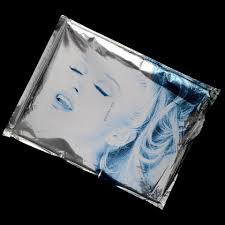


She’s always sought the limelight. Craved it. Commanded it. Sometimes I wonder how much bigger she’d have been—is that even possible?—had she gotten her start with TikTok going at full steam, with all the other social media platforms. She’d have out-Kardashianed Kim. 

As much as her extensive discography, she’s still remembered for writhing around in a wedding dress while singing “Like a Virgin” at the 1984 MTV Awards, her “Justify My Love” video, “Erotica,” the Sex book and deep throating a bottle in the “Truth or Dare” documentary. 


Yes, she pushed sex while Nancy Reagan was telling youth to “Just Say No” and she accepted gay men with open arms while governments and the public shunned them during the AIDS crisis. She made coming out better. She made clubbing more fun as we Vogued and stared at the screens, ogling the male models in her “Cherish” video. An icon, without a doubt. 


But then it got derivative. Kissing Britney and Christina at the 2003 MTV Awards. Mounting herself on a crucifix during a 2013 tour. I had to look that one up. Don’t remember it. Don’t know if I even read about it at the time. Madonna wasn’t making headlines anymore.


Madonna’s attempts to grab headlines now seem forced. Embarrassing even. There have been inane comments about COVID and more flesh-baring moments that come off as tired and desperate rather than edgy. It’s hard to come off as hip when she’s already been there and done all of that. A fake Truth or Dare video with Amy Schumer saying, “I dare you to go on tour” seems childish…and boring. Brings the game back to its roots—fifth graders on a playground—instead of that era of the ’80s and ’90s when gays lapped up everything Madonna said and did.


By now, I’d have hoped Madonna would have evolved. Matured even. Maybe taken inspiration from the legacies of Dolly Parton, Audrey Hepburn and Jane Fonda. I don’t want to see a sixty-four-year-old mother of six baring her breasts yet again, searching for ways for it to seem fresh. It’ll never be fresh again. 


Not that Madonna’s leaning on me for career and image advice, but I’d rather Madonna spend more time as the strong advocate she’s been, speaking out about gay rights, women’s rights and the continuing discrepancies in healthcare and education in places like Malawi from where she adopted four of her children. I Googled Madonna’s name along with “trans rights” and nothing specific came up. I would have thought she’d have been speaking out against J.K. Rowling, mocking conservatives who are afraid to use public bathrooms and showing up at protests to raise concerns about violence toward people who identify as transgender.  


Scanning her activity on Twitter over the past year, there’s lots of self-promotion, which is to be expected, along with a couple of tweets about voting, another that says “Artists are here to disturb the peace,” a couple of Pride tweets and a few in-the-moment about abortions rights after the Supreme Court overturned Roe v. Wade, one about Uvalde, one from thirteen months ago about “bring(ing) lifesaving healthcare to children in Malawi and all around the world.” It’s good but there is no sustained attention to any cause. 


Not that she has to do anything. I’ve just always associated her with poking at entrenched conservatives while putting the spotlight on, not just herself, but human rights. I also Googled Annie Lennox, another ’80s icon, to discover that Lennox continues to do the good work. It’s not so well known in North America because her star has faded. I believe Madonna can still get attention, albeit a fraction of what she once garnered. She could put it to good use, getting into “good trouble.” She’d find creative ways to bring attention to causes, probably building on the brash, ballsy reputation she’s built. That would excite me. That would make me pay attention to more of what she’s up to. I probably still wouldn’t pay for a concert ticket but, if she were part of a large-scale concert for a key cause, that might be what it takes for me to finally see her live.


In the meantime, I’ll sit out this tour. I’ll continue to listen to the music though. Currently, I’m rediscovering “Drowned World/Substitute for Love,” the overlooked “Ghosttown” and gems like “Rain” and “Don’t Tell Me,” along with all the bigger hits. 


If you got tickets, enjoy the show. Dance, sing, laugh. I suppose that’s how it all started as Madonna rose to fame all those years ago.

Friday, March 5, 2021

“LOVE” AND “SIN”: TWO NEW WORKS PORTRAY WHAT IT WAS LIKE BEING GAY DURING THE AIDS CRISIS


Here I go, writing about the AIDS crisis again. Sorry, most definitely not sorry. If I don’t, who will?


Thankfully, Abdi Nazemian and Russell T. Davies will. Yesterday, by coincidence, I finished reading Nazemian’s young adult novel, Like a Love Story, and watching Davies’s TV series “It’s a Sin.” The former chronicles the friendship of three high school seniors in New York City in 1989-1990 while the latter depicts a group of young gay men coming out, celebrating freedom and friendship in London from 1981 to 1991. For both works, AIDS lurks in the background when it’s not figuring prominently into the plot.


It’s a Sin” is a five-episode series, primarily focused on Ritchie, Colin, Roscoe and their gal pal, Jill. In their early twenties as of 1981, they are keen to live life to the fullest, far from knowing eyes in small towns (as with Ritichie and Colin) or away from the harsh need to cure gayness in Roscoe’s family of Nigerian immigrants. In London, the boys can finally step out of closets and let loose, exploring attraction and sexuality they’d kept in check as teens. With its British lens, the series adds another layer to the early denial of a rumored gay cancer. If it even exists—and Ritchie is the fiercest denier—it’s American. Have fun; just don’t have sex with Americans.


In
Like a Love Story, Reza is a new student at a private high school in the Big Apple. Born in Iran, Reza’s immediate family except his father flees to Toronto during the Iranian Revolution. His father, a strict, dark figure, dies in Iran and his mother remarries a wealthy Iranian who lives in New York. By American standards, Reza is formal, reserved and out of tune to the pop culture his peers devour. Judy, a friendly, unfiltered chatty, possibly plus-sized girl who aspires to be an edgy fashion designer, is smitten with the new student the moment she first sees his face and feet, the rest of Reza shielded by an open locker door. Her best friend is Art, a budding photographer and the only identifiable gay person in the school. He’s proud and combative, refusing to submit to the constant hate spewed by other guys at school. Reza’s been raised to conform to familial and cultural expectations, thus creating internal conflict as he struggles with his sexual identity. He’s drawn to Judy and Art who come off as bold, unique individuals. He senses instant friendship with Judy while fighting an attraction to Art. It’s easier to date Judy than to figure out what else he may be feeling.


Reza doesn’t get that period of elation and rampant promiscuity that Ritchie and the gang get in “It’s a Sin.” Much has changed from 1981 to 1989. Reza’s struggle with recognizing a gay identity is weighed down further by the times. Not only does he fear losing family if he comes out as gay, he fears dying from acting on any desires. Gay = AIDS = Death.


B
oth works depict AIDS activism although it’s more of a constant thread in Like a Love Story as Judy’s Uncle Stephen is highly involved in ACT UP protests and Art attends weekly meetings with Stephen whom Art sees as a beloved mentor and father figure. As Nazemian explains in his author’s note, the protests depicted in the novel are based on actual ones. In “It’s a Sin,” Ritchie is openly critical of early activism. He views them as fearmongers. When Jill and Ritchie’s on-again, off-again boyfriend, Ash, get involved, Ritchie continues to want no part. He’s an actor, he reasons; if he’s seen at a protest, it’ll kill his career or, at the very least, limit him to bit parts of gay sidekicks.


Parental denial or abandonment also plays a role in both works, more memorably in “It’s a Sin.” This was a huge issue during the AIDS crisis, with men struggling with the doubly difficult disclosure: “Mom, Dad, I’m gay. And I’ve got AIDS.” Sons were disowned or they were taken back in while their lovers were shut out. Many obituaries of young men mentioned cancer or pneumonia, omitting any reference to AIDS. Both works offer glimmers of better moments when parents and other family members offer compassion and do their best to accept these men for who they were, not a moment to lose.


And that gets to unflinching portrayals of loss, men stripped of dignity, their remaining loved ones helplessly doing what they can to offer comfort while dealing with their own anger and grief. This is always hard to watch or read, but it’s essential if people are to understand how devastating AIDS was to the gay community and how much was taken from society as a whole.


O
n a lighter note, each work pays homage to the music of the time. “It’s a Sin” prominently features gay-friendly music by The Communards, Pet Shop Boys and Kate Bush. Like a Love Story often comes off as an impassioned tribute to Madonna, an artist who enthralled gay men and young women and regularly preached love and compassion for gays. Even the title of the book is derived from a love of Madonna. It’s a twist on her albums, Like a Virgin and Like a Prayer. Early on, Art tells Reza:


           “In between Like a Virgin and Like a Prayer

           she released True Blue...Sex and religion 

           aren’t clear-cut to her, but love is.

           She didn’t call it Like a True Blue.”


          “Like a Romance,” [Reza] says.


          “Like a Love Story,” [Art] adds.


There’s more hope in Love Story, especially with it’s epilogue. By contrast, “It’s a Sin” feels no need to take us beyond Christmas 1991 when AIDS was still an unchecked monster.


I related to both works. Like a Love Story captures the fear I had coming out in the midst of the AIDS crisis. Living to the age of forty seemed utterly impossible. As involved as I got in volunteering (I felt conflicted over the protests), it was a challenge to believe or hope that AIDS could be managed. In 1990, the medications advocates fought so passionately for seemed as destructive as the disease itself, compromised immune systems ill-equipped to deal with what might normally be considered inconvenient or unpleasant side effects. “It’s a Sin,” with a greater window of time for the main story, is better able to show that many gay men initially considered early reports of this disease as a hyped up hoax, part of some sort of governmental conspiracy to dissuade and condemn gay sex.


My main criticism of “It’s a Sin” is that the story arc feels rushed. Had it been a movie, there might have been fewer characters to focus upon. But it seems that Davies, who previously created “Queer as Folk,” wanted to illuminate larger issues regarding AIDS rather than providing a more intimate portrayal of, say, one couple. In interviews Davies has said there will be no second season of the show; he accomplished what he wanted. Fair enough. Still, when television is the platform, it’s easy to imagine how much more depth there could have been in character development and in unpacking the societal, political and medical climate of the time. Perhaps it’s inspiring for other creators of gay content to know there is much more to be covered now that “It’s a Sin” may have piqued renewed interest in understanding what happened during the years when so much about AIDS was unknown whiled shrouded in judgment and shame. In Like a Love Story, Judy’s Uncle Stephen offers a call to action that I’ve long felt:


           What we did. What we fought for. Our history.

           Who we are. They won’t teach it in schools. They

           don’t want us to have a history. They don’t see us.

           They don’t know we are another country, with

           invisible borders, that we are a people. You have

           to make them see. You have to remember it. And

           to share it. Please. Time passes, and people forget.

           Don’t let them.


I don’t have access to figures regarding book sales, but it seems both Love and “Sin” have found an audience. Most people under thirty-five won’t have personal memories or experiences related to HIV at a time when it defied treatment. Perhaps they can recall an uncle or neighbor who died of AIDS, more from a few photos or stories shared by older relatives. The varied responses to the coronavirus give younger viewers and readers a current framework with which they can compare and contextualize the AIDS crisis. Whatever age you are, both works are worth checking out.