Showing posts with label LGBTQ fiction. Show all posts

Monday, September 29, 2025

RUN AWAY WITH ME (Book Review)


By Brian Selznick


(Scholastic, 2025)


I’ve been a fan of Brian Selznick since before I knew it. His name first registered with me with the publication of thick-as-a-brick books The Invention of Hugo Cabret (2007)adapted into the 2011 Martin Scorsese film Hugo, and Wonderstruck (2011)What I didn’t realize—or I’d forgotten—is that Selznick also illustrated middle grade novels by Andrew Clements such as Frindle (1996) and The School Story (2001). What makes Selznick’s novels distinct is that they are chock full of illustrations which are not presented in the traditional way where they are spread out throughout chapters; instead, his illustrations come in large chunks, pages and pages of detailed black and white, full-page sketches. The illustrations often move the story along, filling gaps between the sections of prose that come before and after.


His new book, Run Away with Me, is a slight departure from Hugo and Wonderstruck which were both what I would classify as middle grade. Run Away is decidedly young adult in terms of content and its two sixteen-year-old main characters, Danny and Angelo. As well, the chunks of illustrations appear at the beginning (the first ninety-three pages) and the end (the last eighteen), none interspersed within the prose. For the most part, the illustrations don’t propel the story but enhance it. For instance, I found myself constantly flipping back to the first set of illustrations as particular places were mentioned in the story.


I would say this is a book about storytelling, both oral and in print. In the prologue, the narrator (Danny), tells the reader that the book is set in Rome in the summer of 1986. The prologue goes on to say that he met “a strange, curly-haired boy…who told me he had no name and shared true stories that couldn’t possibly have been true.” Indeed, the boy, Angelo—a name Danny ascribes to him—claims to be nearly three thousand years old. Selznick also gives us an idea of the tone of the novel when he writes: “He took over my imagination until he was all I could see, in every brick and stone and sculpture of the city. He looked like an angel…”


Yes, Selznick, the immensely successful children’s author has decided to tell a gay love story. (After the prologue, I immediately flipped to the About the Author page at the end wherein Selznick’s husband is mentioned.) A gay love story for younger teens. Not the first, but a welcome addition. Hallelujah! 


In the main story, Danny and Angelo spend their days wandering—running, often—through the streets of Rome where Angelo seems to have his own stories to go with every statue, fountain and, of particular interest to Danny, obelisk. Some stories are one-time tellings while others continue throughout the novel, most notably a story about the twin Mondo brothers, Alberto and Vittorio, and a sculptor and a young man who seemingly needs to live at sea, Dante and Giovanni. Incidentally, Danny’s mother works at the Mondo Museum, a site dedicated to books, especially known for restoring old and damaged works. 


Yes, the story is not just a love story between two boys, but also and ode to storytelling, books and the city of Rome. 


More than anything as I read the book, I wished I’d had something like this to read when I was fourteen or fifteen or even while I was still mostly closeted in 1986 at twenty-one. There is a tenderness between these boys from the very beginning:


                                    He looked at me with a dazzling 

                                    kind of joy, deep and pure and full 

                                    of surprise. I’d spent so long hiding 

                                    in the shadows, looking longingly at 

                                    others, I’d never imagined someone

                                    might look back.


This is a love story young queer readers deserve. The boys’ first kiss:

                                    He was quoting a famous poem by 

                                    Keats…When he was done reciting, 

                                    he slipped off my glasses, folded 

                                    them, and put them in my shirt 

                                    pocket. He then placed his hands

                                    on either side of my face. He was 

                                    trembling slightly, and so was I. 

                                    We both leaned forward, closer to 

                                    each other. Our lips touched, and 

                                    I understood what I’d been

                                    running toward all this time.


                                    We kissed, and he tasted of 

                                    honey, and figs, and Rome.


I wish my taste buds were that good.


As the boys spend more time together, they share more about their real lives and interests but the storytelling never stops. In fact, there are three other gay couples whose stories are told within the book. How great to have a book like this on shelves young readers can access! Selznick is masterful in putting just enough on the page while leaving details to the reader’s own mind, thus thwarting book banners who might salivate at the chance to rid libraries of another gay book. (I Googled and it doesn’t appear that the book has created a ruckus.)


As an adult reading Run Away with Me, it’s another reminder how far we’ve come in terms of gay visibility and validation. It also emboldens me to fight for other queer stories on bookshelves so readers with other identities can access their own love stories…or mysteries, thrillers and fantasies. 


Monday, November 29, 2021

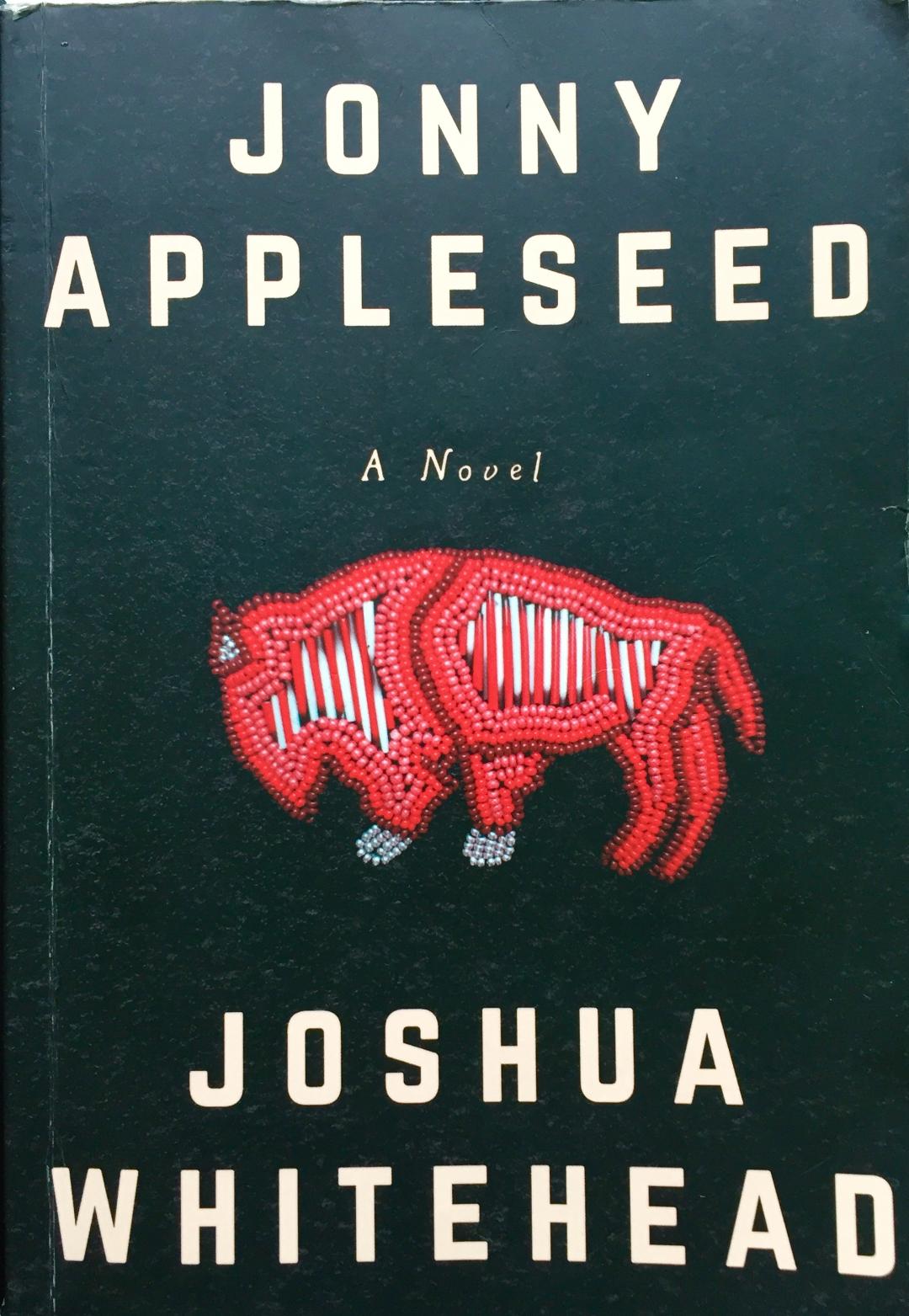
JONNY APPLESEED (Book Review)


By Joshua Whitehead


(Arsenal Pulp Press, 2018)


It’s interesting that the front cover of this book expressly notes that this is “A Novel.” So often, as I read the anecdotes, I felt certain they were mined directly from the author’s actual experiences. We writers do implant much of our lives into our fiction, but things seemed particularly real here. To the extent the anecdotes are imagined, then it’s high praise to Joshua Whitehead that they came off feeling like memoir. 


The fact that I used the word “anecdotes” twice in the opening paragraph is intentional. The novel comes off as a series of vivid vignettes which jump all over the place in time and place. To the extent there is an overarching plot, it involves the titular character earning enough money to make it back to the reservation where he grew up so that he can attend a funeral. The stakes don’t feel high and there is no suspense about whether he or won’t get there on time. 


It’s a meandering journey from beginning to end. Sometimes the weaving of past and present plays out in a series of alternating paragraphs. Not my thing, but I appreciated what the author had set out to do. Other times, I’d completely forget that Jonny was trying to get back home since there’d been so many digressions. This might be intentional. I’m no expert on First Nations storytelling, but a quick Google turned up some information about there being a non-linear tradition which also reminds me of some stories I heard from Elders when I lived on BC’s Sunshine Coast on the traditional territory of the Squamish and Sechelt First Nations.


What makes this novel compelling is the voice. Jonny identifies as a 2S (Two-Spirit) NDN (Indian) who has left the rez in rural Manitoba to make a go of living in the big city, in this case Winnipeg. Whitehead’s writing makes a strong case for the importance of #ownvoices telling stories from a minority perspective. The slang and the inclusion of terms from First Nations languages enrich the novel. 


A couple examples from random page flips provide a sense of the flavor:


The house looked like the ones on the rez, two-storeys, an off-green shade, and two windows on the second floor that look like eyes. We always thought our houses looked like Oscar the Grouch’s—maybe they were like that everywhere? Do all rezzes look the same? Like some NDN Sesame Street?

**


            I bought a pack of Pall Malls for ten bucks, took one out, and lit it up. That feeling of relaxation came over me, the kind that burns your throat but makes you feel like you’re back home even if you’re hundreds of miles away. A good cigarette is like a familiar story. A Nate [Native] saw me spark one up and made his way over to me. 

            “Hey cuz, can I bum a light?”

            “Oh yeah, sure.”

            “Oh hey, can I bum a smoke too?”

            Damn trickster, I thought, someone’s taught him well.


Jonny is frank about his life and what his chances are in making it off the rez. His primary source of income comes as a sex worker, typically through a form of online show and tell but also from meeting in person. I’ve never been a fan of having a main character be a queer sex worker. In the past, I’ll admit to being a judgmental prude, but that’s not the case anymore. People are advantaged and disadvantaged. They do what they can to make ends meet. However, the queer sex worker is a cliché in gay fiction. (I’m sure I’ve mentioned before that a guy I dated more than twenty-five years ago read gay fiction almost exclusively. Every time I’d see a new book in his car or on the nightstand, I’d ask, “What’s the name of the gay hustler?” He’d frown, but there was always one. Maybe it made for more interesting reading than a story about the gay antiques dealer or the gay florist.) 


Thankfully, the sex work is not the core of the novel. There’s as much talk about the amount money he needs to earn from his vocation as there are details of the job and, combined, it’s still minor part of the story. (I'm glad I kept reading after coming across what may be the worst sentence I've read all year. Describing a dream, Whitehead writes, "Bees buzz around (a lilac), their wings slicing through the air, their bodies velvet smooth in a way that reminds me of how I like to shave my pubes." WHAT? It appears, ironically, on page 69. Whitehead is a much better writer. I feel the editor should have stepped in and said, "Um...just no.") Jonny’s connection to a few prominent characters lends heart to the story. Above all is his loving relationship with his kookum (grandmother) who unequivocally accepts Jonny along with his feminine tendencies from when he was a young boy. He is who he is and she couldn’t love him more. A petite woman, kookum is not to be messed with, except by her own daughter, Jonny’s mother. Both women are prone to drink too much—Jonny, too—but his mother is more of a work in progress who often left the parenting to Jonny’s grandmother. His kookum instills a strength in Jonny, including a sense of pride in indigenous beliefs and traditions. 


The other prominent relationship is with Jonny’s childhood friend on the rez, Tias. There’s a casualness to the sexual intimacy between the two men, a natural part of the love between them. Jonny would likely choose Tias as his partner for life, but Tias likes women too and his intimacy with Jonny, while beyond being an experimental phase, comes off as impermanent. Jonny will take what he can get, knowing that Tias is connected to his girlfriend, Jordan, and that Tias will likely opt for a more conventional straight life. In the hands of another writer, it might be easy to judge Tias, even dislike him, but he’s genuinely trying to live his best life, very much wanting Jonny to be a part of it. Yes, it’s complicated as is most everything for the characters in this book.


Many vignettes are delightful such as an account of Jonny having to work in a group as part of a class “Culturama” project in elementary school. Why learn about his own heritage when a report on Sweden is what is assigned? A bossy group member rejects his first version of rice pudding—there’s always a food element in these reports on foreign countries—so his mother figures out how to meet the Swedish standard. 


“Heck, they eat reindeer? Maybe we have more in common than I thought,” she said. When she flipped to the last page, which was about the Swedish tradition of blood pudding, she started laughing… “Here, m’boy. I have just the thing.” 


After the bossy girl tastes the revamped recipe, she screams, “This tastes like shit!” However it tastes, it leaves its mark on the girl’s tongue. “It’s not just red,” I told her. “It’s NDN red.”


There are memorable tales about encountering a bear in the street, stumbling upon a dead porcupine and the two boys being caught wearing nail polish by Tais’s stepfather. The tone of each differs remarkably. 


Whitehead doesn’t whitewash life on or off the rez. There are bleak aspects to both but there’s also a strong sense of survival, of loving people despite their flaws and of holding on fiercely to what makes one unique as a culture, as an orientation, as an individual. 


Jonny Appleseed is a novel that will stick with me. I’m sure a second read will bring more to light. I look forward to following Whitehead’s literary career.


Monday, October 4, 2021

THE GUNCLE (Book Review)


By Steven Rowley


(G.P. Putnam’s Sons, 2021)


So often, comedy goes unrewarded. I’m in hysterics whenever I watch “Best in Show,” a mockumentary about dog shows, starring Eugene Levy, Catherine O’Hara, Fred Willard, Jennifer Coolidge, Jane Lynch, Parker Posey and Christopher Guest. Oscar nominations? Zero. I worry the neighbors will make a noise complaint to the police as I roar with laughter watching Steve Martin and John Candy play off one another in “Planes, Trains and Automobiles.” No Oscar love. The Academy honored Martin with an honorary Oscar in 2013 despite never nominating him for any of his film roles. I know the common stance: comedies aren’t that kind of movie. As if being funny is effortless, as if we should shrug and take it for granted.


When I say that Steven Rowley’s The Guncle is a fun read, I mean that with the highest regard. He is supremely talented in writing humor. The quips and the antics hold strong throughout the book’s more than three hundred pages.


The Guncle is the story of Patrick O’Hara, a forty-three-year-old gay actor, very out and very out of touch with the career that’s allowed him to live comfortably and carefree in Palm Springs. Patrick won a Golden Globe as a sitcom star, but the show finished its run and he, well, ran. That was four years ago, an eternity in Hollywood. Something has kept him away, from his career and life.


When his best friend, Sara, dies after a battle with cancer (this is not a spoiler; we know this by the third page of the first chapter), Patrick flies to Connecticut for the funeral and to be with brother, Greg, who happens to have married Sara. I’ll admit that all this connectedness struck me as too convenient for the plot. Yeah, right. I went with it because, contrived or not, it sets things up beautifully.


Greg requests that his brother take care of the two kids, Maisie and Grant (ages nine and six), for the three months of summer while Greg gets his act together. Patrick, Mr. No Responsibilities, balks. How the hell would he fit his niece and nephew into his cocktail-abundant Palm Springs life in a plush home never intended for kids as guests much less as inhabitants? 


As we see from the outset, Patrick has no business being a stand-in parent:


He takes the kids to brunch—horrified that that’s not a thing for them—and breaks it to them that he isn’t going to take them. (Who does that?!) Young Grant asks, “Why do you live in Palm Spwings? Why do you live tho far away?” Patrick explains: “[I]f you must know, I’m young in Palm Springs. Okay? This is the sad truth for gay men. Forty is ancient in Los Angeles, middle-aged in San Francisco, but young in Palm Springs. That’s why I live there.”


“You’re forty-three!” Maisie bellowed.

“Who are you, the DMV? Lower your voice.”


“That’s almost fifty!” Grant’s eyes grew big.


Patrick took the jab, then closed his eyes and bit his lower lip, the observation just shy of a hate crime. Do not punch a child, do not punch a child. “Can we please focus?”


Of course, no becomes yes, perhaps for the wrong reasons. I’ll just say that sibling rivalries can make people do crazy things. 


Patrick’s way of parenting is, no surprise, unorthodox. He isn’t used to being around children and he does little to edit himself, still drinking, still swearing, still inserting snappy references which fly over the children’s heads. I’m not going to look up the specific quotes, but Maisie often asks, “What are you even saying?” while Grant says, “You talk funny.” Indeed, Patrick drops so many movie references and Oscar Wilde quotes that adults (characters and readers, including myself) don’t always know what Patrick is saying.


It’s my understanding that, being a guncle, you get to be the fun relative in the lives of nieces and nephews. Obviously, Patrick’s got that in spades. It’s an interesting premise when he has to shift (somewhat, at least) from guncling to parenting. There are times when the humor seems inappropriate, even for Patrick O’Hara. As Rowley adds deeper layers to the story, his main character resists and almost sabotages his writer. Some of the potency doesn’t quite land. In some ways, that’s all right. A story involving how to cope with the death of your best friend—not to mention the children’s mother—can get melodramatic. No risk of that here. Still, there are grays, something in between, a sweet spot, which The Guncle orbits around. 


I’ve known many a Patrick O’Hara when I’ve been more connected to gay circles. They may seem like caricatures—old, campy queens, as they were once known—but they are still around and, in small doses, at least, they are a riot. Often, I’ve sat at coffee or stood in a bar around one or two Patricks and been in awe, not wanting to be them, but at least wishing I could keep up. How do they stay so ON all the time? 


I’m surprised that the main character didn’t wear on me after the first hundred pages. Steven Rowley is just that skilled as a writer to make a would-be shell of a character something more and someone whose every comment and action entertains. 


How good is the writing? It’s so jam-packed with humor, I look forward to a second read to laugh and smile again at certain passages and to discover funny bits I glossed over the first time. When Rowley writes almost as a throwaway sentence, “Guests smiled and waved as Patrick weaved through the crowd, many hugged him tight and declared some version of Where have you been?, each putting their emphasis on a different word in the question,” I had to stop, channel my inner Chandler Bing and pose the question with different emphases as well. Again, a FUN read. 


As well, Rowley has done the impossible for me personally. I lived in Los Angeles for five years and friends often went to Palm Springs for weekend getaways and the annual White Party. The idea of going along was always a firm HELL, NO for me: too hot, too gay. People would tell me, “But they have misters everywhere,” meaning little showerheads or something that spritz water on you to keep you cool and refreshed. (Or did “misters” really refer to older men?!) I’ve had several friends move to Palm Springs and privately mourned. Looks like I’ll never see him again. Why didn’t he move to Pittsburgh? Rowley regularly mentions the heat in his setting (where he, incidentally, lives), but the descriptions and the places named had me Googling—Ooh, The Parker hotel!—and wondering which month would be best for a heat-intolerant gay like me to finally pay a visit. 


Imagine that…a fun read that may reconnect me with old friends. That’s quite something to pull off, Steven Rowley. Bravo!