Showing posts with label LGBTQ books. Show all posts

Wednesday, January 28, 2026

GOT YOU COVERED


They say you can’t judge a book by its cover, but publishers want you to do exactly that. With that in mind, I thought I’d offer quick impressions of various covers for James Baldwin’s Giovanni’s Room and what they seem to be selling (or not selling).


First comes the cover for my copy of the book. A large pitcher of water, a tea setting, a wicker chair. Really, this gives me no idea what the book is about. If anything, the image is misleading. Something about a life of leisure? Something about aristocracy? Is it set on some English estate in some place that ends in -shire? Neither David nor Giovanni is wealthy. In fact, the titular setting is tiny and messy. I’m not sure what the publisher had in mind with this cover. If anything, it’s the equivalent to a plastic-wrapped Playboy. Don’t let anyone know what the reader has chosen. Definitely don’t let on that it’s a gay book. Nothing about this cover begs me to buy the book. Had I not known Giovanni’s Room was considered a gay classic, I’d have passed.


Same for this one. Leaves on a branch? What?! There sure are a lot of leaves. Did the book describe a leafy tree? Did I miss that? Once again, this cover seems intended to cover up the book’s content. Let the subject matter be an unknown. Maybe I’d buy it—and perhaps be disappointed—if I were a botanist.


Okay, no doubt about this one. Very gay. I mean, Giovanni is shirtless! Both men appear good-looking. David has the right hair colour. If anything, the drawn figures seem a tad too old to represent the twenty-something characters. They look at least a decade older. I suppose there’s some sex appeal in this cover. I might be disappointed if I bought the book based on the cover. It didn’t come off as a sexy book to me. Especially when considering the ending.


This one’s a head scratcher. Strikes me as a mystery or crime novel. The (presumably) woman’s legs and high heels remind me of Anne Bancroft as Mrs. Robinson in The Graduate, but maybe that’s just me. Vague covers like this one encourage the viewer to make their own (wrong) conclusions. I suppose it gets at the love triangle between David, Giovanni and Hella. Really, I’d pass on this one unless I were a mystery reader, in which case I’d be very disappointed. 


Another vague one. Hands reaching…in the rain? I’m starting to feel like I read the wrong book, as if someone pulled the switcheroo and stuck a different manuscript between my tea-setting cover. 


Well, this one’s colourful. The problem is they’ve got the wrong colour for the hair. David is blond and Giovanni, an Italian, I presumed to have dark hair. Maybe he does in this portrait. Maybe that clump of red on his head is a bow. Why? I don’t know. Just weird. Would I buy the book. No. I’d shrug and move on.


What is this? Time for a Rorschach test? Centre right, I spy a partridge or some other bird. But, no, the entire cover is half a head. The “bird” is actually some guy’s nose. What’s with the colour choice? What’s with the half head in the first place? This tells me nothing. With this cover, I’d pass…even if it’s a classic by James F#%king Baldwin.


Confession. I’ve never been to Paris. For shame, for shame. (Do I at least get points for writing this post from Oslo?) I’m assuming this is Paris, the main setting of the novel. Give the artist points for not featuring the Eiffel Tower. But how many of us peruse bookshelves, thinking, “Hmm,…I’d like to read a story set in Paris. Any story. Just make it in Paris, dammit.” Not enough for me to reach for the book.


Another shirtless Giovanni in the background with David in the foreground. Same artist or did one steal the other’s layout? Surely, there would have been a tiff. I give the nod to this artist. The characters seem the right age on this cover. Assuming I don’t have any hangups over carrying around a GAY book, I might buy this one. More likely so if the back cover had a blurb with no illustrations. There are times I’d still flip the book so the back cover faces out. Yeah, I’m lame.


For this one, forget Paris. Forget David and Giovanni (who seems to have a habit of forgetting his shirt). Forget the love triangle and the fact that Simon and Garfield’s “Mrs. Robinson” is now my earworm of the day. Just go with James F#%king Baldwin. His book. His fame. This book isn’t some knockoff Giovanni’s Room about a pasta restaurant in Manhattan. This is the real deal classic by the celebrated author. The title and the author were the only things I knew about this book before I picked it up. Call it a cost-saving decision by a lazy publisher—no artist fees—but, yeah, if I didn’t have the tea set cover version, I’d probably buy this copy. 


To be honest, I don’t think James Baldwin would quibble much over any of the covers. (Maybe still the tree branch edition.) All this cover coverage highlights the fact Giovanni’s Room has had multiple print runs. Isn’t that what every author (and his estate) wants?  

Monday, January 12, 2026

GIOVANNI'S ROOM (Book Review)


I must admit that, when a book is termed a classic, I feel intimidated. I think of titles such as Beowulf, The Canterbury Tales and James Joyce’s Ulysses. I assume the book will be challenging for my brain to access. The language will be too flowery and high-brow, perhaps even archaic. The dialogue will be too smart, as though only the author and select readers are in on the joke. I even dread the fact individual paragraphs may ramble on for a couple of pages. 


I pre-judge classics. I avoid them. Instead, I pick up a “beach read” without a pang of guilt.


This is why I told myself that I’d never read Giovanni’s Room by James Baldwin which is widely regarded as a gay classic. I got so far as checking it out once from the library, but I returned it when it came due, never having opened the cover. 


While helping clean out the house of Evan’s highly literate aunt who died of cancer in the fall, Giovanni’s Room stared at me from a bookshelf. I’d been looking for another title Pilar had recommended to me but, alas, never found it. Giovanni called my name. 


All right, dammit. I took it. 


I finally read it this past week. 


What surprised me from the first page was how accessible it was. If I had to reread sentences, it was on account of my drifting mind rather than Baldwin stuffing them with six-syllable synonyms for “happy” and prepositional phrases that leaned into Old English. Set mostly in Paris, it’s true that there were a fair number of French statements, but I understood most of them—perhaps Duolingo has actually done some good. Regardless, the French asides were not essential to understanding the story.  


Published seventy years ago, Giovanni’s Room is about an American in Paris, David, a blond man in his late twenties who likes to drink a lot and otherwise seems aimless. (It surprised me that the main character—and every character—was white since Baldwin was Black. Being ignorant of anything about the story, I’d at least looked forward to reading about a Black gay character.) 


David meets Giovanni, a bartender hired for his good looks at a gay bar owned by Guillaume, one of two older, richer gay men (the other being Jacques) whom David and Giovanni view with disgust but from whom they readily accept money. There is some clever conversation between David and Giovanni on that first night, the American versus the Italian, and it is Giovanni who declares, rather quickly, that they are friends. 

“Ah!” cried Giovanni. “Don’t you know when

you have made a friend?”


I knew I must look foolish and that my 

question was foolish too: “So soon?”


“Why no,” he said, reasonably, and 

looked at this watch, “we can wait

another hour if you like. We can be-

come friends then. Or we can wait

until closing time. We can become

friends then. Or we can wait until

tomorrow, only that means that you

must come in here tomorrow and

perhaps you have something else

to do.” He put his watch away and

leaned both elbows on the bar.

“Tell me,” he said. “what is this thing

about time? Why is it better to be

late than early? People are always

saying, we must wait, we must wait.

What are they waiting for?”


By morning, David, who may be bisexual or just very closeted—his girlfriend Hella is wandering Spain—has gone back to Giovanni’s room, a small unkempt maid’s chamber on the outskirts of Paris. David doesn’t have the money to continue paying for his own hotel room so he stays with Giovanni in the cramped space for several months until Hella’s return.


This is when things get complicated and matters unravel. David and Giovanni have fallen in love but David still tells himself he loves Hella. In fact, he is intent on marrying her. 


The story does not end well, the fate of one character mentioned on the third page of the novel. It’s how things get to that point that made me read to the end. 


While Giovanni’s Room turned out to be readable, I can’t say I loved it. The passage quoted above is my favourite part and, if there had been banter like that throughout, I would have been more entertained. But this is one of those books that is lite on action and heavy on the internal thinking of the main character. I’m not sure I even liked David and it probably didn’t help that he and Giovanni find Guillaume and Jacques disgusting mainly for the fact they are older, less attractive, less fit gay men. The older men are regularly referred to as vile—if anything they may be predatory regarding the two younger characters but Giovanni and David play the older two for money and, in Giovanni’s case, work. The lines seem blurry as to who’s preying on whom.


I am glad I finally read Giovanni’s Room. I don’t feel quite as shallow as a gay reader even as I track down one of Rachel Reid’s gay romances from the Game Changer series which led to the steamy TV series, Heated Rivalry. And, oh, how times have changed. Wikipedia’s entry about James Baldwin noted that Giovanni’s Room, “caused great controversy when it was first published in 1956 due to its explicit homoerotic content.” Reading that remark, I am at a loss for what that content was. Most everything happens off the page and certainly there wasn’t anything explicit of the caliber of many of today’s gay works. Not that that does much for me. Really, I just wanted something more to happen on the page… something plot-driven, in particular.


One must-read gay novel finished. I have so many more to consider…


Monday, December 18, 2023

GETTING COZY IN A QUEER BOOKSHOP


I like quirk. It’s why I love the Fremont neighborhood in Seattle and why I’ve made it the primary setting for a gay romance novel I’m writing. 


Fremont has always been a bigger draw for me than the traditionally gay area of the city, Capitol Hill. While that district may have the gay bars and a larger proportion of gay pedestrians for people watching, the truth is I was done with gay bars by the close of the last century and you can spot queer folks anywhere you go in the Seattle. We really are everywhere. Fremont has a troll under a bridge, a neon Rapunzel peering from a tower at the foot of a drawbridge, huge dinosaur hedges, a rocket ship, a paint-splattered statue of Josef Stalin and, as I discovered just this morning, a piece of the Berlin Wall. It’s also the site of a Google campus and a Solstice Parade which last year featured a fire-breathing dragon, sun gods, a ladybug float and, as always, naked painted cyclists. (Look it up.)


Diverse Santas on a 
shopkeeper's roof.

Fremont does everything with a wink, but I like to believe it also ascribes to a higher consciousness. People who weaponize the word woke might risk an aneurysm walking 36th Street, peeking in store windows and seeing signs that say, “Black Lives Matter,” “Chefs and Restaurants Against Sexual Harassment,” “A Queer + Trans-Owned Workers Coop!” and “We Invite All Humans, Races, Religions, Countries of Origin, Genders, Sexual Orientations into Our Community. Our Doors and Hearts Are Open.” My kind of place.


Even more so as of yesterday. Walking with Evan to brunch, I noticed a small white bungalow with bright purple, pink and orange signage on the front: Charlie’s Books and Gifts. When did that spring up? My eyes are always wide open in Fremont and this was an exciting newbie in the hood. I love a bookstore. An independent one is all the better. (I have no desire to give a dime to Amazon.) I stopped and took a pic. “Let’s go in after we eat,” I said. And then my heart skipped a beat. (Much better than suffering an aneurysm.) The stenciled lettering in the front window said: QUEER BOOKS.


What?!


Gay book boutiques are a rare find these days. When I moved to Los Angeles three decades ago, I’d often pop into A Different Light Bookstore, an LGBT business in West Hollywood. At one point, the store also had locations in The Castro in San Francisco and New York City’s Greenwich Village. By 2011, they were all gone. NYC’s Oscar Wilde Bookshop shuttered in 2009 while Washington, D.C.’s Lambda Rising closed in 2010. The gay bookstore in Vancouver, Little Sister’s, is a sad remnant of what it once was, now relying on sex toys and skimpy gay apparel to stay in business. To open a new bookstore now only seems like a possibility in some fairytale land at the end of a rainbow. Or in Fremont.


What started as a sparkly silver “magical disco book cart” that wheeled its way to Seattle markets and Pride events is now a walled haven for queer bibliophiles, going strong after six weeks. It’s a bright space, a swath of pink paint wrapped around the bottom third of the interior walls, the remainder a clean, crisp white. A butcher block topped cart at the entry showcases current queer and queer-friendly reads such as new books by Dolly Parton, Barbra Streisand and The Old Gays. A children’s nook includes stuffed animals, plants on the windowsill and picture books like Big Wig, Perfectly Norman and Bodies are Cool. I browsed general fiction shelves and romance titles while Evan’s eyes were drawn to horror. (I keep telling myself opposites attract.) Near the checkout counter is a bright little banner that says, “YOU BELONG HERE”. Upstairs is a quiet area for reading and writing. What fun it will be to return and write a few scenes of my gay romance on site! 


As is the case for most bookstores these days, Charlie’s sells other merchandise, including canvas shopping bags, stickers, cards and t-shirts emblazoned with messages like “Protect Trans Folks” and “Read Banned Queer Books.” 


Books and other wares may be ordered online. I tested things out to determine shipping costs, a $20 book costing $6 to ship to Peoria, Illinois to arrive in five business days. It’s a way to back a queer-owned business rather than feeding the ever-ravenous Amazon. I have no ownership in Charlie’s, but sometimes it feels better to spend a little more when it goes to a better place.


While browsing, I overheard one of the owners, Charlie Hunts, identified on the store’s website as “a man of trans experience,” telling a queer author that readings and other events are planned for the new year. As part of its own social consciousness, the store is currently decorating a little Christmas tree, each ornament representing a patron’s donation to GenPride Center which seeks to provide housing and services for older LGBTQIA+ residents of Seattle and King County. It’s worth repeating: I love indie bookstores! 


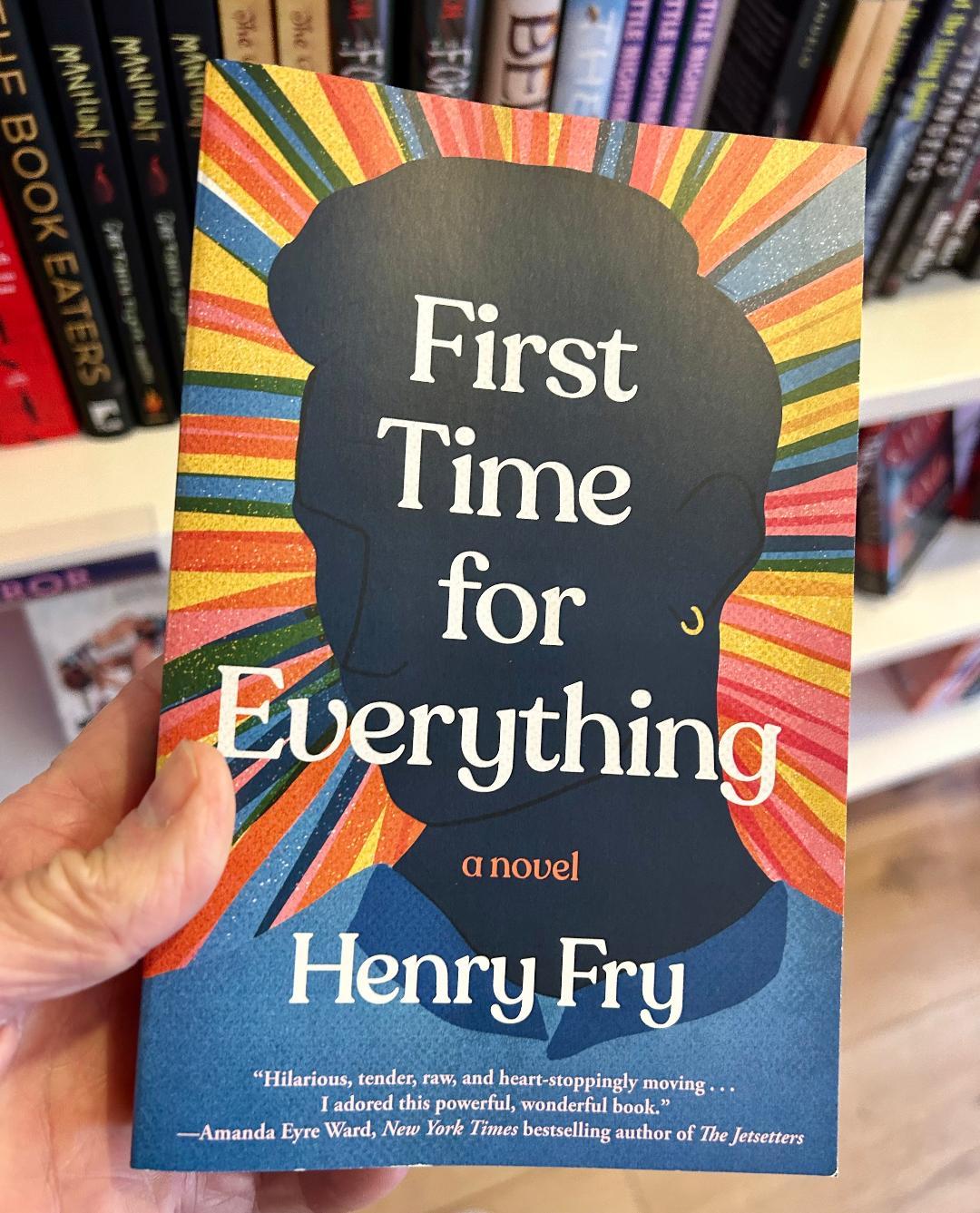
I made off with a modest first purchase, First Time for Everything, a gay romance by first-time novelist, Henry Fry. Lots of firsts in that sentence. Here’s hoping Charlie’s lasts.


Tuesday, March 28, 2023

IN THE KEY OF DALE (Book Review)


By Benjamin Lefebvre


(Arsenal Pulp Press, 2022)


At sixteen, Dale Cardigan is his own guy. He goes it alone much of the time, an old soul who senses adolescence is but a time to endure. He knows it gets better. He’ll find his place when he’s an adult.


Oh, how I feel for Dale. It’s not so dire that he’s crossing off days on a calendar as a countdown to when life will really begin, but he doesn’t make the waiting period easy on himself. Dale attends an all-boys private school after having a tough time in a previous school. The switch doesn’t seem to be so much on account of parental concern about bullying as for the fact the family moved. Dale’s father died in a car accident seven years prior and his mother has remarried, settling in a new Southern Ontario town. 


It's high school, but it’s an unusual experience because he’s with the same group of boys for all his classes. That can feel unbearable if you’re the odd one out and Dale seems to go out of his way to make himself that person. He doesn’t speak in class. Ever. Not to the teachers, not to his classmates. Somehow everyone goes along with this. Dale’s convinced people that he has to rest his vocal cords since he’s a singer with various choir gigs, solos and all. 


Music is Dale’s world. He’s an accomplished pianist, far beyond his years, paid to play organ at a church. Whether singing or playing, he reads and picks up the arrangements quickly. He connects with adults in his musical sphere. A lesbian couple at the church are about to get married and have requested that Dale play and sing at both the wedding and the reception.


It’s at the wedding that Dale runs into Rusty, a furry, red-headed classmate, who also knows the couple. Always startling to see someone in a different context. They’re seated at the same table for the reception. Dale winds up talking to Rusty. A friendship begins even though they don’t have much in common. The boys talk and text outside of school, but Rusty seems to respect Dale’s established cone of silence in class. Due to Dale’s own devices, this creates more than the usual on-off social dynamics. It adds more confusion to typical adolescent angst. What is this relationship? Is it just friendship or could it be something more?


One of the refreshing—and, for me, remarkable—things about reading current gay young adult novels is that there is so much queerness in the teens’ world. Dale has the lesbian couple, plus his married gay uncles. He’s not out to his family even though it’s a worst kept secret. It’s not that he’s afraid he’ll face rejection; rather, he can’t be bothered with it and all of the pronouncements of love and acceptance. 


Times have changed!


Here’s an early conversation between Dale and the husband of his mom’s best friend after the man asks Dale if he has a girlfriend:

He winked at me as he asked the question, like this was some kind of male bonding…

So I just said…“I don’t have a girlfriend. I don’t even—I don’t date girls.”

“Oh.” And then all these wrinkles snuck onto his forehead, and his eyebrows started to skew at an angle I’d never seen on anyone outside of a cartoon before. “What do you do with them?”

I involuntarily snickered but tried to make it sound like a cough. “Nothing. I’m not dating anyone. But just for the record, it’s not girls that I’m not dating—it’s boys. If that makes any sense.”

“What?”

I didn’t know how to make it any clearer than that, so I looked at him, raised an eyebrow, and waited for the other shoe to drop.

“Oh. You mean you’re—”

“Gay. Queer. Sure. But I’m still single.”

“Huh.”


It’s a typical Dale exchange. Most of the rest of the world is clueless, tolerated at best. Maybe he’s more of a typical teenager than he purports to be.


This is an epistolary novel, almost all of it told in letters to Dale’s dead father who seems to be the best listener Dale’s got. (There are a few passages Dale writes as more of a journal entry. These are spicier bits or thoughts written when Dale doesn’t feel like communicating with his dad.) I don’t mind stories, including this one, told through letters but they’re tricky. While I don’t wholly agree with the common writerly piece of advice, “show, don’t tell,” the epistolary structure lends itself to going overboard on the telling bits. This muddies up the pacing of the story. Sometimes the reader wants quick passages of dialogue and/or action without having things set up with, as in this case, “Dear Pa.” Still, there’s a novelty to the format and it make sense as a private means of expression for a teenager, especially someone like Dale who keeps people at bay. I wonder how many times the author, Benjamin Lefebvre, a witty talent, found the format constricting. How many times did he want to break away and, dammit, just tell the story?


Another refreshing part of the novel is—and, here, I suppose I’m giving away an aspect of the plot—its frankness about sex. We’ve had that since Judy Blume, to be sure, but it’s still deemed risky for some publishers, especially when it’s queer sex which seems to get book banners more aroused than the targeted reader. It’s not graphic as in many adult novels, but Lefebvre fits in the word jism a few times. 


I recommend the book even if I have a few quibbles. It’s always hard to give supporting characters their due—probably a snag in every novel; maybe it’s flattering when we want to know more about them—but the problem could have been lessened if Lefebvre merged the two adult gay couples. I wonder if there was an intentional decision to include a broader gay spectrum by having both a gay and a lesbian couple. Nice idea, but it was hard to distinguish each couple’s role which seemed to come down to being supportive, enthusiastic and available…even if Dale never seeks them out. He’s a solitary guy. It’s telling that the only adult he looks to is dead silent. Personally, I’d nix the gay uncles and turn the church couple into lesbian aunts. It’s also hard to make anything of Dale’s stepbrother whose name I forget, not surprisingly. This guy is the same age, lives in the same house halftime since his dad is Dale’s stepfather. They’re also in the same class, all day, every day. He has a teensy, yet important moment and that’s it. There’s an argument that adults in YA are supposed to take a back seat so the teen protagonist has to solve the primary conflict(s), but this stepbrother, who is everywhere in Dale’s life, should have a greater presence in the story. The stepdad? Almost invisible. Even Dale’s music mentors don’t get much of a mention either.


Most problematic of all is Dale’s mother. Not only is she underdeveloped, she doesn’t make sense. There’s a doting nature to her, but somehow she’s clueless about both Dale’s musical talent and his cone of silence at school. Surely, music teachers would have commented many times over the years about his potential. Also, I have no doubt that teachers—and Dale’s stepbrother—would have mentioned his lack of participation and social engagement. Perhaps it’s dramatic for her to suddenly learn about it late in the book, but it’s not believable. The shock was mine since I’d assumed she knew all along. 


Quibbles aside, Dale’s an interesting character and a strong introvert at that. (Yay, positive portrayals of introverts!) There are parallels to the popular Netflix series “Heartstopper” and Alice Oseman’s graphic novels. Dale and Rusty are in similar stages of their queer identity as Charlie and Nick. This isn't a love story per se. Dale's too grounded to be irrationally smitten. The future of Dale and Rusty is open. Dale's realistic enough to know he'll be heading off to college in a year and they don't have a lot in common. His relative levelheadedness is another refreshing aspect of the story. Lefebvre infuses humor throughout the story and gives Dale a unique voice. Leave it to a teenager to describe a pond as being “this beautiful Windex colour.” 


Lastly, I’d like to give a shout-out to Arsenal Pulp Press, based here in Vancouver. It’s not solely a queer publisher, but they’ve got plenty of LGBTQ titles in their catalog, including books I’ve previously blogged like Everything Is Awful and You’re a Terrible Person and Jonny Appleseed as well as works by Ivan Coyote, Amber Dawn and Mattilda Bernstein Sycamore. Check out their catalog here.