Showing posts with label Elton John. Show all posts

Thursday, November 10, 2022

SINGING A DIFFERENT TUNE


I was eleven when it dawned on me I didn’t have to listen to my parents’ music. It had served me well enough. They had a hi-fi in the living room, encased in a lovely wooden cabinet as was common in the seventies and I would slide open the door that hid the shelf that stored albums, scanning through them in search of something contemporary amongst my dad’s classical collection. Favourite album: “Close to You” by the Carpenters. I loved to sit on the step leading down to our sunken living while listening to Karen’s glorious voice sing what I wanted to be my future wedding song, “We’ve Only Just Begun” and that tune about someone with captivating beauty, “(They Long to Be) Close to You.” 

On the day that you were born, the angels got together
And decided to create a dream come true,
So they sprinkled moon dust in your hair of gold 

  and starlight in your eyes of blue.

That is why all the girls in town
Follow you, all around,
Just like me, they long to be
Close to you.


At first when I sang along, I suppose I just sang what Karen sang because that’s the way the song went. I knew she was singing about a guy. In time, I thought more about the words coming out of my mouth in an unintentional off-key harmony to Karen’s perfect pitch. A heavenly guy with throngs of girls in tow. “Just like me, they long to be close to you.” Sometimes I thought it was funny; other times, it just made me feel funny. 


Richard and Karen grew up outside of L.A. and the very white dude, with blond hair and blue eyes may have been a California surfer, but I only knew of the Golden State from “The Brady Bunch” and “Adam-12.” I imagined a handsome prince instead. Oh, dear. I was beginning to feel very funny.


I made the necessary adjustment. I changed “girls” to “boys.” Presto! A blue-eyed blonde as the centerpiece. Using fairy-tale magic, I’d turned the prince into a princess. “All the boys in town follow you, all around. Just like me, they long to be close to you.” Whew. I still felt funny, but I was working on it. Presumably, it would take time for gender reassignment lyrics to stick.


My entry into pop music, a realm I continue to love, came in sixth grade, when Cam Millar stood up at lunch and said, “Raise your hand if you like Elton John? Whoever doesn’t isn’t cool.” Hello, peer pressure. Naturally, I raised my hand. Elton. He was the guy with goofy sunglasses, right? I went home and asked for an Elton John album for my birthday, his “Greatest Hits” from 1974, still an amazing collection. Beyond the sunglasses, there seemed to be something funny about Elton, too. Something about his lyricist, Bernie Taupin, drew my attention as well. I suppose I was still working through my own funny feelings. 


Listening to Hamilton, Ontario radio station CKOC—clearly none of the broadcasting authorities had dyslexia—on my A.M. transistor radio proved to be a great way to be cooler (or so I thought) as I got to know all the songs by, not just Elton, but ABBA, KC & The Sunshine Band and Barbra Streisand. Surely memorizing all the lyrics to Diana Ross songs would get rid of funny feelings, once and for all.


But then pop music introduced me to Andy Gibb and Rex Smith, triggering more funny feelings, not so much about what they sang but based on their photos gracing the sleeves of the 45s I bought. Hair, I told myself. Clearly, it’s just hair envy. I’d buy some Vidal Sassoon shampoo and puff up my hair with a pick and a gob of mousse. Maybe my big hair could be as dreamy as theirs. I regularly checked their photos, strictly for hair comparison’s sake, of course.


I hadn’t yet realized how badly I sang so I continued to belt out pop tunes I played on my brand-new stereo. My family and a few unlucky friends hid their horror while I made songs like “You Light Up My Life” and “Can’t Smile Without You” more grating than they already were.[1] Still, I became more self-conscious, if not yet about my vocal (in)abilities, then about what others might intuit from the lyrics I sang.      


Some songs were safe, if plain weird, like “Muskrat Love” and “Disco Duck (Part 1)[2].” (Some parts of the ’70s are hard to explain. Too much Tang, I guess.) I could also sing “Car Wash” without a thought as my parents fretted about my career aspirations. Butchering the lyrics to “Blinded by the Light” by Manfred Mann’s Earth Band came naturally since I didn’t have a clue what they were singing and there was no internet to check myself. (Seriously, who or what was little Early-Pearly and what’s a curly-wurly? Maybe writer Bruce Springsteen was taking in more than Tang.) 


Singing along to songs by guys was also worry-free as I attempted to hit the notes for “She Believes in Me” by Kenny Rogers and “She’s Always a Woman to Me” by Billy Joel. However, I gravitated to the songs women sang so singing often required revisions. Over time, I became much more adept at pronoun gymnastics. Sometimes I made the adjustments while other times I decided the changes would be clunky or just too much to consistently carry off. Donna Summer and I sang “Will you be my Mr. Right?” in “Last Dance” because a change to Mrs. Right seemed nonsensical. I’d never heard that expression. Did guys just not care as much? As well, I had too much fun belting out Sheena Easton’s “Morning Train (Nine to Five)” to bother with alterations. It was chock full of he, his and him. 

My baby takes the morning trainHe works from nine to five and thenHe takes another home againTo find me waitin' for him.

“My baby” might be surprised and disappointed to find me at the end of the workday. Clearly, I’m no Sheena but then who is?


And flash forward to 2022. I’m not going to do the math. It’s not hard. It’s just hard to take. (Cue Al Stewart’s 1978 ditty, “Time Passages.”) My, how far we’ve come from the days when Elton sang about “Little Jeannie” and “Nikita,” Barry Manilow sang to “Mandy” and George Michael sang “Everything She Wants.” In the past month, “Unholy” topped the US and British charts, the first Billboard Number 1 by someone who identifies as nonbinary (Sam Smith) and someone who is trans (Kim Petras). No chance though that I’ll be singing along to its inane lyrics, alone or in public. (“Mummy don’t know daddy’s getting hot at the body shop, doin’ somethin’ unholy.”) Still, as they say, it’s somethin’.


I don’t sing aloud when others are present anymore. A friend’s cutting critique not so politely put a stop to my sing-alongs. Simon Cowell would have been nicer. What’s done is done. Karaoke bars are safer to visit, I suppose. Still, I mumble-sing in my home as music plays from my laptop. 
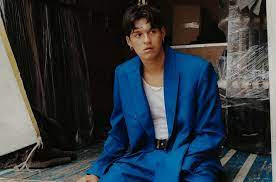


Yesterday I listened to YouTube as I did abs on my exercise mat. The online channel has a knack for knowing what I might like to hear after my chosen tune ends. It played a soulful song I wasn’t familiar with, the male voice sounding better than most. As I continued to do sit-ups, the singer sang, “He tears me to pieces.” It startled me. Did I hear that right? And then: “She don’t know you like me. She could never love you more than me.” I glanced at the screen and made a mental note…Omar Apollo singing “Evergreen.” When I finished my workout, I listened again, a video with the lyrics on the screen. My ears weren’t mistaken. A man singing about a man. (According to Wikipedia, Apollo is openly gay.) The song was a modest hit on the Billboard chart, missing the Top 40, peaking at number 51. So far, it’s hit the Top 40 in the UK, Ireland and Australia, its greatest success coming in the Netherlands where it reached number 4. The various videos of the song have more than ten million views on YouTube. 


Recently, the music channel reacquainted me with an English band called The 1975 which first garnered international attention with the song “Chocolate.” Their songs are catchy, but I’ve never really gotten into them until their new album, “Being Funny in a Foreign Language,” was released in the past month. I listened to several songs and the lyrics made me listen, having something to say beyond generic fare designed to appeal to (or not offend) the masses. On the lead single, “Part of the Band,” lead singer Matty Healy sings:
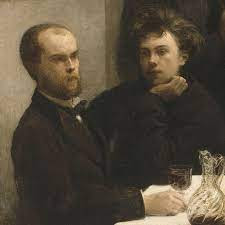

I fell in love with a boy, it was kinda lame, 

I was Rimbaud and he was Paul Verlaine

In my, my my imagination.[3]

Healy sings of a woman, too, letting listeners speculate about his possible bisexuality or a total ambivalence about sexual orientation. The song hasn’t received a great deal of airplay, not likely due to boy talk but perhaps more on account of its frankness in mentioning heroin, cocaine and ejaculations. Still, the video has received about five million views. 


Sex, drugs and rock ‘n’ roll. Same but different. While other people get worked up over pronouns they and them, I’m still taking in how he and him are popping up and evolving in pop music. How lovely to have a singer killing me softly with his song, no lyrical adjustments required.


[1] Full confession: I like “You Light Up My Life” and “Can’t Smile Without You.” I just know I’m not supposed to admit it. Alas, peer pressure persists.

[2] Good grief, is there a “Disco Duck (Part 2)”? Turns out, yes. Mercifully, it’s an instrumental. I’m not providing the link. If you must go there, you’re on your own.

[3] Rimbaud and Verlaine were 19th-century poets who had a torrid, sometimes violent affair. Rimbaud didn’t seem to hide his homosexuality while Verlaine struggled with it, marrying a woman and often getting intoxicated whereupon he would become violent. 

Tuesday, August 4, 2020

IS THIS A "THANK U, NEXT" MOMENT?

Say it isn’t so.

And, if it is so, let me play ostrich. Let me bury my head in the sand.

Dammit, that’s not even how to play ostrich. Turns out they don’t do that. And why would they? As the first article from my Google search points out, this would make breathing difficult and be nonsensical since these birds can run forty miles per hour, leaving common enemies in the dust...er, sand.

So my lifetime image of a fearful, denial-prone ostrich has been shattered. I’ll deal with it. Right now I’m finding it challenging enough to deal with another potentially shattered image: that of Ellen DeGeneres.

Yep, I’m alarmed.

It seems things aren’t peachy keen behind the scenes of her talk show. She doesn’t allow staff to look at her. (Hmm,...I’ve heard that allegation made about Janet Jackson and Mariah Carey in the past. Why is this the go-to allegation when portraying a female celebrity as a diva?) But it’s worse, of course. You get sent home if she doesn’t like the way you smell and she prohibits people from eating meat. (Apparently WeWork banned meat a couple of years ago as part of a company environmental policy. Where do I apply? Banned or not, no fish in the office microwave. Ever.) People online are saying that it’s no secret that Ellen DeGeneres is the meanest person alive. Troubling.

But the allegations get worse. I’ve seen legal buzzworthy phrases; toxic work environment, sexual harassment. These things can’t be pushed aside. The producers, not Ellen, are accused of these more actionable offenses, but she is the public face for the show. This is serious stuff.

And Ellen has acknowledged that something is rotten in the state of DeGeneres, issuing a public apology to her staff.

More than just her show is on the line here.

To be clear, I’m not a fan of her talk show. I’ve tried to watch it a few times and I can’t stomach it. Too much time with Ellen dancing the way we do in our own living rooms. (Just because we do it, doesn’t make it entertainment.) The producers add in dopey game show-like segments and the interviews are pure fluff. I don’t need to spend an hour of my time each day—or even on a rare sick day—crashed on the couch waiting through prolonged commercial breaks to get an extra shot of someone who, until recently, has been regarded as the Queen of Nice.

Still, I have long respected Ellen. And many of us owe her a heap of gratitude. I suppose I first became aware of her as the star of the sitcom, “These Friends of Mine,” which premiered in March, 1994. The pilot episode was goofy, making me laugh as Ellen tried to get a better driver’s license photo. (Of course, the photo kept being snapped when she was least ready.) Nothing groundbreaking, to be sure, but it did its job, helping me wind down from a new job as an attorney in a Santa Monica law firm. I stuck with it as it changed its name to “Ellen,” never Must-See TV but something like comfort food. (Never knock the mashed potatoes!)

And then, “Ellen” had a moment. It was indeed a Must-See, as 42 million viewers tuned in to witness character Ellen Morgan come out on an episode that aired April 30, 1997. Two weeks earlier, 38-year-old Ellen DeGeneres graced the cover of Time magazine with the headline, “Yep, I’m Gay”.
It’s hard to overstate what the episode represented in terms of LGBTQ history. There had been other LGBTQ characters such as Jodie Dallas on “Soap,” Steven Carrington on Dynasty,” Matt Fielding on “Melrose Place,” Nancy on “Roseanne,” Carol and Susan on “Friends”. For the most part, these characters were only recurring roles and/or had woefully undeveloped story lines. It was as if networks and producers were content with pushing a button or two. Look! Gay character! Aren’t we avant-garde!

Indeed, the financial risk was great. In 1989, when “thirtysomething” brought on two male characters (seemingly out of nowhere!) to go on a date and appear in bed together, the network, ABC, prohibited the actors from any physical contact. Still, it was risqué stuff. ABC lost $1.5 million in advertising money as sponsors pulled out.

On Ellen” the lead character came out as gay, paving the way for shows like “Will & Grace,” “Queer as Folk” (both British and American versions), “The L Word” and a multitude of other shows that emerged as cable networks and web series vastly expanded viewing choices. For the coming out episode, J.C. Penney, Wendy’s and Chrysler pulled out as advertisers, but the show was celebrated with viewing parties supported by GLAAD and the Human Rights Campaign. By golly, Ellen was here and Ellen was queer!

Sadly, “Ellen” only lasted one more season. Personally, I felt that the show lost its funny as it struggled to present authentic issues about being newly out. As a trailblazer, it got lost in the weeds.

Ellen’s career sagged. No doubt, she paid a price for coming out. (Straight actress Laura Dern—a deserving Oscar winner this year—played the love interest on the renowned episode and couldn’t get another role for a year and a half.)

Four years later, Ellen returned to star in another sitcom, “The Ellen Show,” playing another lesbian character—from the outset, this time—who moves back home after her internet company goes bust. Despite having Cloris Leachman, Martin Mull and Jim Gaffigan in the cast, the show failed, lasting only half a season.

Six years after the hyped coming out of both the actress and her sitcom character, DeGeneres finally found success again in May 2003, voicing Dory in Disney’s Finding Nemo and following up in September with the debut of her long-running talk show.

It is undeniable that Ellen DeGeneres has done wonders to normalize being gay. For seventeen years, a lesbian has been warmly received in family rooms across North America, including in a lot of small towns and rural areas in red states. She talks openly about her wife, Portia, in the same way Regis used to talk about Joy and Kathie Lee went on about Frank. Regular stuff. I have no doubt that Ellen DeGeneres has been the first lesbian many viewers have “known”. And, up until the past few months, what a wonderful representative she has been.

This past week, in particular, people have come out with claws sharpened, gleeful to tear apart someone whose image seemed so squeaky clean. Gosh, people hate that sort of thing. Let the feeding frenzy begin! On a local morning radio station, I heard the deejays speak authoritatively about Ellen’s vacant eyes as guests chatted. On Twitter, she trended all weekend as cancel culture embraced hashtags like #Replace Ellen. The Mean Tweets would be ripe for a reading on Jimmy Kimmel if they weren’t so raw:
“I’m so happy that # EllenDeGeneres’ show is crashing into a ball of fire”;
“Ellen comes out as mean”;
“omg no one likes her. she’s rude to all her guest and asks inappropriate questions
like it’s a personality trait. truly a disgrace to all gays” [multiple sic]
So...even #LGBT heroes can be assholes/bitches sometimes...interesting...”

This is the sort of commentary that comes in reaction to allegations that Ellen isn’t nice. Hmm…

And maybe it’s comments like the last one that make me most uncomfortable. We’ve come a long way from Ellen’s groundbreaking moment in 1997. Nothing can take away from the fact that she stepped up and out, risking her career to be truer to herself and, in the process, to help other people come out and find acceptance.

In a cold, harsh way, I suppose one could say she was served her purpose. Things are much different now, compared to 1997. But does that mean she gets cast aside? Such is already a natural process for aging celebrities and the normally brief Best Before dates for people in the entertainment business being “fresh”. She has lasted far longer than most. Still, why must we turn away? Why must there be so much glee in rejecting someone who once seemed so universally beloved? Does this say more about the callousness of society than the meanness of an individual?

I have no stakes on the continuation of a talk show that doesn’t interest me. But I do care about the legacy of working toward greater LGBTQ acceptance. Ellen DeGeneres is an integral part of that. Perhaps that is why I am willing to grant her more leeway than the average boss or celebrity who is called out for creating a hostile workplace. I’m also someone who tried to stick with Jussie Smollet from “Empire” until things just got too bizarre. Kevin Spacey? Just no.

There are indeed serious allegations from people who have worked on the show. While many of the harsher allegations (i.e., sexual harassment) directly involve producers, not Ellen herself, it is valid for people to intone that she knew or should have known. Conversely, I think it is plausible that she didn’t know (even though, yes, she should have). At some point, a talk show that goes on for seventeen years becomes something of a well-oiled machine. The host can basically phone it in. (Maybe her eyes are a tad vacant.) Everything gets sped up. Show up, do your thing, go home. No surprise that she would have minimal contact with staff by this point. Sad, perhaps, but quite likely.

Despite talk of her being the meanest person in show business, I still believe there’s a good person within. Maybe things got away from her. The only reason I’d like to see the show to continue with Ellen as the host is to see if she can make it right.

Our LGBTQ icons are flawed, as are we. I grew up loving Sir Elton John’s music and respecting him for speaking out as a gay man and raising oodles of money and awareness during the AIDS crisis, but I’ve also read about more than a few of his unflattering fits. Not great, but the good far outweighs the bad. I do believe he’s got a good heart. Same with Ellen.

Please don’t prove me wrong. If I have to bury my head, it’s hell getting all that sand out of my hair.